 Pin
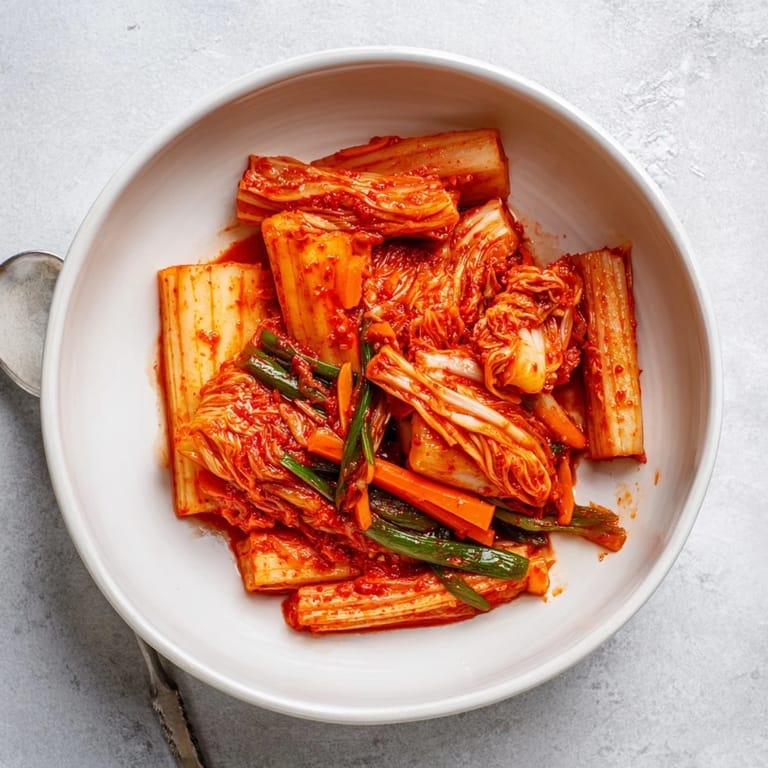
Pin Last autumn my Korean neighbor Mrs. Lee caught me staring at her balcony lined with mysterious jars. She laughed and pressed a jar into my hands, explaining she makes kimchi every fall. That first bite changed everything. The crunch, the heat, the tang. Now I understand why she called it Korean soul food.
My first attempt fermented too fast because I left it near the radiator. The jars bubbled aggressively and the smell was potent. Mrs. Lee gently reminded me that fermentation needs patience and the right spot. Now I tuck my jars in the coolest corner of the kitchen and check them like they are sleeping children.
Ingredients
- Large napa cabbage: The foundation, seek out heavy heads with tight leaves for the best crunch after fermentation
- Coarse sea salt: Essential for drawing out moisture and creating the perfect brine environment
- Daikon radish: Adds sweetness and texture that balances the heat beautifully
- Korean red chili flakes (gochugaru): This specific chili creates that signature red color and smoky heat
- Rice flour: Makes the spice paste cling to every leaf
- Fish sauce or soy sauce: The umami backbone that deepens all the other flavors
Tired of Takeout? 🥡
Get 10 meals you can make faster than delivery arrives. Seriously.
One email. No spam. Unsubscribe anytime.
Instructions
- Salt the cabbage:
- Cut your cabbage into manageable pieces and soak it in the salt water bath, weighing it down so every leaf gets tender and transformed
- Prepare the spice paste:
- Cook your rice flour paste until it thickens like custard, then blend it with garlic, ginger, onion, fish sauce, and gochugaru into a vibrant red mixture
- Massage everything together:
- Put on those kitchen gloves and work the paste into every crevice of the drained vegetables until they are thoroughly coated
- Pack and wait:
- Press your kimchi firmly into jars, leaving breathing room, then let time work its magic at room temperature
 Pin
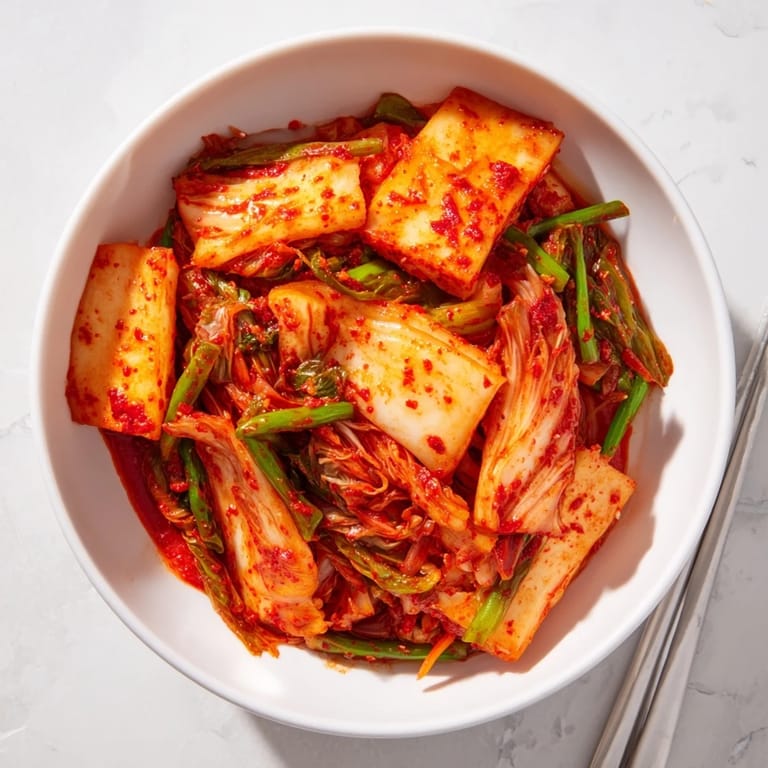
Pin Friends now request jars instead of dinner invitations when they visit. Something about receiving handmade fermented food feels intimate and special. I love seeing people reach for kimchi instead of hot sauce.
Finding Your Spice Balance
Start with three tablespoons of gochugaru if you are heat sensitive. You can always add more next batch. The spice level will mellow slightly as fermentation progresses, so account for that transformation.
Choosing the Right Spot
Direct sunlight will make your kimchi ferment unevenly and potentially spoil. Find a dark corner with stable temperature. Your kitchen counter away from windows is usually perfect.
Signs It Is Ready
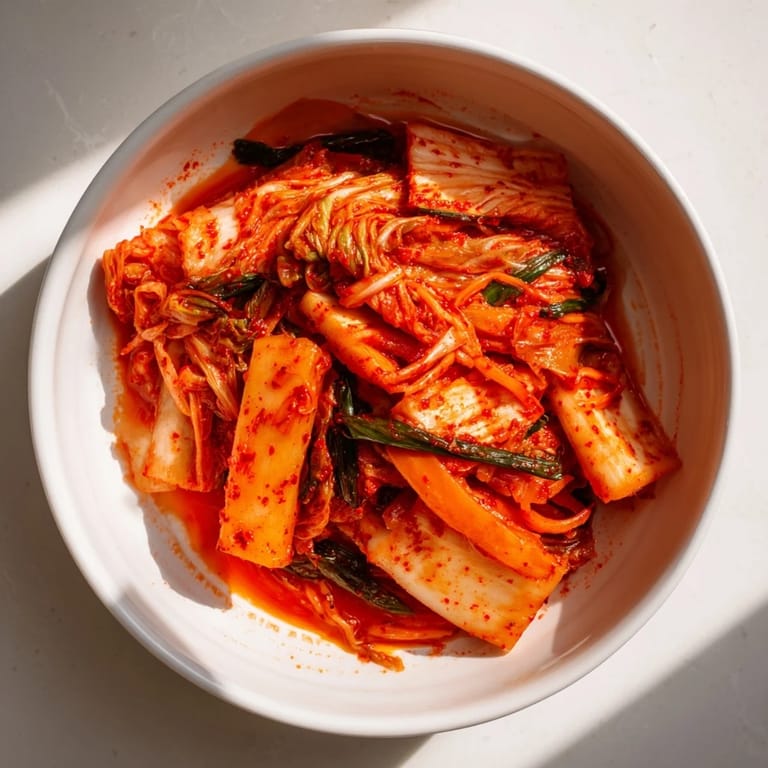
You will know fermentation is working when you see tiny bubbles rising and smell that distinctive sour aroma. The cabbage should taste tangy with a pleasant fizz. Trust your senses more than the clock.
- Taste daily after the first two days
- The flavor will continue evolving in the refrigerator
- Mild kimchi now might become quite sour next month
 Pin
Pin There is something deeply satisfying about creating food that transforms over time. Happy fermenting.
Recipe Q&A
- → How long does the fermentation process take?
Initial fermentation requires 1-2 days at room temperature, depending on your preferred level of sourness. After that, refrigeration slows the process while flavors continue developing over several weeks.
- → What is gochugaru and can I substitute it?
Gochugaru are Korean red chili flakes with a smoky, slightly sweet heat profile. Regular red pepper flakes or cayenne can work but will alter the traditional flavor and color significantly.
- → Why is rice flour used in the spice paste?
Cooking rice flour into a thick porridge helps bind the spices and creates a medium for beneficial bacteria to thrive during fermentation. It contributes to the proper texture and fermentation process.
- → How do I know when fermentation is complete?
Taste after 48 hours. When the vegetables reach your desired balance of tangy, sour, and spicy flavors, transfer to cold storage. Bubbles and a slightly sour aroma indicate active fermentation.
- → Can I adjust the spice level?
Absolutely. Start with 3 tablespoons of gochugaru for moderate heat, increasing up to 5 tablespoons for intense spice. Adding grated apple or pear to the paste creates a milder, slightly sweet version.
- → How long does it keep in the refrigerator?
Properly stored kimchi lasts several months in the refrigerator, continuing to ferment slowly and develop deeper, more complex flavors over time. Keep jars tightly sealed and use clean utensils.