 Pin
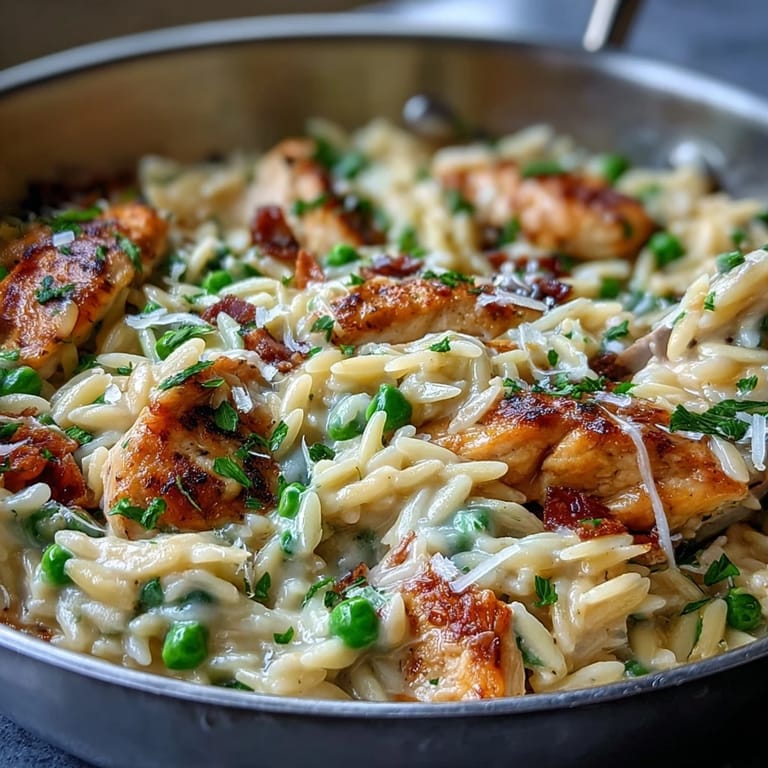
Pin You know those weekday evenings when you’re balancing emails and hunger, and somehow the smell of bubbling lemony chicken snaps you back into the moment? The first time I made lemon orzo with chicken and peas, the kitchen was filled with soft sunlight and that unmistakable scent of fresh lemon zest, the kind that somehow feels like cleaning the slate for a new season. I didn’t expect the peas to pop with sweetness, or the orzo to get so wonderfully creamy in one pot. A single pot dish meant less fuss, and it soon became a staple for nights when relaxation was a priority. There’s something almost theatrical about the way butter hisses as it hits the hot skillet, promising comfort before anything else begins.
I remember the night we served it to friends after a hike, the table crowded with laughing faces and plates wiped clean within minutes. Someone mentioned the peas tasted like spring—an oddly perfect compliment that made the effort feel worthwhile. The conversation shifted from work to local produce, and I realized that food like this can nudge small joys to the surface. Later, the pot was scraped clean by someone who'd claimed they weren’t hungry at all. It’s the kind of recipe that turns ordinary dinners into easy celebrations.
Ingredients
- Boneless, skinless chicken breasts: Searing the chicken first brings out its flavor and keeps it tender; cutting it into 1-inch pieces ensures quick, even cooking.
- Frozen green peas: Thawed peas add a pop of sweetness and color, best added toward the end so they stay bright.
- Yellow onion: Finely chopping brings mellow flavor and a gentle sweetness as it sautés, forming the flavor base.
- Garlic: Garlic infuses the whole dish with aromatic warmth; mince finely for even flavor.
- Lemon zest and juice: Zest first, then juice; both lift the orzo and chicken with freshness and a light tang.
- Fresh parsley: Just a sprinkle adds herbal brightness and makes the dish feel finished.
- Orzo pasta: Use uncooked orzo—its small size cooks quickly and creates a creamy texture as it simmers.
- Parmesan cheese: Grated Parmesan melts into the orzo, making each spoonful rich and savory.
- Unsalted butter: Butter deepens flavor and brings a luscious finish to the sauce.
- Low-sodium chicken broth: Broth keeps things lighter but flavorful, while controlling salt levels.
- Olive oil: Olive oil is for searing—make sure the pan is hot so chicken browns nicely.
- Dried oregano: A pinch gives Mediterranean notes; don’t overdo it or it’ll overpower the lemon.
- Salt and black pepper: Season chicken early so each bite gets the right taste; adjust at the end after tasting.
Tired of Takeout? 🥡
Get 10 meals you can make faster than delivery arrives. Seriously.
One email. No spam. Unsubscribe anytime.
Instructions
- Get the skillet ready:
- Heat olive oil in a large, deep skillet or Dutch oven over medium-high until you hear a gentle sizzle and see light shimmering on the surface.
- Sear the chicken:
- Add chicken pieces seasoned with salt, pepper, and oregano. Sauté for 4–5 minutes, letting them color and just cook through, then transfer to a plate so you lock in their juices.
- Sauté onions and garlic:
- Add butter to the hot pot, let it melt fully, then stir in the onions. Cook for 3 minutes until translucent, then add garlic and stir until it smells fragrant, about 1 minute.
- Toast the orzo:
- Pour in the orzo and stir constantly for 1–2 minutes; listen for the orzo lightly crackling and smell the toasty, nutty aroma.
- Cook orzo in broth:
- Pour in chicken broth, bring to a gentle boil, then reduce heat. Cover and simmer for 7–8 minutes, stirring occasionally—the orzo starts creamy, and most liquid is absorbed.
- Finish with chicken and vegetables:
- Return the chicken and add peas, lemon zest, and juice. Stir well and let cook uncovered for 4–5 minutes, just until orzo is al dente and bright.
- Make it creamy and finish:
- Remove from heat, stir in Parmesan and parsley, and adjust salt or pepper as needed.
- Serve and garnish:
- Scoop into bowls and top with extra lemon zest or Parmesan if you want a bit more brightness.
 Pin
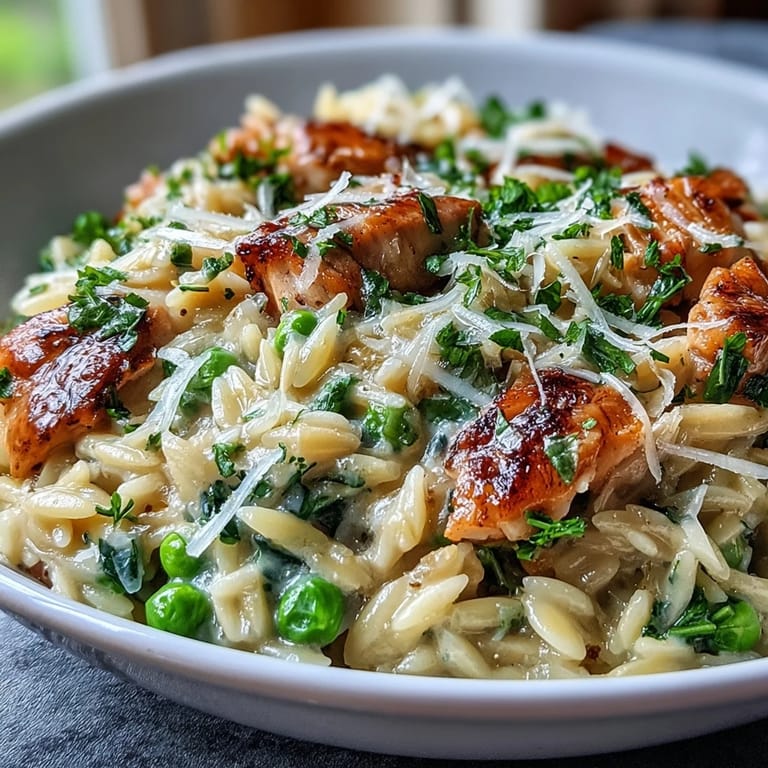
Pin One spring night, with a playlist humming in the background and dishes mostly done, this lemon orzo turned into a ritual that marked the end of a busy week. Mixing in the peas while chatting about weekend plans felt like a small luxury, and the meal itself brought a collective sigh of contentment around the table. I realized then that some recipes quietly become part of your life’s rhythm. Even our dog got a taste (minus the onions), and wagged his approval. That one-pot magic became our go-to for the kind of nights that deserved both simplicity and warmth.
When the Timing Matters Most
The first time I got distracted with texts, I left the orzo simmering and ended up with sticky, overcooked pasta. Lesson learned—the trick is to set a timer and stir gently so it stays creamy but not gluey. Don’t leave the stove, or the moment when the orzo is just right will slip away. If it seems dry, a splash more broth works wonders. Timing really makes all the difference between a comforting dinner and an accidental lunchbox filler.
Letting Lemon Lead the Way
Zesting the lemon before juicing means you capture the fresh oils and avoid the frustration of squeezing a slippery rind. Using both zest and juice gives a double dose of citrus that pops against the sweet peas and savory chicken. The aroma transforms the kitchen each time. If you love the tang, add extra zest right at the end for a burst of brightness. Always taste as you go—lemons can vary and so should the balance.
Tiny Tweaks, Big Wins
Swapping out chicken for shrimp or tofu turns this dish into something new, and don’t hesitate to stir in a splash of cream if you’re craving extra silkiness. It took a few rounds to realize that Parmesan thickens up the sauce quickly, so hold off on extra broth until you see how creamy it gets. You can always garnish with additional parsley to lighten things up.
- Always thaw peas in advance so they stay tender and don’t water down the dish.
- If your orzo sticks, loosen it with broth—not water—for added flavor.
- Have lemon wedges handy to squeeze at the table for customizable zing.
 Pin
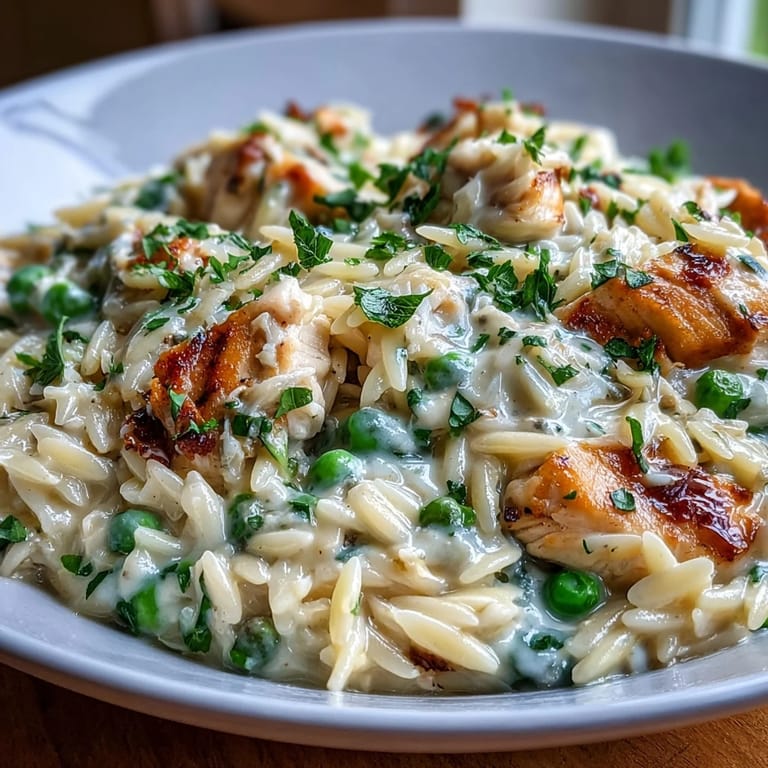
Pin If you try this one-pot lemon orzo, I hope the simple steps and sunny flavors bring some easy joy to your weeknight dinners. May each bite remind you how just a few ingredients—and a relaxed kitchen—can make any evening feel like a fresh start.
Recipe Q&A
- → Can I substitute shrimp or tofu for the chicken?
Yes, you can easily replace chicken with shrimp or tofu for a pescatarian or vegetarian option. Adjust cooking time accordingly.
- → How do I make the dish creamier?
For a richer texture, stir in a splash of heavy cream after cooking orzo, just before serving.
- → What cookware should I use?
A large deep skillet or Dutch oven works best to ensure even cooking and easy stirring throughout the meal.
- → Can I use fresh peas instead of frozen?
Fresh peas are suitable. Simply add them with the chicken and lemon and cook until just tender.
- → Is this dish gluten-free?
No, traditional orzo contains gluten. Use gluten-free pasta for an alternative if needed.
- → How do I store leftovers?
Refrigerate leftovers in a sealed container for up to three days. Reheat gently with a splash of broth or water.