 Pin
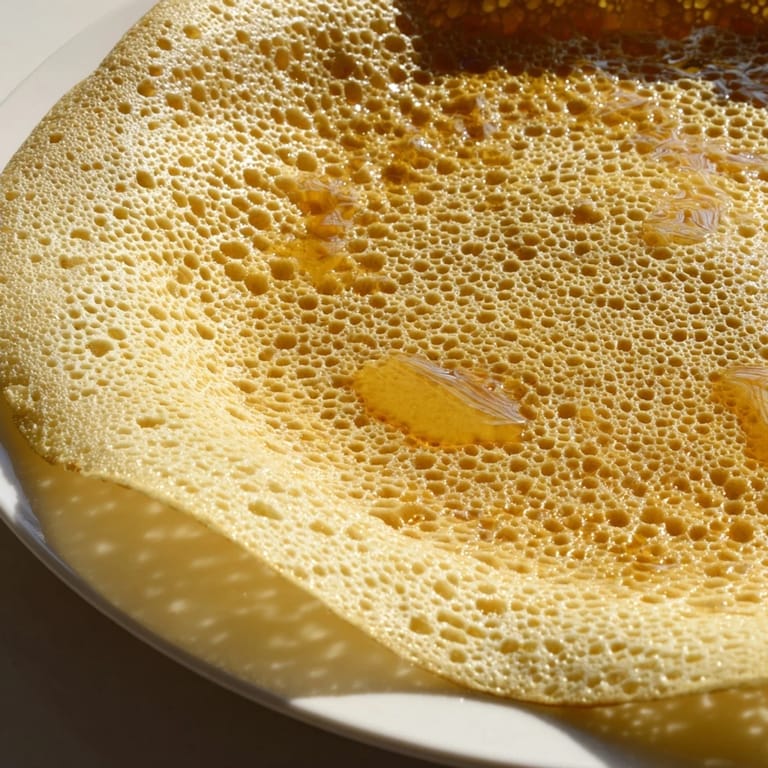
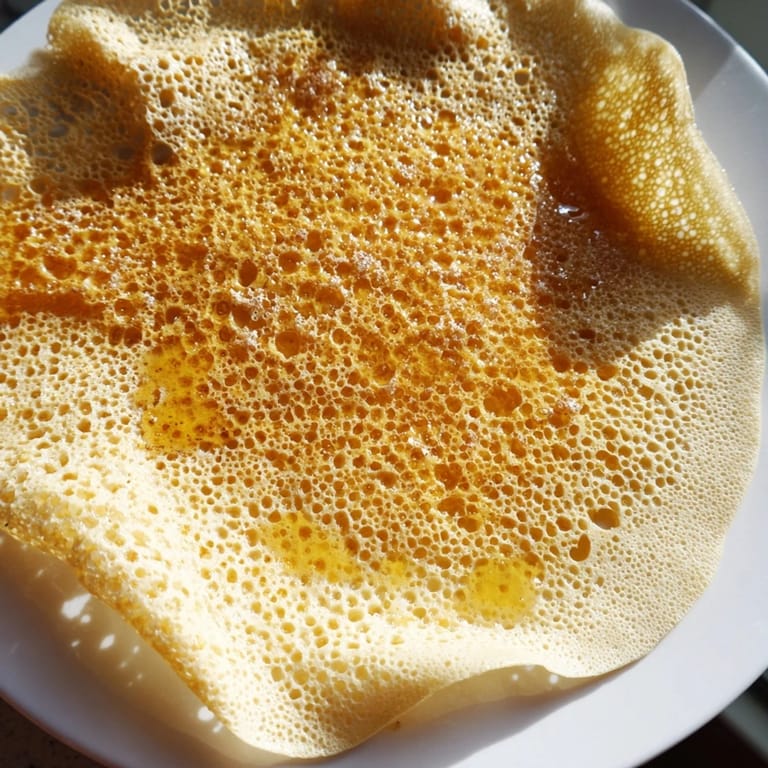
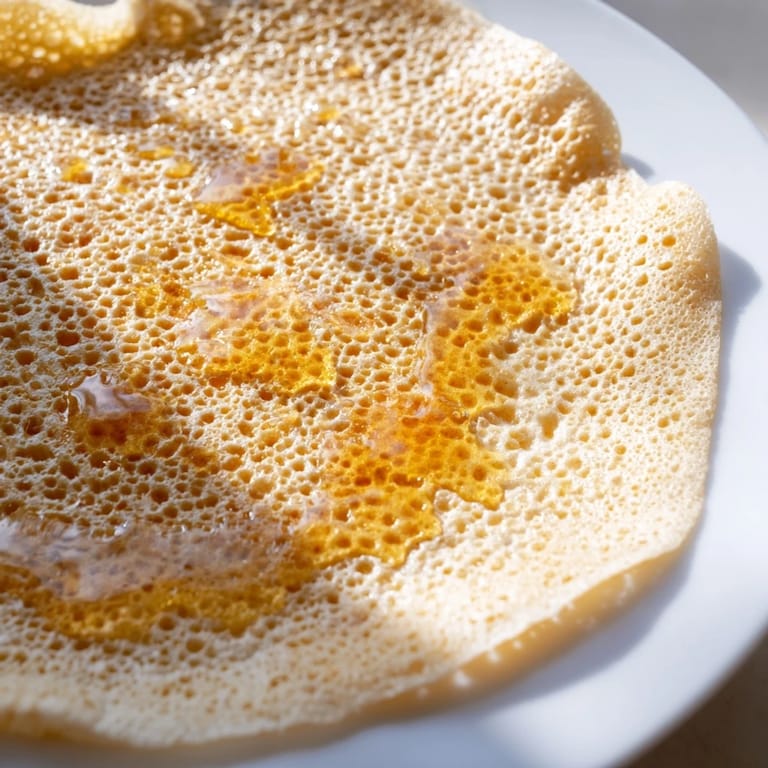
Pin The first time I made baghrir, I wasn't expecting the magic that happens when yeast meets semolina. My kitchen filled with this gentle, yeasty warmth as the batter bubbled quietly on the counter, and when I poured it into the pan, hundreds of tiny holes appeared like the surface of the moon. That honeycomb texture is what makes baghrir so special—it's not a crepe, not quite a pancake, but something entirely its own that soaks up warm honey like edible velvet.
I made these for a friend who'd never tried Moroccan food, and watching her face when she took that first bite—the way her eyes went soft—made me understand why this dish matters. It's the kind of breakfast that makes people slow down, that tastes like care.
Ingredients
- Fine semolina: This is what gives baghrir its distinctive texture and slightly nutty flavor; don't swap it for coarse semolina or you'll lose the delicate crumb.
- All-purpose flour: Just enough to balance the semolina and help the structure hold.
- Warm water: The temperature matters here because it wakes up the yeast; test it on your wrist like you're checking a baby's bath.
- Active dry yeast: This is the secret to those honeycomb holes; it creates tiny bubbles that stay put even after cooking.
- Baking powder: A little extra lift to ensure the holes are deep and generous.
- Sugar: Just enough to feed the yeast without making these sweet on their own.
- Salt: A small amount that brings out the subtle flavors.
- Unsalted butter and honey: The only finishing you need—let them mingle together so the warmth brings out their sweetness.
Tired of Takeout? 🥡
Get 10 meals you can make faster than delivery arrives. Seriously.
One email. No spam. Unsubscribe anytime.
Instructions
- Mix the dry foundation:
- Whisk semolina, flour, sugar, yeast, baking powder, and salt together in a large bowl until there are no streaks or clumps. This ensures the yeast distributes evenly.
- Build the batter:
- Add warm water gradually while whisking constantly, as if you're coaxing the flour into submission; you want a smooth, pourable consistency with no lumps hiding in the corners.
- Let it rest and rise:
- Cover the bowl loosely and leave it at room temperature for 30 minutes, watching as it slowly comes to life with tiny bubbles breaking the surface. If your kitchen is cool, it might take a few minutes longer.
- Heat your pan with patience:
- Place a nonstick skillet or crepe pan over medium heat and let it warm for a minute—don't grease it, as this is actually what prevents sticking.
- Pour and let it bloom:
- Ladle about ¼ cup of batter into the center of the hot pan and gently swirl so it spreads into a thin layer; you'll see the magic start immediately as the surface erupts with holes.
- Cook without flipping:
- Let it sit undisturbed for 2 to 3 minutes until the surface is covered in holes like a sponge and the top feels completely dry to the touch. This is when you know it's ready.
- Transfer and continue:
- Slide the baghrir onto a plate and repeat with the remaining batter, stirring the bowl gently between batches in case the semolina settles.
- Warm the honey sauce:
- In a small saucepan, melt butter and honey together over low heat just until they're unified and fragrant.
- Serve with generosity:
- Stack the warm baghrir and drizzle the honey-butter mixture over the top, letting it sink into all those tiny pockets.
 Pin
Pin There's a quiet moment right before the honey hits the warm baghrir, when steam rises and you can smell the butter beginning to caramelize. That's when I remember why I love cooking this particular thing.
Why This Texture Is Worth Your Time
The honeycomb isn't accidental—it's what happens when yeast creates tiny gas bubbles that set in the heat before they have a chance to pop. Other pancakes are denser, cake-like, heavy. Baghrir stays light enough that it almost dissolves on your tongue, especially when honey softens it further. The first time someone compares it to eating air that somehow tastes like wheat and butter, you'll understand why this is different.
Timing and Temperature Matter
I learned the hard way that baghrir needs its batter to rest, not as a suggestion but as a real requirement. The first batch I made without waiting was dense and forgettable. But when you give it those 30 minutes, the yeast has time to bloom and distribute, and the semolina softens just enough to create the right texture. Temperature matters too—your water should be warm but not hot enough to kill the yeast, and your pan should be medium heat, steady and patient.
Serving Variations and Moments
I've learned that baghrir is versatile in the most graceful way. Some mornings I drizzle honey and butter, other times I've added a sprinkle of crushed almonds or pistachios for crunch. I've even folded them gently and served them with a spoonful of thick yogurt for a lighter breakfast. The key is serving them warm—they're still wonderful as they cool, but that first minute when the honey pools and the butter glistens is peak magic.
- Sprinkle chopped pistachios or almonds over the honey for texture contrast.
- A dollop of thick yogurt alongside brings a cool creaminess that balances the sweetness.
- Make them ahead and gently reheat in a low oven if you need to feed a crowd.
 Pin
Pin Baghrir reminds me that some of the most beautiful things in cooking happen quietly, without fuss or complicated steps. Serve them while they're warm, watch them disappear, and let the honey do what it does best.
Recipe Q&A
- → What gives baghrir its honeycomb texture?
The bubbly batter, created by yeast and baking powder, produces many tiny holes as the crepe cooks on one side, giving the honeycomb appearance.
- → Can I use all-purpose flour only?
While all-purpose flour can be used, combining it with fine semolina enhances the texture and characteristic sponginess of baghrir.
- → Is flipping the crepe necessary during cooking?
No, baghrir is traditionally cooked on one side only until the surface is dry and covered with holes, then removed from the pan.
- → How do I keep the batter from being too thick?
If the batter feels too thick after resting, adding a small amount of warm water helps achieve the desired pourable consistency.
- → What is the best way to serve baghrir?
Serve warm, generously drizzled with melted butter and honey for a rich, sweet finish, commonly enjoyed for breakfast or dessert.
- → Can baghrir be reheated?
Yes, gently reheating baghrir preserves its texture and warmth without drying it out.