 Pin
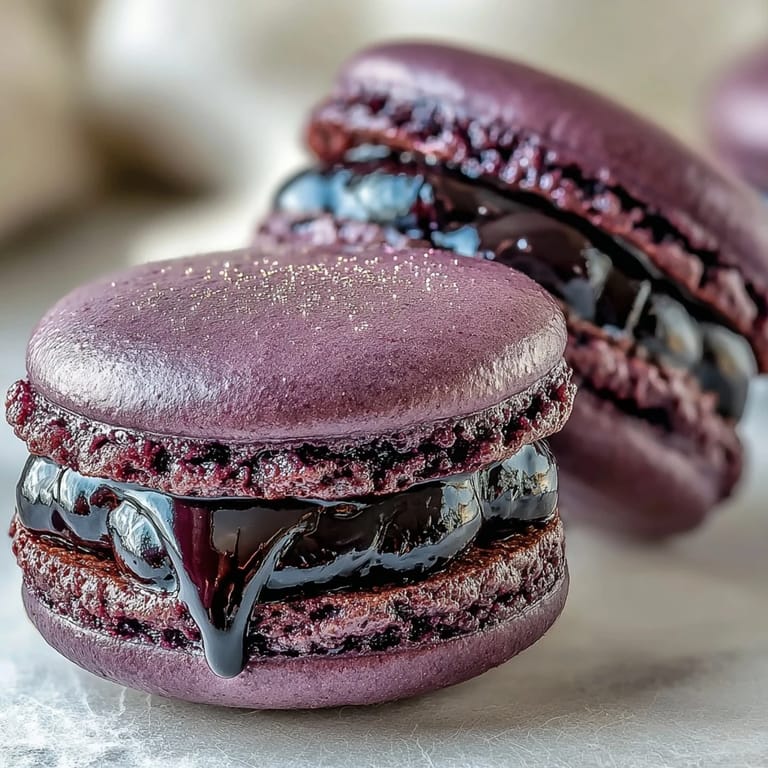
Pin The first time I attempted macarons, I stood in my kitchen at midnight, surrounded by failed shells and a sink full of dishes, wondering why the French made this look so effortless. Years later, after countless batches and learning to trust the process rather than fight it, I discovered that blackcurrant macarons were my breakthrough—those jewel-toned shells with their tart, sophisticated ganache filling finally proved I could master this notoriously temperamental cookie. There's something almost meditative about piping tiny circles, tapping the tray just right, and waiting for that magical skin to form on top. Now, these delicate almond meringue cookies have become my secret weapon for impressing people I actually care about.
I made these for a friend's engagement party last spring, and watching her face light up when she bit into one—that split-second moment before she closed her eyes to savor it—reminded me why I bake at all. The macarons were arranged on a tiered stand, glowing under the soft evening light, and somehow they became less about the recipe and more about showing someone you believe they deserve something beautiful.
Ingredients
- Egg whites, aged: This is non-negotiable—room temperature whites beaten to stiff peaks create the structure that holds everything together, and aging them for 24 to 48 hours in the fridge stabilizes the meringue in ways fresh eggs simply can't.
- Granulated sugar: This dissolves into the meringue and creates that glossy, stable foundation you're chasing.
- Powdered sugar and almond flour: These must be sifted together multiple times to avoid lumps that will ruin the texture; I learned this the hard way after my first three attempts.
- Salt: Just a pinch, but it sharpens the meringue's stability and prevents overbeating.
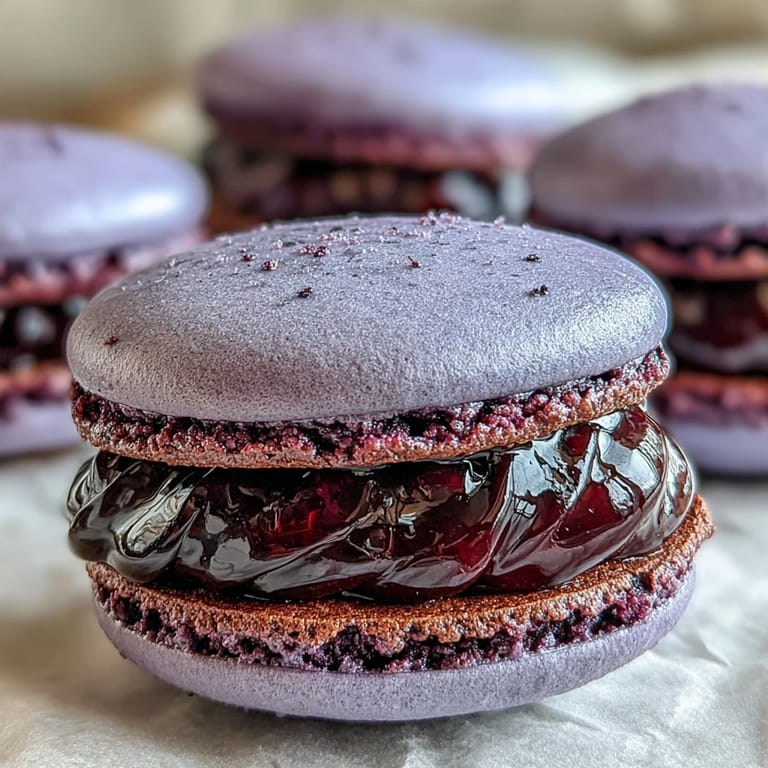
- Gel food coloring: Skip liquid coloring because it thins the meringue; gel coloring gives you that stunning deep purple without compromising texture.
- Blackcurrant purée: Strain it well to remove seeds, which can puncture your ganache and create tiny leaks during assembly.
- White chocolate, unsalted butter, and lemon juice: The butter adds silkiness, the lemon juice cuts through sweetness and brightens the blackcurrant flavor, and the white chocolate provides the canvas these flavors paint on.
Tired of Takeout? 🥡
Get 10 meals you can make faster than delivery arrives. Seriously.
One email. No spam. Unsubscribe anytime.
Instructions
- Prepare your workspace:
- Line your baking sheets with parchment paper or silicone mats—macarons are dramatic about sticking, and you'll want a quick release. Make sure your mixer bowl is spotlessly clean and grease-free, because even a whisper of oil will sabotage your meringue.
- Combine your dry ingredients:
- Pulse the almond flour and powdered sugar in a food processor until they're incredibly fine and well married together. Sift this mixture into a separate bowl, pressing any stubborn lumps through with the back of a spoon—this step separates good macarons from grainy, dense failures.
- Build your meringue:
- Beat the aged egg whites with salt on medium speed until they're foamy, then gradually add the granulated sugar while continuing to beat until you have stiff, glossy peaks that stand straight up when you lift the beater. This should take about 5 to 7 minutes, and patience here pays dividends.
- Add color:
- Fold in your gel coloring a tiny bit at a time until the meringue is evenly tinted to a deep, jewel-like purple—you want it dark enough to hint at what's inside.
- Fold with intention:
- Add the dry mixture in three additions, folding gently with a rubber spatula using a cutting-and-turning motion until the batter reaches the right consistency. You'll know you're done when the mixture flows like thick, slow-moving lava and you can draw a figure-8 without the line breaking—this is the hardest part to judge, so go slowly.
- Pipe with confidence:
- Transfer the batter to a piping bag fitted with a 1 cm round tip and pipe small circles about 3.5 cm in diameter, spacing them slightly apart. If your hand shakes, take a breath—these are more forgiving than you think.
- Release the air:
- Tap the tray firmly on the counter several times to release trapped air bubbles, then use a toothpick to pop any remaining ones you see. This step is the difference between smooth-topped macarons and pockmarked ones.
- Rest and wait:
- Leave the shells at room temperature for 30 to 45 minutes until a thin, papery skin forms on top and the shells are no longer tacky to the touch—this resting period is what creates those signature ruffled feet.
- Bake with restraint:
- Preheat your oven to 150°C (300°F) and bake one tray at a time for 13 to 15 minutes, rotating halfway through, until the shells are set but still have just a whisper of give when you gently press them. They should lift cleanly from the parchment once completely cooled.
- Make the ganache:
- Place finely chopped white chocolate in a heatproof bowl, heat the blackcurrant purée until it just simmers, then pour it over the chocolate and let it sit undisturbed for one minute before stirring gently until silky and smooth. Stir in the softened butter and lemon juice until fully incorporated, then let it cool until it's thickened but still pipeable—it should hold its shape but not be stiff.
- Assemble with care:
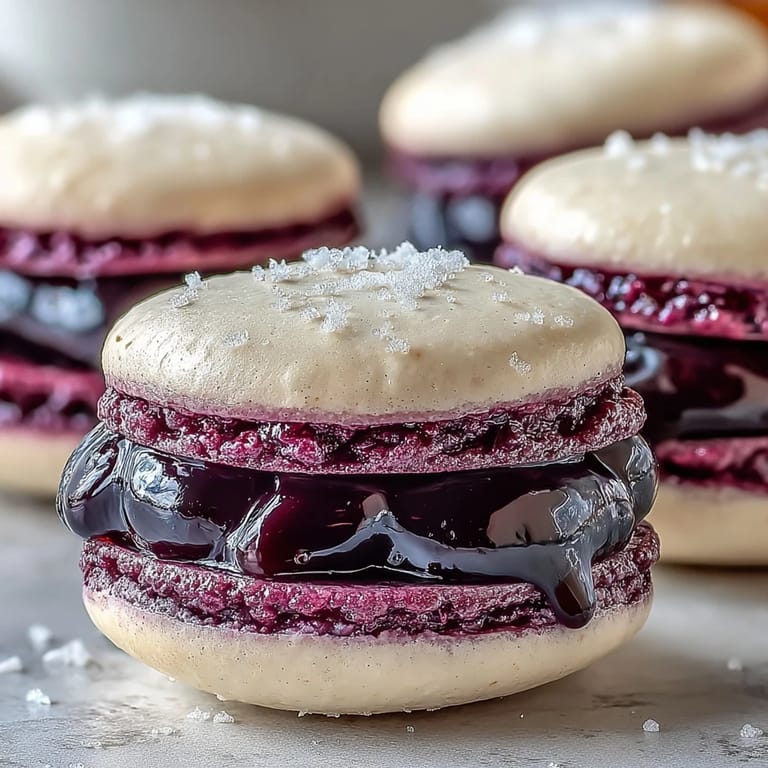
- Pair up your cooled shells by size, pipe a small dollop of ganache onto one shell of each pair, then gently sandwich it with the second shell, pressing down just enough to bond them without squishing out all the filling. You'll develop a feel for the pressure needed.
- Age them properly:
- Place the assembled macarons in an airtight container and refrigerate for at least 24 hours—this maturation time allows the shells to soften slightly and the flavors to deepen and marry together beautifully. Bring them to room temperature before serving.
 Pin
Pin There was a moment while piping these for the first time when I realized I'd stopped thinking about whether they'd work and started thinking about how beautiful they looked on the tray—and that's when I knew I'd finally understood what macarons are really about. They're not just a test of technique; they're an exercise in trusting the process and celebrating small victories.
The Science Behind the Ruffles
Those signature ruffled feet that make macarons instantly recognizable aren't just decoration—they're a sign that your technique worked perfectly. The resting period before baking allows a skin to form on the surface of the shells, which creates pressure underneath during baking and forces the batter to expand upward and outward, forming those delicate frills at the base. When this works, it's genuinely magical to watch.
Why Blackcurrant Belongs Here
Blackcurrant is simultaneously tart, floral, and deeply fruity in a way that feels almost mysterious on the palate, which is exactly why it pairs so perfectly with the delicate, slightly sweet almond shells. The lemon juice in the ganache acts as an amplifier, making the blackcurrant flavor pop without overwhelming the delicate cookie structure. This flavor combination feels sophisticated without being pretentious, which is honestly my favorite kind of dessert.
Troubleshooting and Next Time
If your macarons came out hollow or with no ruffles, your oven was likely too cool or you needed more resting time before baking. If the shells cracked, your oven was too hot or you skipped the resting period—both incredibly easy fixes for the next batch. If the filling leaked out, your ganache was too thin when you piped it, so let it cool a bit longer next time and you'll be golden.
- Keep notes about timing and oven behavior—your specific oven is unique, and those notes become your secret guide.
- Fresh or frozen blackcurrants can be blended and strained if you can't find purée, and cassis liqueur is a respectable substitute when nothing else is available.
- Macarons are at their absolute best 1 to 2 days after assembly, when the shells have softened slightly and the ganache has melded with them.
 Pin
Pin These macarons demand patience and precision, but once you understand what they're asking for, you'll make them again and again. There's genuine joy in creating something so refined that looks like it came from a Parisian pâtisserie, all from your own kitchen.
Recipe Q&A
- → Why must egg whites be aged before making macarons?
Aging egg whites for 24-48 hours in the refrigerator allows them to lose moisture and become more stable. This helps achieve stiffer, glossier peaks when beating, resulting in stronger meringue that holds its shape better during piping and baking.
- → How do I know when the macaron batter is properly mixed?
The batter is ready when it flows in thick ribbons off your spatula and you can draw a figure-8 without the stream breaking. Overmixing makes shells flat and spread too much, while undermixing leaves lumpy tops. The consistency should be lava-like, not runny or stiff.
- → What is the purpose of letting macaron shells rest before baking?
Resting shells for 30-45 minutes allows a skin to form on the surface. This skin traps steam during baking, creating the characteristic smooth top and ruffled feet. If shells feel tacky when touched lightly, they need more resting time.
- → Can I substitute the blackcurrant purée with other fruits?
Yes, you can replace blackcurrant purée with other tart fruit purées like raspberry, passion fruit, or lemon. Adjust sugar in the ganache slightly if using sweeter fruits. The key is using strained purée without seeds for smooth texture.
- → Why do macarons need to refrigerate for 24 hours after assembly?
Refrigeration allows moisture from the ganache to soften the shells slightly, creating the signature chewy interior with crisp exterior. This resting period also lets the blackcurrant flavor meld with the almond shells for balanced taste in every bite.
- → What causes macaron shells to crack or hollow?
Cracking often comes from undermixed batter, insufficient resting time, or oven temperature fluctuations. Hollow shells typically result from overmixed batter or incorrect oven temperature. Use an oven thermometer and follow the macaronage technique precisely.