 Pin
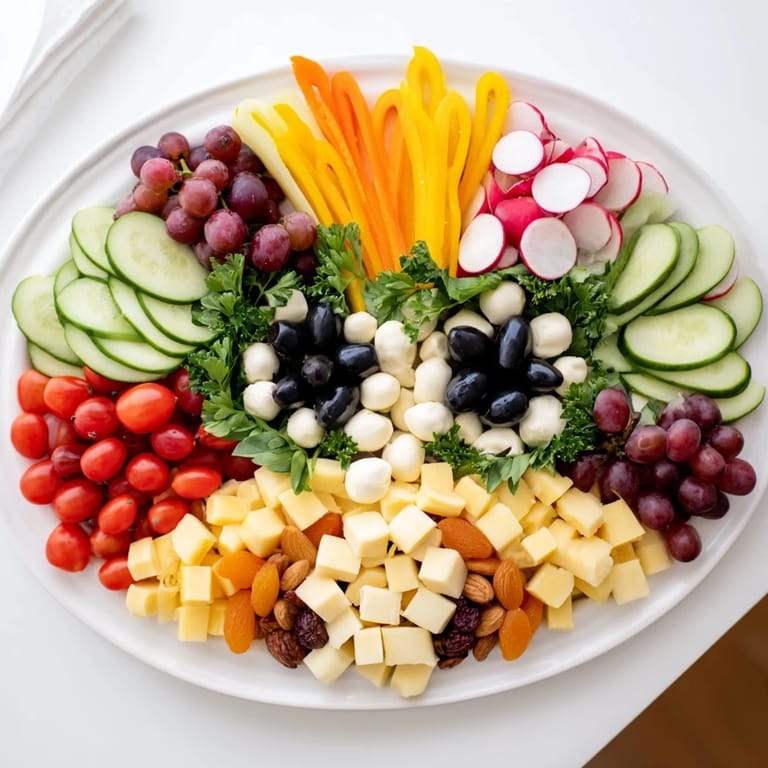
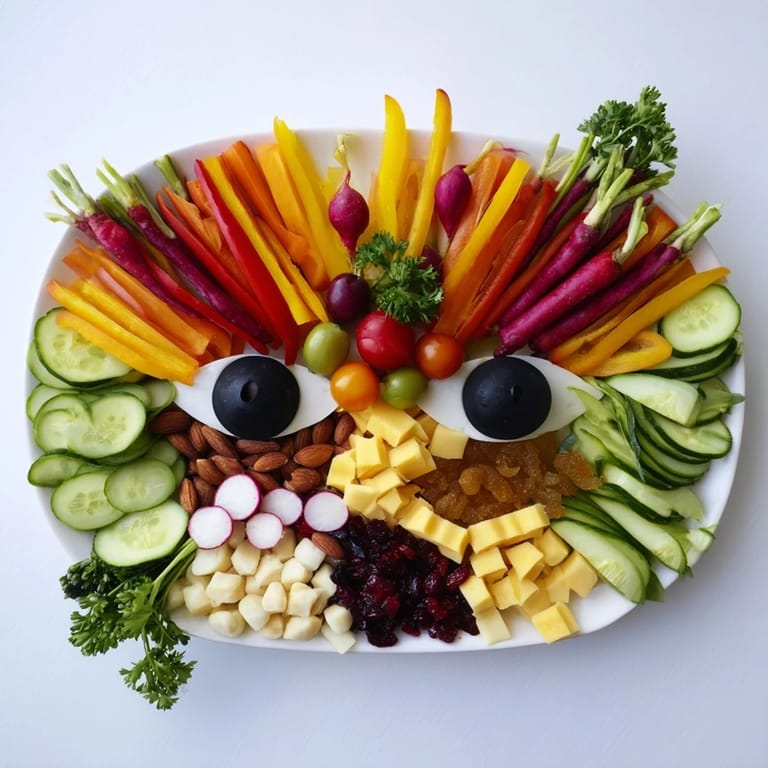
Pin I'll never forget the first time I created a masquerade mask on a platter for a New Year's Eve gathering at my apartment. My friend Sarah arrived early and gasped when she saw the colorful vegetables and cheeses fanned out in that dramatic symmetry, with olives staring back like mysterious eyes. She said it looked too beautiful to eat—but of course, everyone dove in within minutes. That moment taught me that food arranged with intention becomes an experience, not just sustenance. Now, whenever I want to turn a simple appetizer into something memorable, I think of that mask and how it made my guests feel like they were attending something truly special.
What I love most is watching people approach the board tentatively, uncertain where to start, and then watching their faces light up as they realize they can take whatever appeals to them. There's something generous about a platter arranged this way—it says you anticipated people's different tastes and made space for everyone at your table.
Ingredients
- Large green or black olives, pitted (2 whole): These become the mask's hypnotic eyes, so choose ones that look striking and have good depth
- Cucumber slices (1 cup, thinly sliced): The palest, coolest element that creates those feathered lines radiating outward—slice them on a mandoline if you want them gossamer-thin
- Colorful bell pepper strips (1 cup): Red, yellow, and orange create the warmth that makes the whole mask come alive, so choose peppers that are truly vibrant
- Cherry tomatoes, halved (1/2 cup): These add jewel-like pops of color and a hint of sweetness to balance the savory elements
- Red radish slices (1/2 cup): Don't skip these—their peppery bite and bright pink rounds add sophistication to what could otherwise feel too sweet
- Baby carrots, halved lengthwise (1/2 cup): Their natural sweetness and orange glow anchor one side of the mask beautifully
- Seedless grapes, red or green (1/2 cup): These roll around like little treasures and offer unexpected bursts of juice
- Assorted cheeses, cubed (1 cup): Cheddar, Gouda, and Swiss create pockets of creaminess—don't use anything too soft or it'll look sad
- Mini mozzarella balls (1/2 cup): These act like little jewels scattered throughout, adding moisture and richness in every bite
- Nuts—walnuts, almonds, or pistachios (1/2 cup): Toast them lightly if you want them to stand out more, or leave them raw for delicate flavor
- Dried fruits—apricots, cranberries, or figs (1/4 cup): These add pockets of concentrated sweetness and chewiness that keeps people reaching back
- Crackers or breadsticks (1/2 cup, optional): Use sturdy ones that won't shatter—they frame the lower edge like the mask's elegant border
- Fresh herbs for garnish: Parsley for its feathery texture, basil for freshness, dill for sophistication—use what makes you happy
Tired of Takeout? 🥡
Get 10 meals you can make faster than delivery arrives. Seriously.
One email. No spam. Unsubscribe anytime.
Instructions
- Choose your canvas:
- Select a large serving board, preferably oval or rectangular so you can create that mask silhouette. I always wipe mine with a barely damp cloth first so everything stays pristine and colors pop.
- Position the eyes:
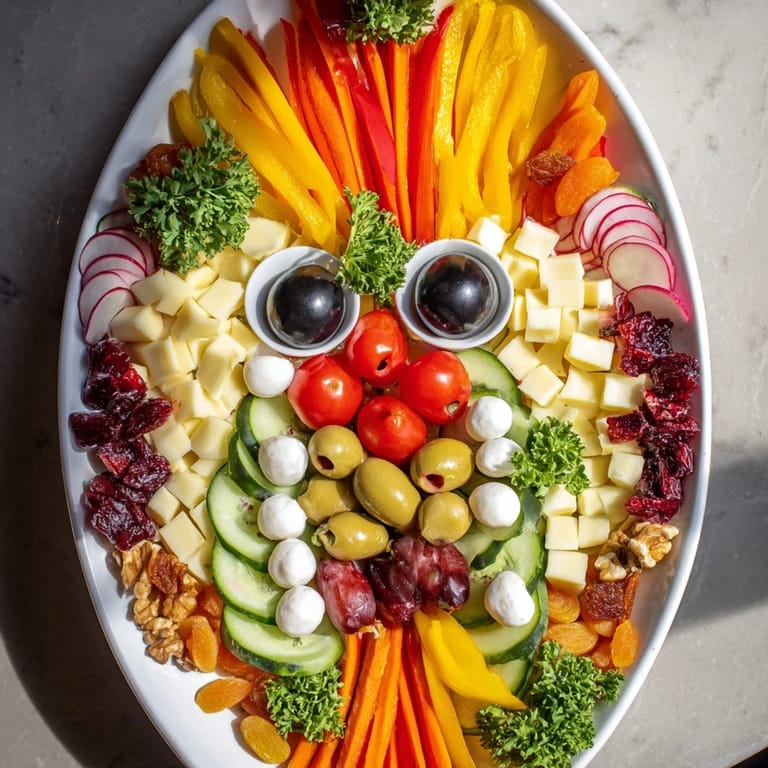
- Place your two olives or cheese cubes near the center-top, spaced about 4 inches apart horizontally. These are the soul of your mask—arrange them with intention. If using olives, position them pit-side up so that dark opening really commands attention.
- Fan out the first layer:
- Starting above and around those eyes, begin creating arcs with your most colorful vegetables—bell peppers first, then cucumber slices layered so they catch the light. Work outward and upward like you're drawing theatrical plumage. You're creating drama here, so don't be shy with the color.
- Build the texture:
- Tuck cheese cubes and mozzarella balls throughout the vegetable sections. These pockets of cream and white break up the intensity and give people different things to discover as they look closer.
- Fill the gaps with intention:
- Scatter nuts and dried fruits where you see blank spaces. A cluster of walnuts next to bright red peppers, golden apricots near the pale cucumber—think about how each element makes the next one shine brighter.
- Frame the edges:
- Arrange crackers or breadsticks along the bottom edge or sides, creating a defined border that makes the whole thing feel complete and purposeful.
- Add the flourish:
- Scatter fresh herbs and edible flowers across the entire arrangement. This is where it transforms from beautiful to magical—let the green herbs float across the colors like final brushstrokes on a masterpiece.
- Serve with ceremony:
- Bring it to the table while it's still fresh and let people gather around it. The moment of revelation is part of the magic.
 Pin
Pin I think about the dinner parties where someone said, 'I almost didn't want to eat it because it was so beautiful.' That's when you know you've created something that transcended being just food. It became a moment, a memory, a conversation starter. That's what this mask does.
Making It Personal to Your Guests
This is the beautiful thing about a platter—it can tell the story of who's coming. Got a friend who doesn't eat dairy? Skip the cheese and mozzarella, load up on nuts and grapes instead. Someone who loves olives? Give them a whole section of different varieties in the mix. For non-vegetarian friends, you can tuck smoked salmon, shrimp, or prosciutto into the vegetables and suddenly it's a completely different experience for them. The mask works because it accommodates everyone's story.
The Secret of Visual Drama
I learned this the hard way after my first attempt looked more like a sad salad board than a masquerade fantasy. The magic isn't in having everything—it's in the symmetry and the repetition. When you fan vegetables in arcs, when you create balance with color on each side, when you repeat a color theme throughout, suddenly your eye follows a rhythm and the whole thing feels intentional. Asymmetry reads as accident; symmetry reads as artistry. Spend time getting the vegetable arcs even and mirrored, and the rest will fall into place.
Serving and Storage
Here's what I've learned about the practical side: serve this immediately after assembling it, and it stays gorgeous for about two hours before the vegetables start to weep and the colors begin to muddy together. If you absolutely must make it ahead, arrange everything except the most delicate herbs and flowers, cover it loosely with plastic wrap, and add those final garnishes when your guests arrive. The olives stay perfect indefinitely, the nuts won't soften, and the heartier vegetables like carrots and peppers stay crisp for hours, but the cucumber and fresh herbs give up the ghost quickly.
- Keep a small bowl of your best olive oil mixed with fresh lemon juice nearby for people to drizzle if they want
- Have small plates and napkins ready because this isn't finger food—well, it is, but people will want somewhere to arrange their selections
- If serving with dips, place them in small bowls positioned at the sides so people can access them without disrupting the arrangement
 Pin
Pin This mask teaches us something beautiful about hospitality—that effort in presentation is really just effort in saying 'you matter.' Someone will remember this platter long after they've forgotten what else was served that night.
Recipe Q&A
- → What ingredients form the 'eyes' of the platter?
Two large olives or small cubes of firm cheese such as cheddar or gouda are used to create the eye openings at the center top of the board.
- → Can this platter be adapted for vegan diets?
Yes, omit all cheeses and replace them with marinated tofu cubes to make a vegan-friendly arrangement.
- → How can I add protein to this platter?
Including cooked shrimp, smoked salmon, or cured meats can add protein and accommodate non-vegetarian guests.
- → What types of nuts and dried fruits work best here?
Walnuts, almonds, or pistachios provide a crunchy contrast, while dried apricots, cranberries, or figs add sweet, chewy notes.
- → Is this platter suitable for gluten-free diets?
Yes, simply omit the crackers or breadsticks, or replace them with gluten-free options to maintain gluten-free status.
- → How should the platter be garnished for presentation?
Fresh herbs like parsley, basil, or dill alongside edible flowers add a festive and colorful finishing touch.