 Pin
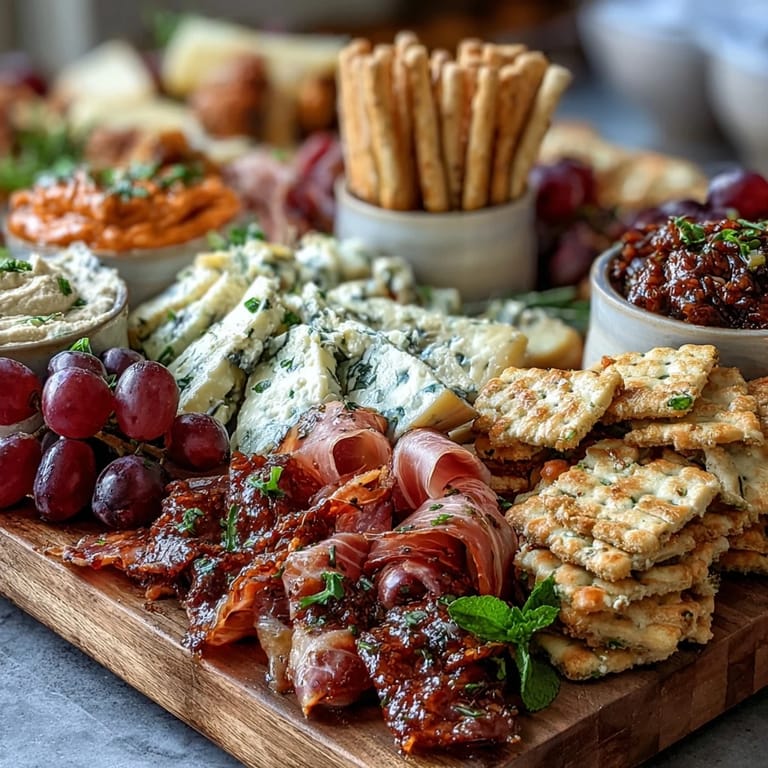
Pin My neighbor texted me three days before her housewarming asking if I could bring something to share, and I spent an embarrassing amount of time overthinking it before realizing a charcuterie board was the move. There's something about arranging cured meats and cheeses on a board that feels both effortless and impressive, like you've unlocked some secret kitchen confidence. Walking into her new place with that board tucked under my arm, I watched people gravitate toward it immediately, abandoning small talk for slivers of prosciutto and wedges of brie. It became clear that day that the best party food isn't always the most complicated—sometimes it's just about creating a beautiful spread where everyone finds something they love.
I learned the magic of a charcuterie board at a friend's dinner party where her teenage son ate more from that one platter than from three other dishes combined. She caught my eye across the room with this knowing smile, like we'd both just discovered the same hack. The board stayed out for the entire evening, and guests kept drifting back to it between courses, which taught me that sometimes the simplest offerings become the most memorable ones.
Ingredients
- Prosciutto (120 g): Buy it sliced fresh at the deli counter if you can—it'll fold more elegantly than pre-packaged and tastes noticeably better when arranged loosely so air reaches every layer.
- Salami (120 g): Choose a good quality version with visible fat marbling, as that's where the flavor lives and what keeps it from tasting too lean.
- Smoked ham (120 g): This acts as your bridge flavor, familiar enough that it brings people in but smoky enough to add complexity.
- Chorizo slices (100 g): The spicy element that makes people pause and notice, adding visual warmth with its red color.
- Brie (150 g): Let it sit out for 15 minutes before serving so the paste softens slightly and becomes creamy, which makes spreading it actually enjoyable.
- Aged cheddar (150 g): Cutting it into cubes instead of slices gives it a different visual appeal and makes it feel more accessible to grab.
- Gouda (120 g): Its subtle sweetness bridges the gap between savory cured meats and the sweeter dried fruits beautifully.
- Blue cheese (100 g): Use a good one—the funky intensity makes people either love it immediately or skip it entirely, which is exactly how blue cheese should work.
- Hummus (100 g): Make your own if time allows, but a quality store-bought version works just fine when you've already invested effort elsewhere.
- Tzatziki (100 g): The cool, herby flavor offers a palate reset between bites of richer items.
- Roasted red pepper dip (100 g): Slightly sweet and smoky, it pairs gorgeously with vegetables and lighter crackers.
- Assorted crackers (150 g): Mix textures—crispy, delicate, sturdy—so people have options depending on what they're pairing them with.
- Baguette (100 g): Slice it no more than two hours before serving or it'll dry out and become less pleasant to bite through.
- Breadsticks (100 g): They're sturdy vessels for dips and take up visual space without requiring much thought.
- Red grapes (1 cup): The sweetness and juiciness provide contrast to salty meats and sharp cheeses.
- Green grapes (1 cup): A subtle visual variation that lets you create balance across different sections of the board.
- Cherry tomatoes (1 cup): Their bright color catches the eye, and their slight acidity cuts through richness.
- Cucumber slices (1 cup): Cool and refreshing, they give people something light to nibble between heavier items.
- Red bell pepper (1 whole): Slice it into long strips so it's visually striking and easy to grab with a hand full of dips.
- Baby carrots (1 cup): Sweet enough that even people who don't usually eat raw vegetables find themselves reaching for them.
- Mixed nuts (½ cup): Toast them lightly if they aren't already, as this deepens their flavor and makes them feel more intentional.
- Olives (½ cup): Get a mix of green and black varieties—the contrast in flavor and appearance matters more than you'd think.
- Dried apricots (¼ cup): Their sweetness and chewiness against salty cured meat is an underrated combination.
- Dried figs (¼ cup): They add sophistication through their deep color and subtle earthiness.
- Fresh herbs: Rosemary and thyme sprinkled across the board make it feel like you actually planned this, even if you assembled it 20 minutes before guests arrived.
Tired of Takeout? 🥡
Get 10 meals you can make faster than delivery arrives. Seriously.
One email. No spam. Unsubscribe anytime.
Instructions
- Start with your anchor:
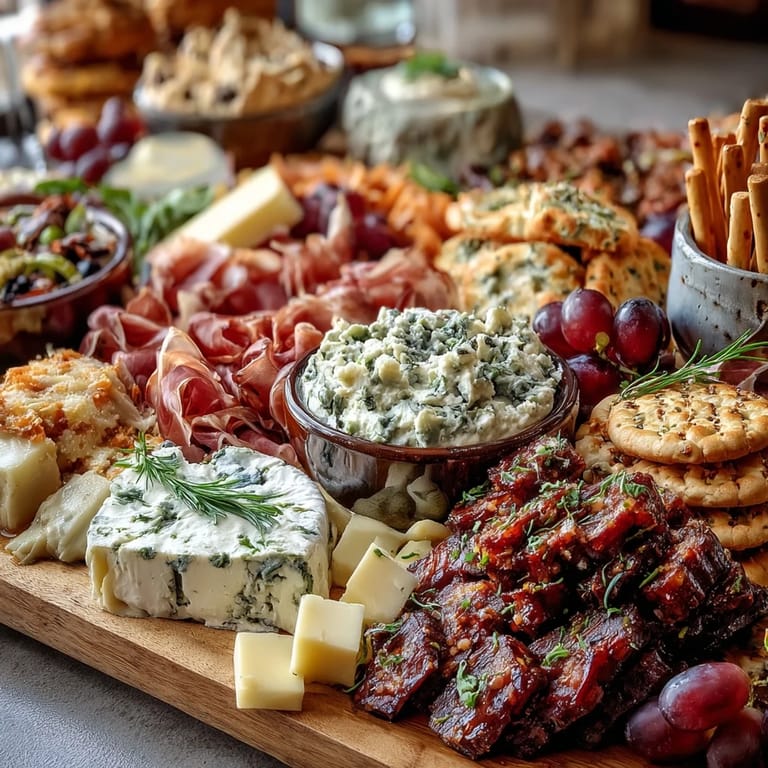
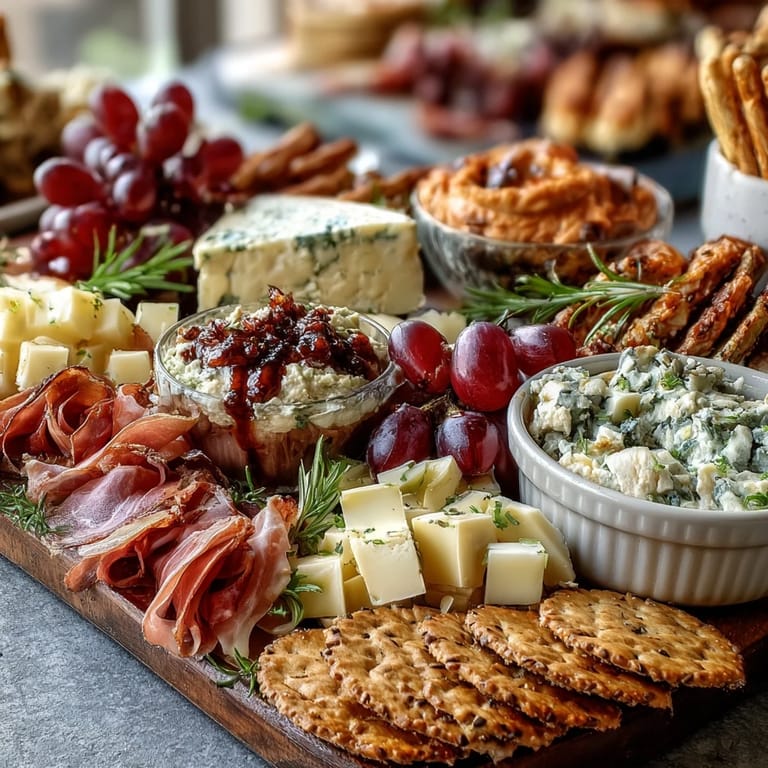
- Arrange the cured meats in loose, overlapping folds across roughly a third of your board, leaving enough space so each piece is visible rather than piled into one dense section. Think of it like you're creating a landscape where each fold catches light differently.
- Create cheese clusters:
- Place each cheese type in its own small area, spacing them so they're not competing for attention but also distributed so someone doesn't have to reach across the entire board to find what they want. If a cheese needs a knife, place one nearby so people know it's intentional rather than figuring it out.
- Nestle in the dips:
- Pour dips into small bowls and position them where they're visible but won't get in the way of the main attractions. I usually place them near crackers and vegetables since that's what people will be dipping anyway.
- Build the cracker sections:
- Fan out different cracker varieties and bread in sections, overlapping them slightly so they look abundant without taking up tons of space. Variety in shape and color here makes the board feel intentional rather than random.
- Fill with fruits and vegetables:
- Use grapes, tomatoes, cucumber, and pepper to fill the visual gaps while creating paths that guide the eye around the board naturally. Their colors should feel distributed rather than concentrated in one corner.
- Scatter the finishing elements:
- Drop nuts, olives, dried apricots, and figs into small clusters throughout, using them to bridge different sections and add visual texture. They're not just flavor—they're what makes someone look at the board and think someone really cared about this.
- Garnish with intention:
- Sprinkle fresh herbs across the top, focusing on areas where they'll be noticed—over cheeses, between meats, wherever the board looks a little bare. This final touch is the thing that transforms it from nice to beautiful.
 Pin
Pin There's a moment during every gathering where someone who showed up stressed about work relaxes completely, standing in front of a charcuterie board and just... making themselves a small plate. That shift from anxious to present is partly about the food itself, but mostly about the permission a board gives you to slow down and choose exactly what you want. I've watched people discover flavor combinations they'd never thought of by accident, and that's when I realized these boards are really about creating space for good things to happen.
How to Build the Perfect Board Layout
The secret isn't symmetry—it's creating sections without making it look like you divided a spreadsheet into six boxes. I start by placing the three heaviest components first: the cured meats, the cheeses, and the dips. Once those are anchored, everything else is about filling spaces and creating balance. Think in terms of flow rather than checklist, as if someone's eye and hand will naturally wander from meats to cheese to vegetables and back again without ever feeling lost.
Temperature and Timing Matters More Than You'd Expect
Brie that's too cold tastes chalky instead of creamy, which defeats the entire point of having it. I pull mine out 15 minutes before serving, and suddenly it becomes something people spread instead of stare at. The same goes for cured meats—they taste better when they're not ice-cold, as their flavors open up slightly. The first time I learned this was embarrassing because I'd been serving beautiful boards where the best ingredients were essentially locked away by temperature.
The Details That Actually Get Noticed
People remember cheese knives left beside soft cheeses, the fact that olives were pitted, and that someone cared enough to slice things at different thicknesses. They don't necessarily articulate these things, but they taste them in how easy the board is to navigate. I've also learned that dried fruits scattered throughout matter far more than if you clump them together, since people discover them gradually rather than picking them all immediately.
- Always have extra small napkins nearby since people will grab multiple items and need somewhere to put them while deciding what to try next.
- Keep a small serving spoon with the olives so people aren't fishing around with their fingers wondering if they're supposed to just take one.
- Position the board somewhere people can access it without blocking traffic, as charcuterie boards are meant to invite casual grazing rather than formal plating.
 Pin
Pin A charcuterie board is somehow both the easiest and most elegant thing you can put on a table, which is probably why it's become a staple at celebrations. It's a way of saying you wanted people to feel welcome without making it all about you or what you cooked.
Recipe Q&A
- → What types of meats work best for this board?
Cured meats like prosciutto, salami, smoked ham, and chorizo provide a flavorful and savory base that complements cheeses and fresh produce.
- → Can I substitute the dips with other options?
Absolutely, dips like hummus and tzatziki are versatile. You can also include roasted red pepper dip or others based on personal preference.
- → How should I arrange the board for best presentation?
Place meats in loose folds or rolls, spread cheeses evenly, nestle dips in bowls among other items, and fan out crackers and breads to create an inviting layout.
- → Are there suggestions for accommodating dietary restrictions?
Yes, substitute meats or cheeses as needed, include gluten-free crackers, and offer vegetarian-friendly options to suit guests.
- → What are good pairings for this spread?
A crisp white wine or a light red wine pairs beautifully, enhancing the variety of flavors and textures.