 Pin
Pin The first time I made pavlova, I was greeted by a swirl of sugary air that seemed to linger in the kitchen long after I’d finished whipping the meringue. My playlist was humming away, and I found myself twirling the spatula while clouds of egg whites transformed under the mixer. It wasn’t a planned occasion—just an impulsive experiment spurred by a heap of spring berries on the counter. There’s something magical about seeing the meringue puff up and crackle gently as it cools, inviting both anticipation and a touch of anxiety. The kitchen felt lighter, as if the dessert itself was lifting the mood with its billowy charm.
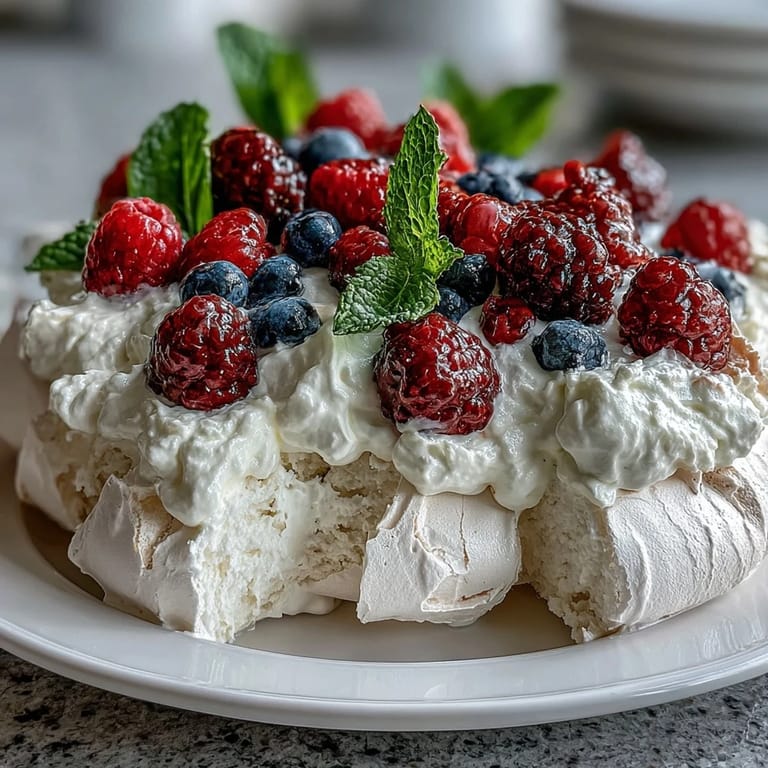
One sunny afternoon, I decided to bake pavlova for my friends as we gathered for an impromptu garden brunch. I remember the laughter echoing out the back door while I debated whether to add extra strawberries. When I unveiled the finished pavlova, still cool from the oven, everyone paused mid-conversation to admire its crown of whipped cream and glossy berries. There was a momentary hush—then forks started clinking and we barely left any crumbs behind. Serving pavlova made me realize how a homemade dessert can turn a simple gathering into something memorable.
Ingredients
- Egg whites: Room temperature egg whites whip up higher and fluffier; I always check for any stray yolk because even the tiniest bit can ruin the peaks.
- Superfine sugar: This dissolves more easily into the meringue, ensuring a glossy finish and crisp shell—don’t substitute with regular granulated unless you pulse it in a blender first.
- Cornstarch: Helps to create that marshmallowy interior, so don’t skip it; a little goes a long way.
- White vinegar: Balances sweetness and stabilizes the meringue, giving it structure.
- Vanilla extract: I use pure vanilla for a subtle depth of flavor; synthetic vanillin just doesn’t give the same effect.
- Heavy whipping cream: Cold cream whips best; sometimes I chill the bowl and beaters to speed up the process.
- Powdered sugar: Makes the whipped cream silky and sweet without grittiness.
- Fresh berries: My favorite mix includes strawberries, blueberries, raspberries, and blackberries, all sliced or left whole for color and texture.
- Fresh mint leaves: Optional, but they add a pop of color and a hint of fragrance on top.
Tired of Takeout? 🥡
Get 10 meals you can make faster than delivery arrives. Seriously.
One email. No spam. Unsubscribe anytime.
Instructions
- Get the oven ready:
- Preheat to 275°F (135°C) and line your baking sheet, flipping the parchment after marking a circle guide so the pencil doesn’t touch the food.
- Whip those egg whites:
- Use a squeaky-clean bowl and beat until the whites look foamy and hold soft peaks—listen for the subtle change in sound as they thicken.
- Sweeten and whip:
- Add the sugar slowly, tablespoon by tablespoon, and feel the texture transform to glossy, thick mountains; take your time for perfection.
- Gently fold and finish:
- With a spatula, carefully fold in cornstarch, vinegar, and vanilla until just combined—don’t deflate your beautiful meringue.
- Shape the nest:
- Spoon the meringue onto your circle, build up the edges to create a shallow well, and don’t worry about perfection; rustic shapes are charming.
- Bake and cool:
- Let the pavlova bake for 1 hour 15 minutes, then switch off the oven and let it cool inside with the door ajar; you’ll hear faint pops as the shell crisps.
- Whip the cream:
- Beat cold heavy cream with powdered sugar and vanilla just until soft peaks form; stop before it turns grainy.
- Assemble and decorate:
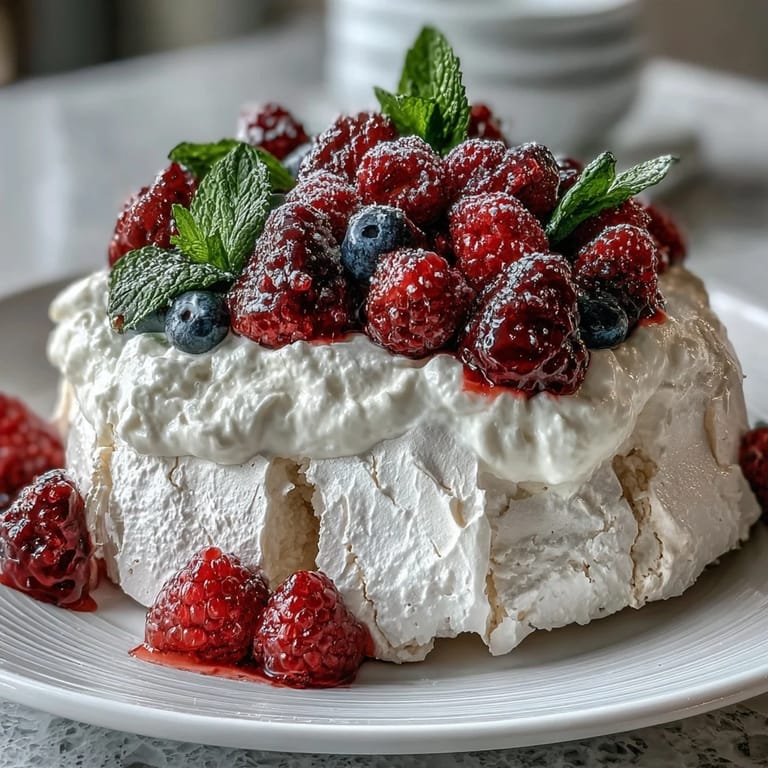
- Transfer cooled meringue to a platter, swirl the whipped cream on top, and arrange berries in generous handfuls for that cascade of color.
- Garnish and serve:
- Add mint leaves if you have them, slice, and enjoy right away for the perfect contrast of textures.
 Pin
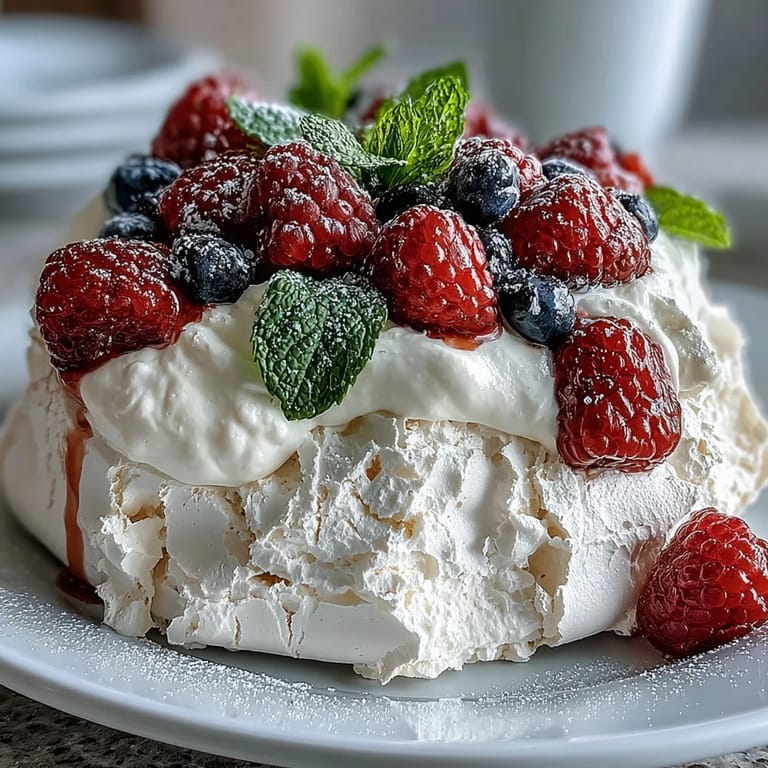
Pin Once, after a rainy spring dinner, the pavlova was the conversation starter—its beauty made everyone pause, but what lingered was the sheer delight of its texture and flavor. It’s that kind of moment where the dessert seems to carry the mood, turning simple berries and cream into a celebration at the table.
How to Handle Mistakes Without Stress
I’ve had meringue turn runny because the bowl wasn’t perfectly dry, and I’ve learned not to panic. If the pavlova cracks a little or looks rustic, I simply pile on extra cream and berries—it becomes a secret advantage. It’s easy to forget that imperfect pavlova is still deliciously perfect when shared.
Choosing the Best Berries for Pavlova
After trying all sorts of fruit, my favorite remains a mix of tart raspberries and sweet strawberries, especially when they’re in season. The berries should be ripe but not overripe—otherwise, they’ll leak juice and make the cream runny. I sometimes toss them with a touch of sugar if they need extra sweetness.
Last-Minute Serving Tips for Wow Factor
Just before serving, I like to stack the berries in a casual heap rather than fuss over symmetry; it always looks inviting. Let the pavlova sit for about five minutes after assembling to let the cream meld slightly, but don’t wait too long or the meringue will lose its crispness. Even a simple sprig of mint can elevate the look far beyond the effort.
- If berries appear dull, brush them lightly with honey for shine.
- Slice the dessert with a sharp, serrated knife for clean cuts.
- Don’t refrigerate assembled pavlova—it becomes soggy fast.
 Pin
Pin Baking pavlova always leaves the kitchen smelling sweet and the table full of smiles. Enjoy the mess and the magic—this dessert is meant for sharing.
Recipe Q&A
- → How do I achieve a crisp pavlova exterior?
Beat egg whites to stiff peaks and bake at a low temperature to dry out and crisp the meringue shell.
- → Can I use other fruits for topping?
Swap berries with any seasonal fruit, such as mango, kiwi, or peaches, for a different flavor profile.
- → Why add cornstarch and vinegar?
Cornstarch and vinegar stabilize the meringue, creating a softer center and crisp outer shell.
- → Is pavlova suitable for gluten-free diets?
Yes, pavlova is naturally gluten-free, but always check labels on powdered sugar and flavorings.
- → How long can pavlova be stored?
Store unadorned pavlova in an airtight container for up to two days. Add toppings just before serving.
- → Can the whipped cream be flavored?
Add extracts like almond or lemon, or infuse with citrus zest for a customized touch to the cream layer.