 Pin
Pin My grandmother's kitchen in Cairo always smelled like honey and rose water on Friday afternoons, and Basbousa was her quiet ritual. She'd mix the semolina and coconut with such certainty, as if the recipe lived in her hands rather than in her head, and I'd watch from the corner with a cup of tea, understanding only later that this wasn't just dessert—it was how she showed love. The first time I made it myself, I was nervous about the syrup, convinced I'd mess up the timing, but when that golden cake met the cool liquid and everything came together, I finally understood her hands.
I made this for a group of friends during a chaotic dinner party, and someone asked for the recipe before they'd even finished their first piece. There's something about warm Basbousa with strong coffee that makes conversation slower, easier, like everyone collectively decides to pause.
Ingredients
- Fine semolina: Use fine, not coarse—it dissolves into the cake and creates that moist crumb texture that makes Basbousa different from regular cakes.
- Desiccated coconut: Unsweetened matters here because the syrup brings all the sweetness; sweetened coconut makes it cloying and throws off the balance.
- Plain yogurt: This is your secret weapon—it adds moisture and tang that keeps the cake from tasting one-dimensional.
- Melted butter or ghee: Ghee gives it a richer, nuttier flavor if you have it, but regular butter works perfectly fine.
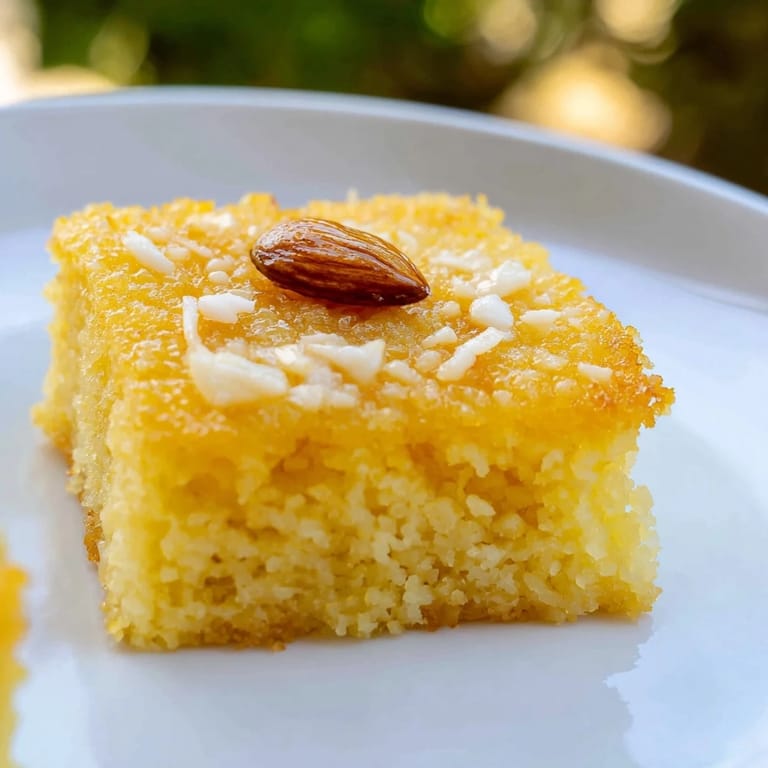
- Whole almonds: Leave them whole and blanched; they're both decoration and insurance that each piece feels special.
- Rose water or orange blossom water: Optional but worth hunting down—even a small bottle transforms the syrup from sweet to ethereal.
Tired of Takeout? 🥡
Get 10 meals you can make faster than delivery arrives. Seriously.
One email. No spam. Unsubscribe anytime.
Instructions
- Mix the dry base:
- Combine semolina, sugar, coconut, baking powder, and salt in a large bowl, stirring until the texture is even and the coconut is distributed throughout. This part takes about two minutes and feels almost meditative.
- Add the wet ingredients:
- Pour in yogurt, melted butter, and vanilla, then stir until a thick, sticky batter forms that holds together when you squeeze it. Don't overmix—just combine until everything is incorporated and the batter looks unified.
- Spread and score:
- Press the batter evenly into a greased 9x9 inch pan using a spatula or damp hands, then use a sharp knife to score it into 12 squares or diamonds while it's still soft. The scoring matters because it's where the syrup seeps in and where you'll eventually cut.
- Garnish with almonds:
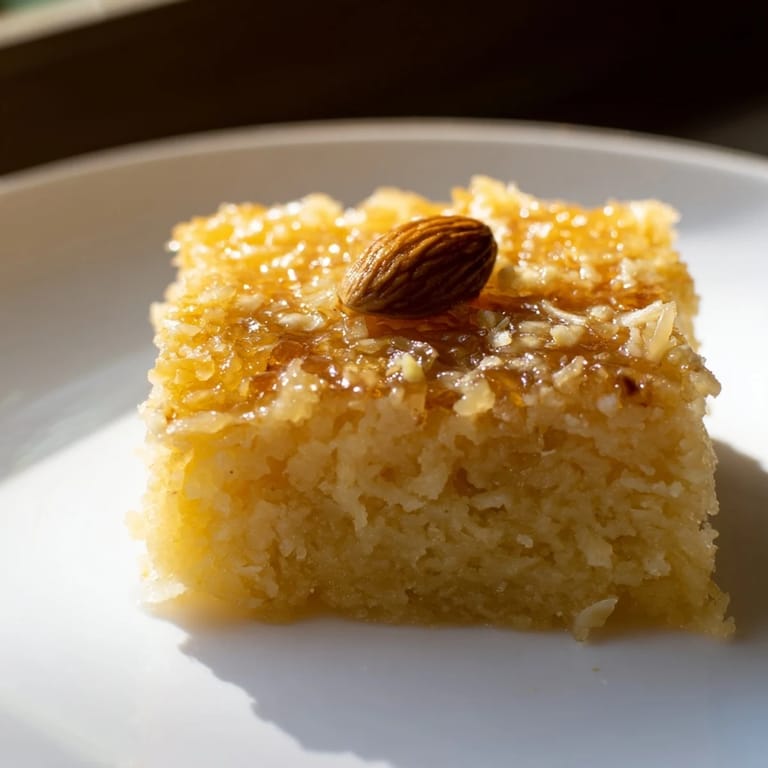
- Press one whole almond into the center of each scored piece—this both looks beautiful and signals that something special is inside.
- Bake until golden:
- Set the oven to 350°F (180°C) and bake for 30–35 minutes until the top is deep golden brown and a toothpick comes out clean from the center. The edges should feel set but the center still slightly yielding.
- Make the syrup while baking:
- In a saucepan, combine sugar, water, and lemon juice, bring to a boil, then simmer for 8–10 minutes until it thickens slightly and coats the back of a spoon. Remove from heat, let cool, and stir in rose or orange blossom water if using.
- Pour syrup on hot cake:
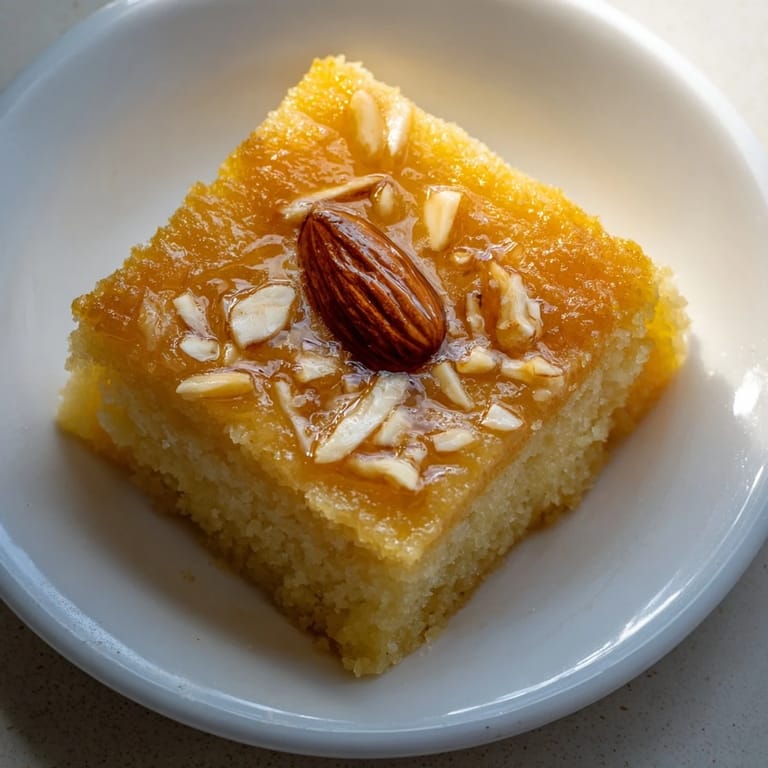
- The moment the Basbousa comes out of the oven, pour the cooled syrup evenly over the hot surface and watch it absorb—this temperature contrast is what makes the cake spongy and syrup-soaked rather than either too wet or too dry. Let it cool completely before re-cutting.
 Pin
Pin The moment I watched someone close their eyes while eating a piece with tea, I realized that good food is just timing and intention—semolina and sugar and coconut arranged so they make each other better. This cake does that quietly, without any fancy technique or complicated steps.
Why Basbousa Became My Go-To Dessert
It's one of those recipes that asks for almost nothing but gives back generously. You don't need specialty equipment, you don't need to whip anything or wait for yeast, and it tastes like you spent hours in the kitchen when you spent maybe forty minutes total. The first time I served it, I made it because I was too tired for anything ambitious, but my guests asked for the recipe—that's when I realized constraint can actually be a kind of creativity.
The Syrup is Everything
I used to think the syrup was just a finishing touch, but it's actually the entire soul of the dish. When it seeps into the warm cake, the semolina softens and the coconut becomes almost creamy, and suddenly you're eating something that tastes nothing like the dry mixture you put in the oven. The lemon juice cuts the sweetness just enough so your palate doesn't get tired, and rose water—if you use it—adds a whisper of something impossible to name.
Variations and Personal Touches
Once you understand the basic balance, this recipe welcomes experimentation without demanding it. Some days I make it exactly as written because the original is flawless; other days I've substituted sour cream for half the yogurt for richness, swapped pistachios for almonds, or added extra shredded coconut on top before baking for people who want an even stronger flavor. You can also play with the syrup by adding cardamom, using orange zest instead of orange blossom water, or making it less sweet if that matches your taste better.
- Sour cream makes the crumb tangier and denser if you want richness without using more butter.
- Pistachios are more delicate and slightly bitter in a way that makes the sweetness feel less heavy.
- Extra coconut on top before baking creates a crispier surface that contrasts beautifully with the moist inside.
 Pin
Pin This is the kind of recipe that reminds you why people bake in the first place: because sweetness and care and a little bit of tradition can turn flour and sugar into something worth remembering. Make it, share it, and let the syrup do its quiet work.
Recipe Q&A
- → What gives Basbousa its moist texture?
The combination of fine semolina, yogurt, and melted butter creates a tender and moist cake texture.
- → Can I use alternatives to the almonds for garnish?
Yes, pistachios or other nuts can be used to garnish and add a unique flavor and crunch.
- → How is the syrup prepared and used?
The syrup is made by boiling sugar, water, and lemon juice, then simmered until slightly thickened. It's poured over the hot cake to infuse sweetness and moisture.
- → What flavorings can enhance the syrup?
Rose water or orange blossom water can be added to the syrup for a fragrant floral aroma.
- → What is the best way to serve this dessert?
Serve Basbousa at room temperature alongside mint tea or Turkish coffee to complement its sweet, nutty flavors.
- → Can the yogurt be substituted for a different ingredient?
For extra richness, half of the yogurt can be replaced with sour cream without affecting the texture significantly.