 Pin
Pin I stumbled onto this idea while flipping through an old art history book at a friend's place, and somehow my brain made the leap from Celtic crosses to cheese platters. There's something about the symmetry that spoke to me—the way you could build something with four distinct voices speaking together around a quiet center. That night, I bought four completely different cheeses and spent an hour arranging them like I was composing a still life. Everyone who walked into that dinner immediately got it. The cross shape felt intentional without being fussy, elegant without trying too hard.
My sister brought her new partner to dinner last spring, and I wanted to do something that felt special but not stressful. I'd just learned this cheese board trick and thought the Celtic cross would be a conversation starter—something that felt thoughtful without being try-hard. As people reached for their first bites, someone asked about the geometry, and suddenly we were all talking about Celtic art and Irish heritage and why certain cheeses pair with certain wines. That platter became the thing that grounded the whole evening in a story bigger than just food.
Ingredients
- Irish cheddar, cubed: Sharp, crumbly, and deeply satisfying—it's your grounding point, the cheese that anchors the board with its bold character.
- Brie, sliced: Creamy and luxurious, it rounds out the board with softness and invites people to slow down a little when they taste it.
- Blue cheese, crumbled: The brave choice that shouldn't be underestimated—it adds intrigue and complexity, especially once you drizzle honey over it.
- Manchego, sliced: Nutty and buttery, it bridges the gap between subtle and bold and makes everyone wonder where that particular flavor comes from.
- Sour cream or Greek yogurt: The dip's backbone—yogurt gives you something a hair lighter and tangier if that calls to you more.
- Fresh chives, finely chopped: They're bright without demanding attention, just enough green to remind you this is alive and fresh.
- Lemon juice: A squeeze that wakes everything up and keeps the dip from tasting one-note.
- Seedless red grapes: They catch light and add a visual sweetness that balances the savory spread, plus they're a textural surprise against creamy cheese.
- Dried apricots: Chewy and concentrated, they sing when paired with blue cheese and give you a moment of brightness.
- Walnuts: Toasted warmth that grounds the board and gives hands something to reach for between bites of softer things.
- Honey: A drizzle of liquid gold over the blue cheese turns it from sharp into something almost dessert-like.
- Rustic crackers and baguette: Your vehicles for everything else—choose crackers with real texture, not the flavorless kind.
Tired of Takeout? 🥡
Get 10 meals you can make faster than delivery arrives. Seriously.
One email. No spam. Unsubscribe anytime.
Instructions
- Build your dip:
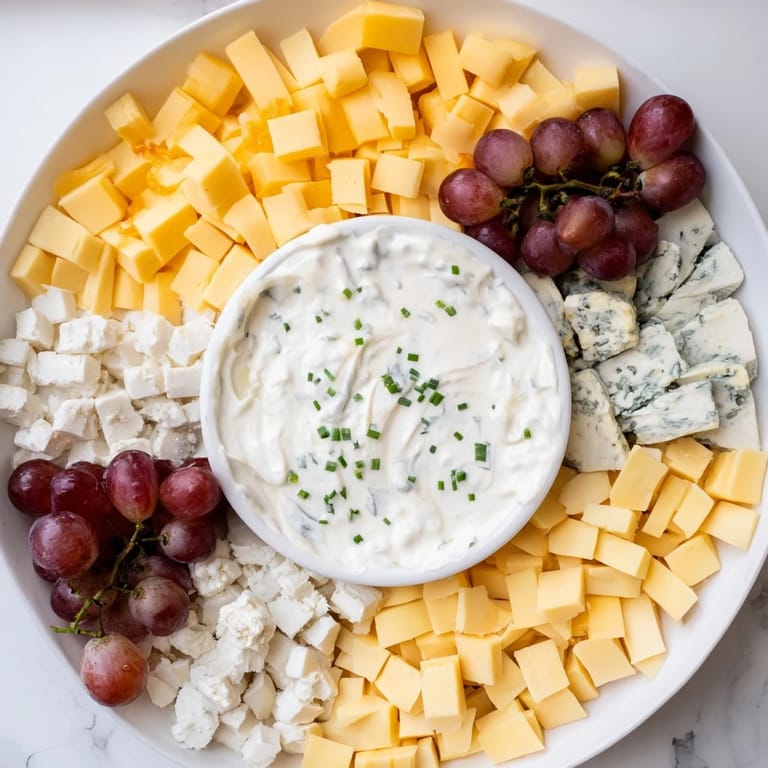
- Mix the sour cream or yogurt with your chopped chives, lemon juice, salt, and pepper until it tastes like something you'd want to eat by the spoonful. Spoon it into a small round bowl—this is your center, so make it count.
- Position the heart:
- Place that dip bowl smack in the middle of your large round platter, almost like you're planting a flag. This is your north star for everything that follows.
- Divide into four worlds:
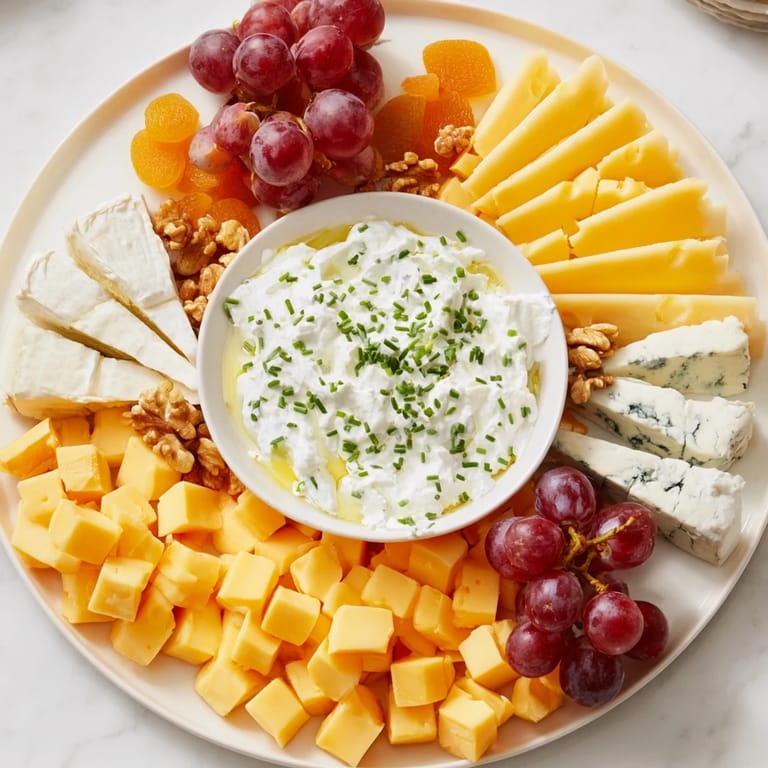
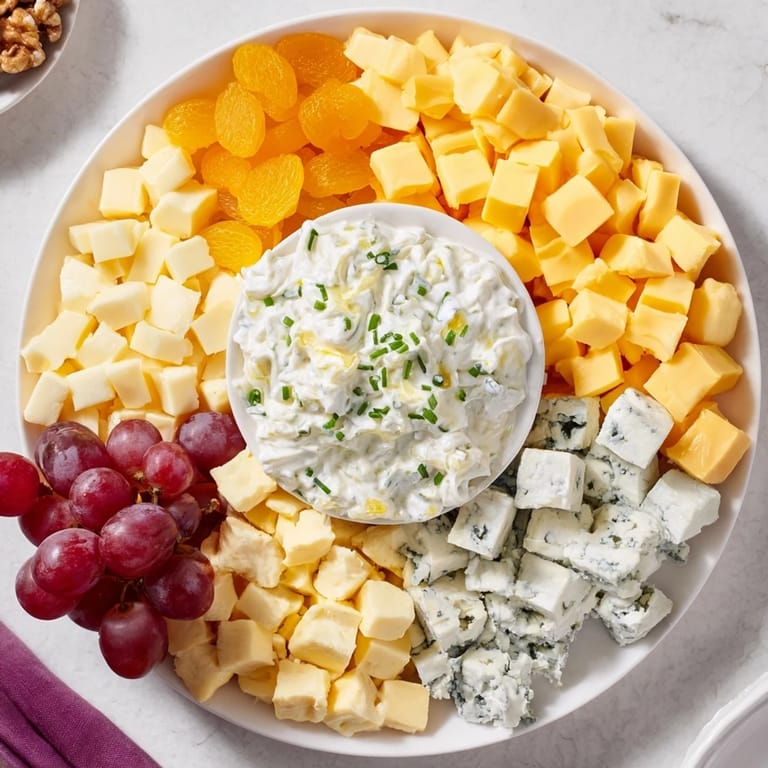
- Imagine lines running north-south and east-west from that center bowl, creating four equal quadrants. Each quadrant gets its own cheese, fanned or grouped however feels right to your eye.
- Fill the Irish cheddar quadrant:
- Cube your Irish cheddar and arrange it in the first quadrant, keeping the pieces bite-sized and inviting.
- Settle the Brie:
- Slice the Brie into elegant triangles and fan them into the second quadrant, letting them overlap slightly like they're dancing around each other.
- Crumble the blue cheese:
- Break your blue cheese into substantial, interesting pieces and arrange them in the third quadrant so people can actually pick them up without them crumbling to dust.
- Add the Manchego:
- Slice and arrange your Manchego in the fourth quadrant, giving it the same care and attention as the other cheeses.
- Fill the gaps:
- In the spaces between your four quadrants, scatter grapes, dried apricots, and walnuts in a way that feels intentional but not overthought. Let colors talk to each other.
- The honey moment:
- Drizzle honey lightly over the blue cheese quadrant—it should catch the light and invite people to try that combination first.
- Edge the board:
- Arrange your crackers and baguette slices around the outer perimeter of the platter, creating a border that frames everything inside.
- Bring everything into the room:
- Let the cheese sit at room temperature for at least thirty minutes before serving so each flavor can fully show up and say hello.
 Pin
Pin There's a moment right before everyone dives in where nobody's quite sure where to start, and the board just sits there looking beautiful. That moment never lasts long, but I love it every time—it's the platter doing exactly what I hoped, holding everyone's attention for just a beat.
Building Your Own Cross
The geometry of this platter is less about precision and more about intention. You're not trying to win a geometry prize; you're creating visual rhythm that makes sense to your eye. If one quadrant looks slightly larger than another, that's fine—your guests won't be measuring, they'll be noticing that you put thought into how things sit together. The cross shape is actually forgiving because the round platter works naturally with it, and cheese doesn't need to be perfectly aligned to look elegant.
Cheese Selection and Swaps
Irish cheddar, Brie, blue cheese, and Manchego work together because they each do something completely different—one's bold, one's soft, one's funky, one's nutty. But this is your board, so think about what makes sense for your guests and your moment. Swap the cheddar for Gruyère if that calls to you, or trade the blue for a sharper stilton. The only real rule is that you want contrast—if all four cheeses taste similar, the board loses its conversation. Consider what people around you actually enjoy eating, not what you think cheese boards should contain.
Timing and Wine Pairing
This whole thing comes together in about twenty minutes, which means you can assemble it while people are arriving and settling in, or finish it just before you want to serve. There's something grounding about putting it together in front of people—they see the intention and the care. For wine, think about brightness and freshness: a crisp Sauvignon Blanc, a light Pinot Noir, or even a crisp cider plays beautifully against the richness of the cheeses. Avoid anything too heavy or oaky—you want the wine to be a companion to the food, not to overwhelm it.
- Let cheeses come to room temperature about thirty minutes before guests arrive if you can plan ahead.
- If you're traveling with this board, assemble everything except the honey drizzle and add it once you're in your destination.
- Keep backup crackers and bread close by—people demolish these faster than you'd expect, and having more means nobody has to choose between their favorite cheese and bread.
 Pin
Pin This platter is my reminder that beautiful food doesn't need to be complicated—it just needs intention and things that actually taste good together. I hope someone you care about enjoys this as much as mine do.
Recipe Q&A
- → What cheeses are used in this platter?
Irish cheddar, brie, blue cheese, and manchego are featured to offer a variety of textures and tastes.
- → How is the central dip made?
The dip combines sour cream or Greek yogurt with fresh chives, lemon juice, salt, and pepper for a tangy complement.
- → What accompaniments enhance the cheese flavors?
Seedless red grapes, dried apricots, walnuts, and honey add sweetness, crunch, and variety to each quadrant.
- → How should the platter be arranged?
Divide the serving platter into four quadrants, placing each cheese type separately around the central dip and fill spaces with accompaniments.
- → Can I add other items to this platter?
Yes, slices of apple or pear and other regional cheeses can be included for extra flavor and diversity.