 Pin
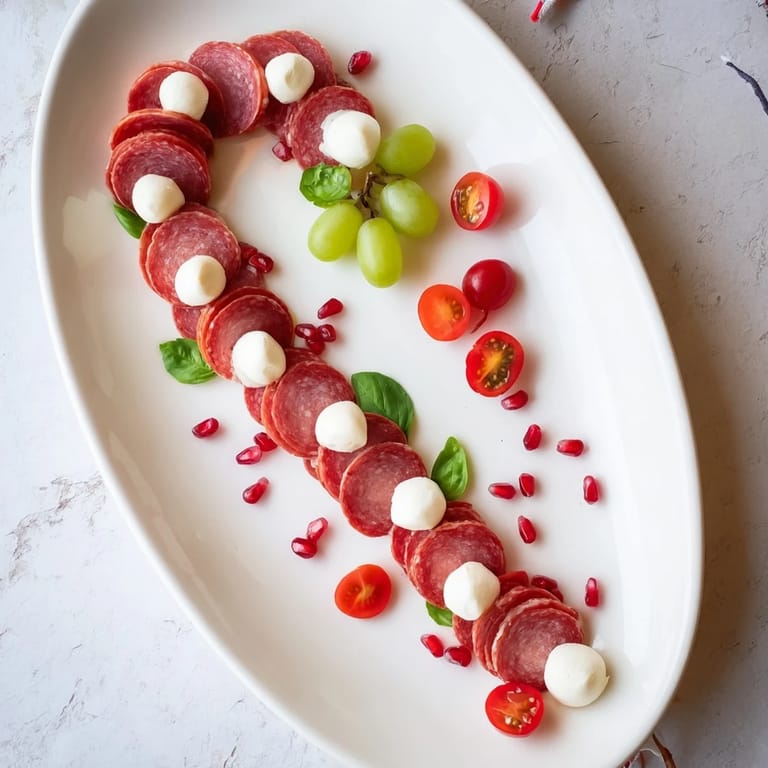
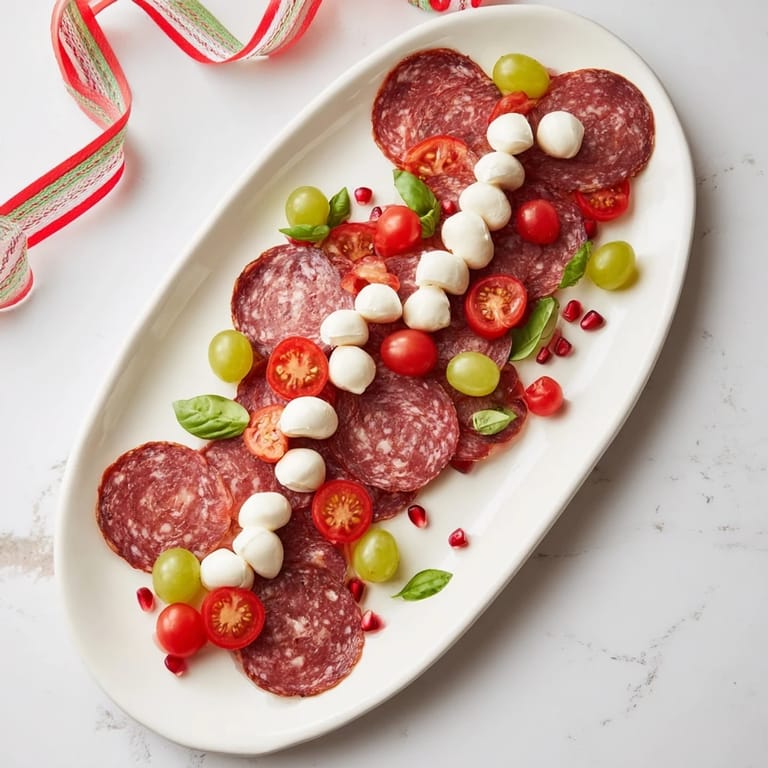
Pin I still remember the holiday party three years ago when my sister challenged me to create something that would make guests actually stop and gasp before eating. That's when I discovered that the most elegant appetizers aren't complicated—they're just beautiful. The Candy Cane Zigzag was born that afternoon, and now it's become the one thing people request every December. It's a charcuterie board that looks like a piece of edible art, arranged in a bold striped pattern that instantly sets a festive mood the moment it hits the table.
Last Christmas Eve, I watched my teenage nephew's face light up when he realized the board was shaped like a candy cane. He spent twenty minutes just photographing it from different angles before anyone touched a thing. That's when I knew this recipe had crossed from being just food into being a memory-maker, the kind of dish that becomes part of your family's holiday story.
Ingredients
- Mozzarella cheese, 200 g sliced or small balls (bocconcini): This is your white stripe foundation—mild, creamy, and it doesn't compete with the other flavors. The small balls are easier to work with if you want them to nestle perfectly into your pattern
- Goat cheese, 100 g optional, sliced or crumbled: Adds a tangy sophistication and creates visual interest with its subtle creaminess. Optional, but it's worth including if you want to elevate beyond the basics
- Dry-cured salami, 200 g sliced: This is your bold red statement. Look for a salami with good marbling that holds its shape when overlapped. It's what creates that striking candy cane stripe
- Prosciutto, 100 g optional, rolled: The delicate accent that adds textural contrast. Rolling it creates little ruffles that catch the light beautifully
- Cherry tomatoes, 100 g halved: These add freshness and fill in the gaps where you need extra red. They're surprisingly important for balancing the richness of the cheeses and meats
- Red bell pepper, 1 sliced into strips: Adds crunch and a bright sweetness that cuts through the salty elements. The strips create linear visual interest
- Pomegranate seeds, 50 g for garnish: These are your jewels—the final touch that makes everything look intentional and luxurious. Add them last so they stay plump and juicy
- Grapes, 100 g green or red: Choose whichever color feels right for your board's balance. They add sweetness and a refreshing pause between savory bites
- Fresh basil or rosemary sprigs: This isn't just decoration—it's aromatic seasoning that reminds people this is a thoughtfully composed board. Tuck sprigs in last
- Assorted crackers or gluten-free crackers, 150 g: These are the vehicle for all your flavors. Mix textures—some crispy, some sturdy. Gluten-free options have come so far; nobody will know the difference
- Small baguette, 1 sliced optional: For those who want bread instead of crackers, and because sometimes the carb-to-filling ratio just matters
- Whole-grain mustard or honey, 1 small bowl: Mustard adds a sharp contrast, honey adds warmth. Choose based on your crowd's preference
- Cranberry chutney or fig jam, 1 small bowl: This is the unexpected element that makes people lean back and say, 'oh, that's good.' It bridges the gap between sweet and savory
Tired of Takeout? 🥡
Get 10 meals you can make faster than delivery arrives. Seriously.
One email. No spam. Unsubscribe anytime.
Instructions
- Map your masterpiece:
- Before you place anything, take a moment to visualize your candy cane on the board. Imagine where the curves will flow, where the widest stripe should be. Mental rehearsal prevents the panic of second-guessing yourself mid-assembly
- Start the red foundation:
- Begin at one corner with your salami slices, overlapping them like shingles on a roof. Curve them gently toward the center of the board, moving in that graceful S-shape. The overlapping creates dimension and catches light beautifully. You'll feel the pattern emerging under your hands
- Add the white stripe:
- Now layer your mozzarella alongside the salami, creating that striking contrast. Space them so the eye can clearly distinguish red from white. This is where it starts to look intentional rather than random
- Complete the curve:
- Continue this alternating pattern all the way across your board, curving back toward the opposite corner. Step back frequently—your eyes are better judges than your hands at this stage
- Fill in the texture:
- This is where you add the goat cheese and rolled prosciutto. Tuck them into the spaces between your main stripe, adding visual complexity. Think of this as adding wrinkles to your candy cane's surface
- Bring in the garnish colors:
- Scatter your cherry tomato halves and red pepper strips alongside the red sections. These shouldn't be perfectly placed—a natural scatter looks more inviting than rigid arrangement
- Add the jewels and greens:
- Distribute the grapes around the board's negative space. Tuck in those fresh basil or rosemary sprigs—they bring life and aroma to the whole composition. This is the moment it stops being ingredients and becomes an experience
- Scatter the pomegranate seeds:
- This is your final flourish. Do this just before serving so they stay gleaming and juicy. They catch the light and make everything feel festive and special
- Position the support players:
- Arrange your crackers and baguette slices around the perimeter or in a basket nearby. Place your bowls of mustard and chutney where guests can easily reach them. Everything should feel accessible and intentionally placed
- Final styling moment:
- Step back and look at the whole board. Add a final herb sprig if something feels bare, or remove an element if it feels crowded. Trust your eye—this is your creation
 Pin
Pin I learned something unexpected while building these boards: presentation genuinely changes how food tastes. My neighbor came to one of these gatherings convinced she didn't like goat cheese, but when it was nestled into this beautiful arrangement with the other elements, she ate three pieces and asked for the recipe. Somehow, being part of something beautiful made it taste better.
The Art of the Arrangement
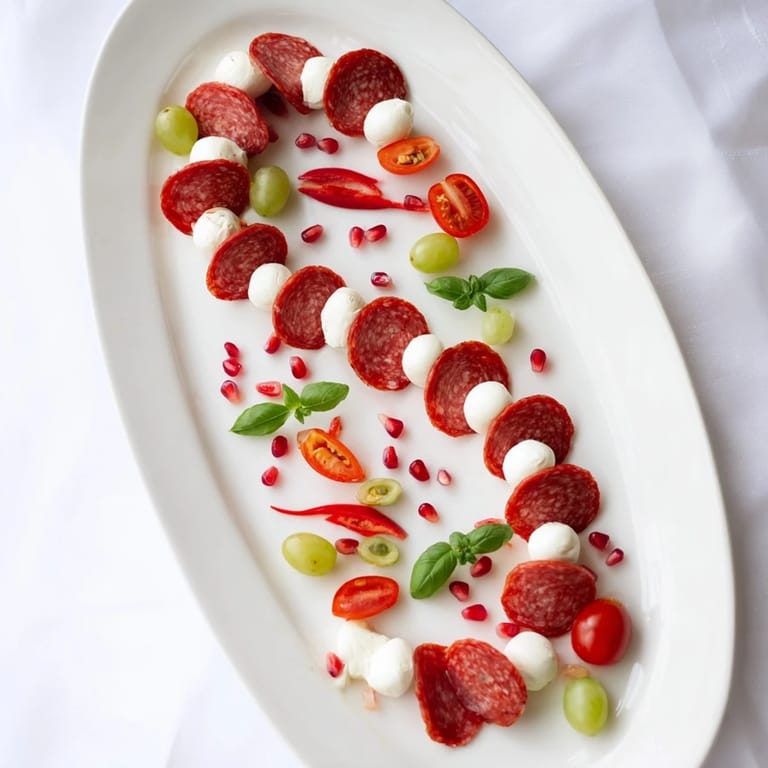
There's something almost meditative about creating this candy cane pattern. You're not following a rigid recipe—you're making thousands of tiny decisions about color, balance, and flow. The beauty is that there's no 'wrong' way as long as your red and white elements create that clear contrast. If your curve isn't perfect, it's still a candy cane. If your stripe wiggles a little, it has character. This is one of those dishes where the imperfections are actually what make it feel handmade and special rather than store-bought and sterile.
Wine and Beverage Pairings
This board practically sings with a crisp white wine—something like a Pinot Grigio or Sauvignon Blanc cuts through the richness of the cheese and meat. But honestly, a sparkling wine is where the magic happens. The bubbles feel celebratory and refresh your palate between bites. If you're serving without alcohol, a sparkling apple cider or cranberry sparkler echoes the holiday theme perfectly and pairs beautifully with those tart-sweet elements on the board.
Making It Your Own
This is the framework, but your personal taste is the actual recipe. Go vegetarian by doubling down on cheeses, roasted peppers, and marinated artichokes—the pattern works just as beautifully with all those elements. Swap the mozzarella for white cheddar or Havarti if you prefer something with more personality. Use whatever fresh herbs you have in your kitchen. The candy cane concept is flexible; the principle is just bold color contrasts and a little festive arrangement. This is your board to make.
- Prep your cheese and meat slices about an hour before, keeping them covered and cool until assembly time
- If pomegranates aren't in season, fresh raspberries or red currants create the same jewel-like effect
- Keep toothpicks and small napkins nearby—guests will want both
 Pin
Pin This board has become my answer to 'what should I bring to the holiday party'—it's impressive without being stressful, beautiful without being fussy, and it feeds a crowd while still feeling personal. That's the real gift of this recipe.
Recipe Q&A
- → How can I make the board vegetarian?
Simply omit the salami and prosciutto, then increase the variety of cheeses and add extras like roasted peppers or marinated artichokes for more flavor and texture.
- → What is the best cheese alternative to mozzarella?
White cheddar or Havarti are excellent substitutes that offer a similar texture and mild flavor to maintain balance with other board elements.
- → Are there gluten-free options for the crackers?
Yes, use gluten-free crackers or omit the baguette to accommodate gluten sensitivities without compromising the board’s appeal.
- → How should I arrange the ingredients for the candy cane shape?
Alternate slices of salami and mozzarella along a large board in a curving S-shape, fill with goat cheese and prosciutto, then layer red and white accompaniments along the curves for visual impact.
- → What dips pair well with this holiday board?
Whole-grain mustard and cranberry chutney or fig jam complement the savory and sweet elements beautifully, enhancing the overall flavor experience.
- → Can this board be prepared in advance?
It’s best assembled shortly before serving to maintain freshness, especially for the herbs, fresh fruits, and crackers, which may lose texture if prepared too early.