 Pin
Pin There's something about October afternoons that makes me crave this soup. I was sorting through a farmers market haul, turning the acorn squash over in my hands, when I noticed how the ridges caught the light like tiny valleys. That's when I decided to stop overthinking soup and just roast the thing until it practically melted. The kitchen filled with this warm, almost honeyed smell, and suddenly I understood why this became the dish I make when I want to feel like autumn is still holding my hand.
I made this for my neighbor one November evening after she'd mentioned feeling run down, and watching her taste it straight from the bowl was worth every minute of prep. She closed her eyes on the first spoonful, and I swear something shifted in her shoulders. That's when it clicked for me that the best soups aren't about being fancy or complicated, they're about creating a moment where someone feels cared for.
Ingredients
- Acorn squash (2 medium, about 2 lbs total): The star that needs no convincing, roasting transforms the flesh into something naturally sweet and dense enough to build the whole soup around.
- Yellow onion (1 medium, chopped): Sauté this until it goes golden and soft, because those caramelized edges add depth that plain onion just can't match.
- Garlic (2 cloves, minced): Don't skip this even if you think you're not a garlic person, because once blended it becomes whisper-soft seasoning rather than harsh or bold.
- Carrot (1 medium, peeled and chopped): Acts as a gentle sweetener and thickener without stealing focus from the squash.
- Vegetable broth (4 cups): Use something you actually like drinking on its own, because it becomes the foundation of every spoonful.
- Water (1 cup): Gives you control over the flavor intensity if your broth runs salty.
- Heavy cream or coconut milk (1/2 cup): This is where the velvety part happens, stirred in at the very end to keep it from breaking or separating.
- Olive oil (2 tbsp total): Half goes on the squash before roasting, half goes into the pot for sautéing.
- Salt and black pepper (1 tsp salt, 1/2 tsp pepper): Taste as you go because seasoning is personal and your broth might already be salty.
- Ground nutmeg and cinnamon (1/4 tsp each): These aren't optional flourishes, they're the spices that make people say this tastes like fall in a bowl.
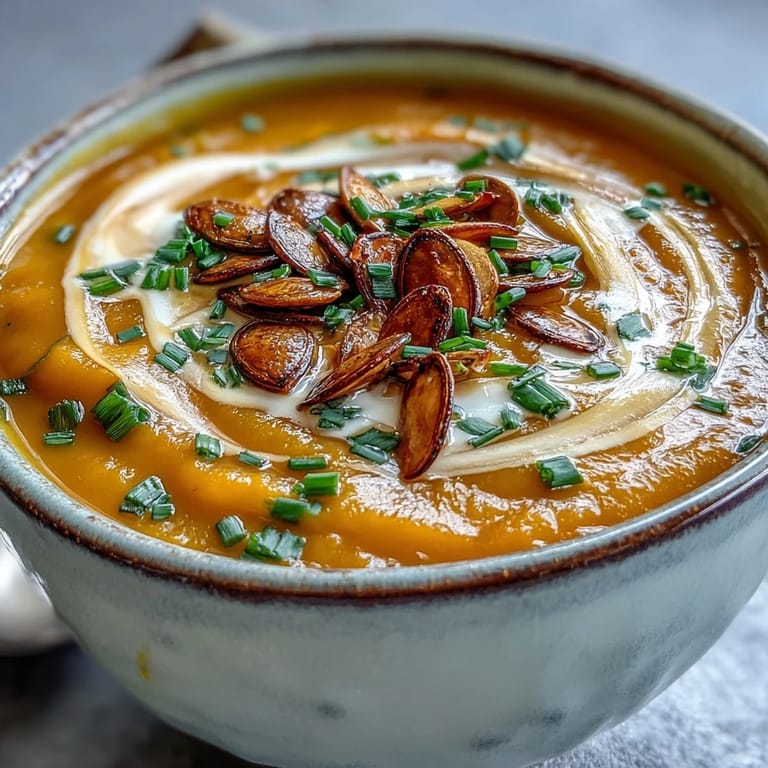
- Toasted pumpkin seeds, fresh chives, and cream for garnish: The toppings that turn a bowl of soup into something you actually want to photograph.
Tired of Takeout? 🥡
Get 10 meals you can make faster than delivery arrives. Seriously.
One email. No spam. Unsubscribe anytime.
Instructions
- Get your oven ready and prep the squash:
- Heat your oven to 400°F and line a baking sheet with parchment paper. Cut your acorn squashes in half, scoop out the seeds, then brush the cut sides with a tablespoon of olive oil like you're tucking them in. Place them cut side down and let them roast for 30 to 35 minutes until the flesh is tender enough to pierce with a fork.
- Build your flavor base:
- While the squash roasts, heat the remaining oil in a large pot over medium heat and add your chopped onion, carrot, and garlic. Let them soften for 5 to 7 minutes, stirring occasionally until the onions turn golden at the edges and the whole kitchen smells incredible. You'll know it's ready when you can break a piece of onion with barely any pressure.
- Combine everything and simmer:
- Once the squash cools enough to handle, scoop the flesh out and add it to the pot along with the broth, water, salt, pepper, nutmeg, and cinnamon. Bring it to a boil, then turn the heat down and let it bubble gently for about 10 minutes so all the flavors get to know each other.
- Blend until silky:
- Turn off the heat and use an immersion blender to puree everything until it's smooth as silk, or carefully transfer it in batches to a countertop blender if that's what you have. Work slowly and let the blender do the work instead of forcing it.
- Finish with cream and taste:
- Stir in your cream or coconut milk gently, then taste and adjust the salt, pepper, and spices until it feels right to you. If it's cooled down, reheat it gently over low heat without boiling.
- Serve and celebrate:
- Ladle the soup into bowls and top with toasted pumpkin seeds, a scatter of fresh chives, and a drizzle of cream if you're feeling fancy. The warmth of the soup will soften everything just enough.
 Pin
Pin The moment someone told me they were making this soup for their kids' school potluck, I realized how far a simple vegetable soup could travel. It showed up as comfort for the shy kid who had nothing familiar to eat, and became a reason for three parents to exchange recipes after pickup. Food doesn't need a story to be good, but it sure feels better when it becomes one.
Why Acorn Squash Wins in Fall
Acorn squash is honestly underrated compared to butternut, but what it lacks in size it makes up for in texture and natural sweetness. The flesh becomes incredibly creamy when roasted, and it doesn't need the long cooking time that butternut demands. I've learned that roasting any winter squash concentrates its sugars, which is why this soup tastes almost dessert-like without being cloying.
Customizing for Your Crowd
This soup is genuinely flexible depending on who's eating it and what you have on hand. If you're cooking for someone watching calories, use coconut milk or even just omit the cream and top with seeds instead for richness. I've made it with apple cider instead of water for a friend who loves apple, and once experimented with sage and thyme instead of cinnamon, which turned it into something more savory and honestly equally good.
The Garnish Game
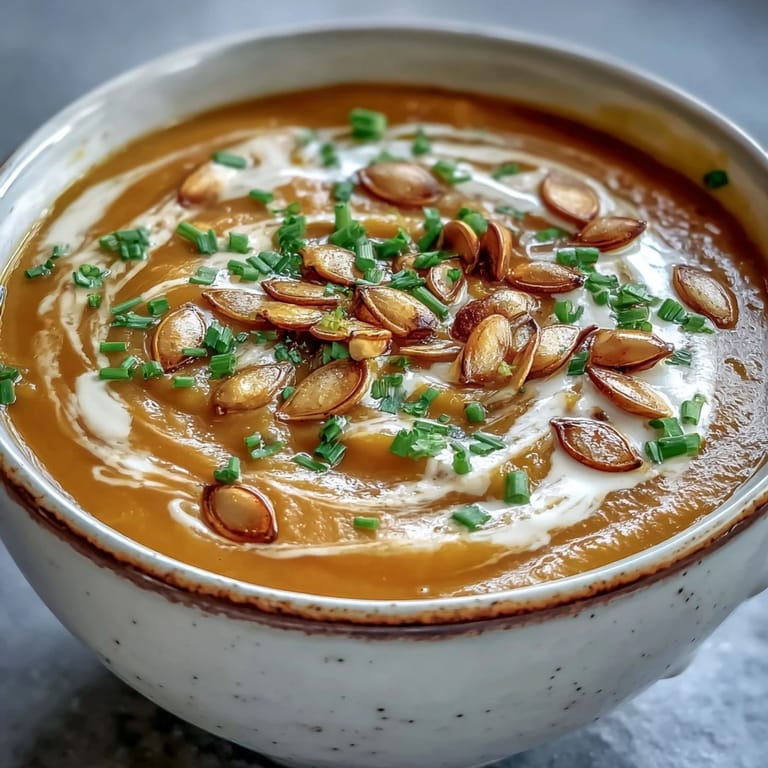
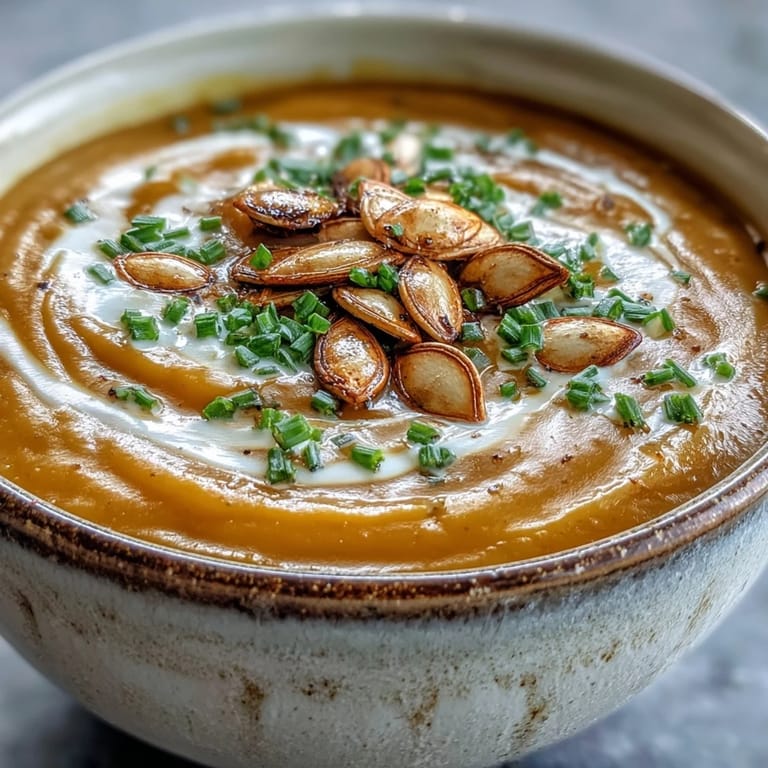
Never underestimate how much a good garnish matters to how a soup actually tastes and feels when you're eating it. The pumpkin seeds add crunch and a subtle earthiness that cuts through the richness, while fresh chives bring a little brightness that wakes everything up. A final drizzle of cream or even a touch of truffle oil if you're feeling indulgent transforms a weeknight dinner into something that feels considered.
- Toast your pumpkin seeds yourself in a dry pan for two minutes if you can, because homemade tastes completely different from store-bought.
- Fresh chives matter more than you'd think, so grab them from somewhere good instead of the sad plastic container if you can.
- The soup tastes even better the next day after the flavors have settled, so make it ahead without shame.
 Pin
Pin This soup reminds me why I love cooking at all, turning something as simple as roasted squash into something that makes people feel held and warm. Every time I make it, someone asks for the recipe, and I know there's no better compliment than that.
Recipe Q&A
- → Can I make this dairy-free?
Yes, simply substitute coconut milk for the heavy cream. The coconut milk adds a subtle tropical sweetness while maintaining the velvety texture.
- → How should I store leftovers?
Store in an airtight container in the refrigerator for up to 4 days. Reheat gently over low heat, adding a splash of broth if needed to restore consistency.
- → Can I freeze this soup?
Absolutely. Freeze in portion-sized containers for up to 3 months. Thaw overnight in the refrigerator before reheating. Note that the texture may be slightly thinner after freezing.
- → What can I use instead of acorn squash?
Butternut squash works beautifully as a substitute. The preparation method remains the same, though butternut may yield a slightly sweeter result.
- → How do I achieve the smoothest texture?
Use an immersion blender directly in the pot for convenience, or puree in batches using a countertop blender. For ultra-silky results, strain through a fine-mesh sieve after blending.
- → What spices work well with this?
The nutmeg and cinnamon complement the squash's natural sweetness. For a variation, try adding a pinch of cayenne for gentle heat or fresh sage for an earthy twist.