 Pin
Pin The first time I made paella, I stood in front of a borrowed paella pan at a friend's summer party, absolutely convinced I'd ruin it. But something about the way the saffron turned that first ladle of stock golden—it felt like I was holding a tiny miracle in my hands. That moment changed everything, and now whenever I make it, I'm transported back to that nervous thrill, that smell of chorizo hitting hot oil, and the realization that I'd just created something beautiful.
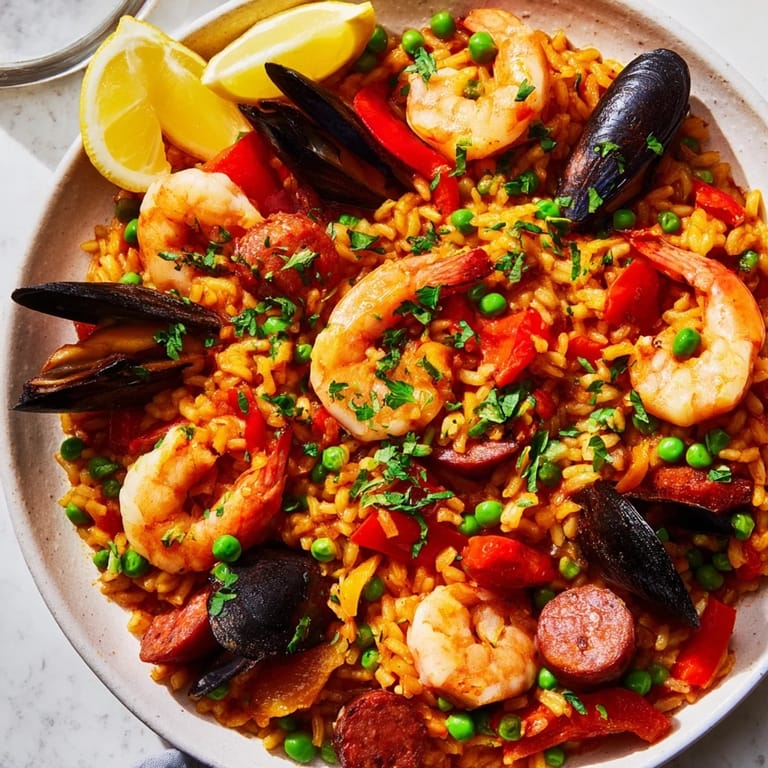
I'll never forget the year my partner's family came to visit right when stone crabs were in season. I decided paella was the move, and the moment I opened that foil packet to reveal perfectly cooked shrimp and mussels releasing their briny steam, my mother-in-law actually gasped. That one dish became the reason they still talk about that visit, and honestly, it's the reason I keep making it.
Ingredients
- Chorizo sausage, 200g sliced: The soul of the dish—that smoky, paprika-kissed flavor infuses every grain of rice and the oil itself becomes liquid gold.
- Chicken thighs, 250g bite-sized pieces: Dark meat stays tender and juicy, unlike breast meat which can dry out; cut them while the chorizo browns so you're always moving forward.
- Large shrimp, 250g peeled and deveined: The sweetness they add at the end balances all that smokiness and depth.
- Mussels, 250g cleaned and debearded: They'll tell you when they're done by opening—trust them, and discard any that refuse to open after cooking.
- Calamari rings, 200g optional: These add a tender chew and delicate flavor that makes people wonder what that wonderful texture is.
- Short-grain paella or Arborio rice, 400g: The shorter grain holds onto sauce better than long-grain varieties, creating those precious crispy bits on the pan bottom.
- Chicken or seafood stock, 1L heated: Keep it hot in a separate pot so it doesn't shock the rice when it hits the pan; warm stock means even cooking.
- Saffron threads, 1/2 tsp: This is your investment piece—those golden threads are what transforms ordinary rice into something that tastes like celebration.
- Olive oil, 2 tbsp: The fat carries flavor and prevents sticking; don't skimp here because it's the medium for everything else.
- Onion, 1 medium finely chopped: It dissolves into the rice, creating a subtle sweetness that no one can quite identify but everyone feels.
- Bell peppers, 1 red and 1 yellow sliced: The different colors aren't just pretty—they cook at slightly different rates, giving you varied textures.
- Tomatoes, 2 medium diced: Fresh tomatoes add brightness and a subtle acidity that keeps the dish from feeling heavy.
- Frozen peas, 150g: Sprinkle these on top near the end so they stay bright green and crisp rather than soft.
- Garlic, 3 cloves minced: Add it after the onions have softened, otherwise it can turn bitter and dominate everything.
- Smoked paprika, 1 tsp: This is what gives paella its characteristic warmth and earthiness—regular paprika won't carry the same magic.
- Salt and black pepper, to taste: Taste as you go because the stock already carries salt, and you don't want to oversalt.
- Bay leaf, 1: It perfumes the entire pot with subtle depth and you'll fish it out at the end.
- Fresh parsley, chopped: The final shower of green brightens everything and adds a fresh herbal note right at the finish line.
- Lemon wedges: Each guest squeezes their own, controlling how much brightness they want with every bite.
Tired of Takeout? 🥡
Get 10 meals you can make faster than delivery arrives. Seriously.
One email. No spam. Unsubscribe anytime.
Instructions
- Wake up the saffron:
- Pour 3 tablespoons of hot stock over those precious threads in a small bowl and let them sit for a few minutes. Watch as they bloom and turn the liquid into liquid gold—this is saffron doing what it's meant to do.
- Brown the proteins:
- Heat your olive oil in the paella pan over medium heat until it shimmers, then add the chorizo and chicken. Let them sit for a minute before you stir—you want a deep golden crust, not pale and steamed.
- Build your flavor base:
- Once the proteins are out of the pan, add your chopped onion and bell peppers to the oil they've left behind. This fat is pure flavor now, carrying everything the meat gave up.
- Finish the soffritto:
- When the onions are translucent and the peppers are beginning to soften, add the garlic and tomatoes. Let it cook for just two minutes—you want to wake up the garlic without letting it turn harsh.
- Toast the rice:
- Stir the rice into the pan, coating every grain in that oil and paprika. You'll hear it click slightly against the pan and smell that toasted, nutty aroma—this step is crucial.
- Combine everything:
- Return the chicken and chorizo, pour in that saffron-infused stock and the rest of the hot stock, add the bay leaf and seasonings, and stir gently. The pan will smell incredible and look like a painting.
- Let it simmer untouched:
- Bring to a boil, then lower the heat to maintain a gentle simmer. Here's the hardest part: don't stir for 15 minutes. Let the rice absorb the stock and develop that golden crust on the bottom that Spaniards call socarrat.
- Nestle in the seafood:
- Nestle your shrimp and mussels into the rice, scatter the peas across the top, and loosely cover with foil. The steam will cook everything gently and the mussels will open to signal they're ready.
- Rest and finish:
- Remove from heat and let it sit covered for 5 minutes. This final pause lets everything settle and the flavors meld. Discard any mussels that didn't open—they're telling you something.
- Garnish with joy:
- Shower it all with fresh parsley, arrange lemon wedges around the pan, and carry it to the table as your masterpiece.
 Pin
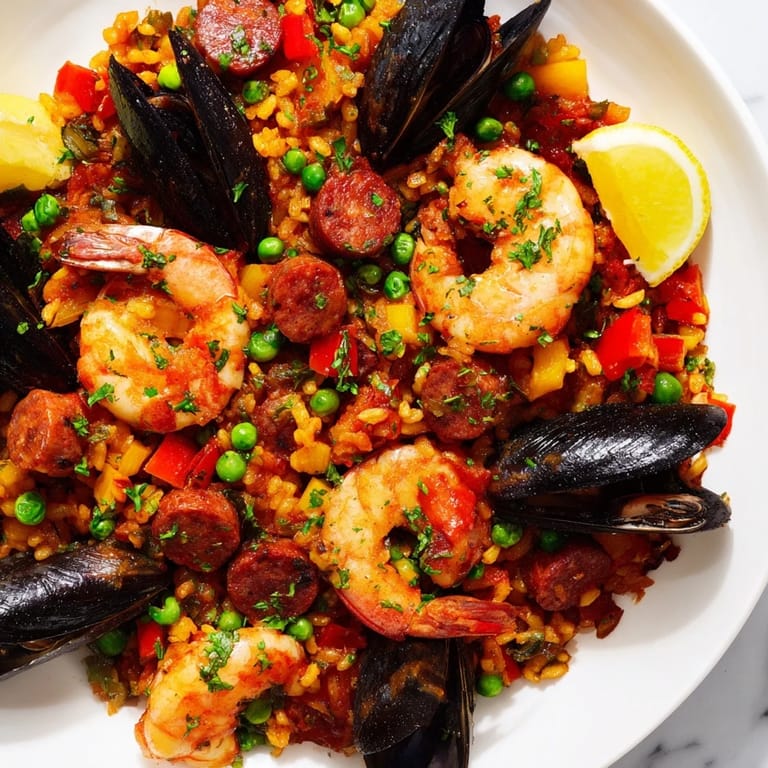
Pin There's a moment, right after you uncover that foil and the steam rises with the smell of the sea meeting smoke and saffron, when everyone stops talking. That silent moment of awe before the forks come out—that's when you know you've done it right. It's not just dinner; it's theater.
The Socarrat Secret
That slightly crispy, golden layer on the bottom of the pan isn't a mistake—it's the whole reason Spanish home cooks fight over who gets to scrape the pan clean. The sound it makes when you hear it toasting, the smell it releases, and the way those caramelized grains taste is what separates a good paella from an unforgettable one. Listen to your pan and trust what you hear.
Why This Works as a Crowd Pleaser
Paella is theater disguised as cooking. You're working with stunning colors, incredible aromas, and a technique that feels impressive but isn't fussy. People gather around it, they ooh and aah before they even taste it, and then when they do, everything they thought it would be, it is. It's generous without being pretentious, and it makes everyone at the table feel like they're eating something special.
Customizing Your Paella
The beauty of paella is that it's truly forgiving about what you put in it. Use scallops instead of calamari, add clams, swap in artichokes if you're feeding vegetarians, or use rabbit if you can find it. The technique remains the same, the saffron does its job, and you always end up with something delicious. I've made this with whatever the market had that day, and it's never disappointed.
- Swap proteins based on what's fresh and what your guests love—seafood, meat, or vegetables all work beautifully in this framework.
- If you're cooking for someone who can't have saffron, use a pinch of turmeric for color and earthy warmth, though the flavor won't be quite the same magic.
- Add a splash of white wine when you pour in the stock for extra depth, especially if you're serving it alongside wine anyway.
 Pin
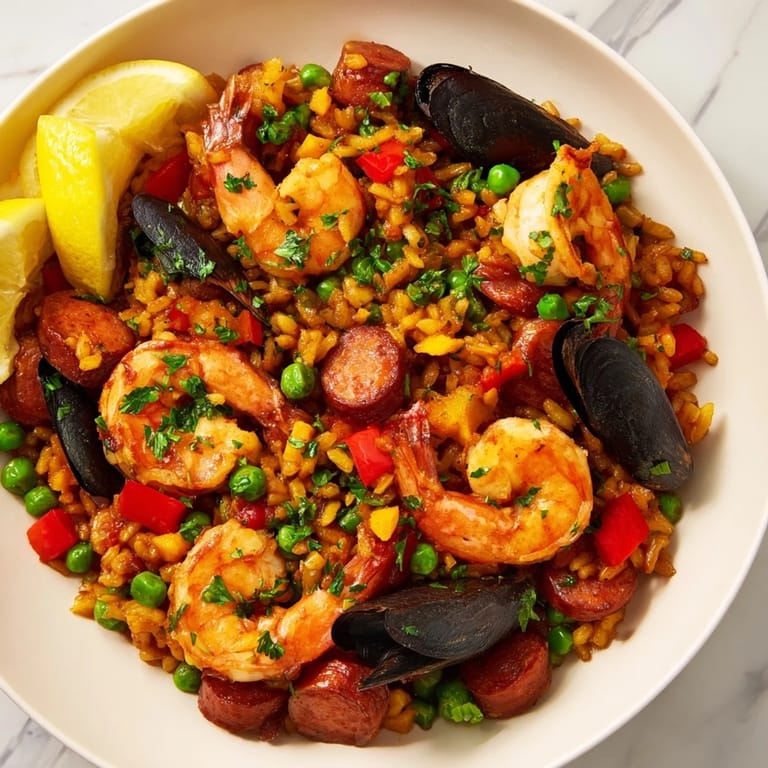
Pin This dish has a way of turning an ordinary evening into something people remember. Make it with confidence and watch what happens.
Recipe Q&A
- → What type of rice is best for this dish?
Short-grain paella or Arborio rice works best to absorb flavors while maintaining a tender texture.
- → Can I substitute the seafood in the dish?
Yes, clams or scallops can be used as alternatives to shrimp, mussels, or calamari for varied flavors.
- → How do I achieve the characteristic smoky flavor?
Using smoked Spanish paprika (pimentón) infuses the dish with an authentic smoky aroma.
- → Is there a recommended cooking vessel?
A large paella pan or wide, deep skillet ensures even cooking and proper liquid absorption.
- → What beverages pair well with this dish?
Crisp Spanish white wines like Albariño or Verdejo complement the saffron and seafood notes beautifully.