 Pin
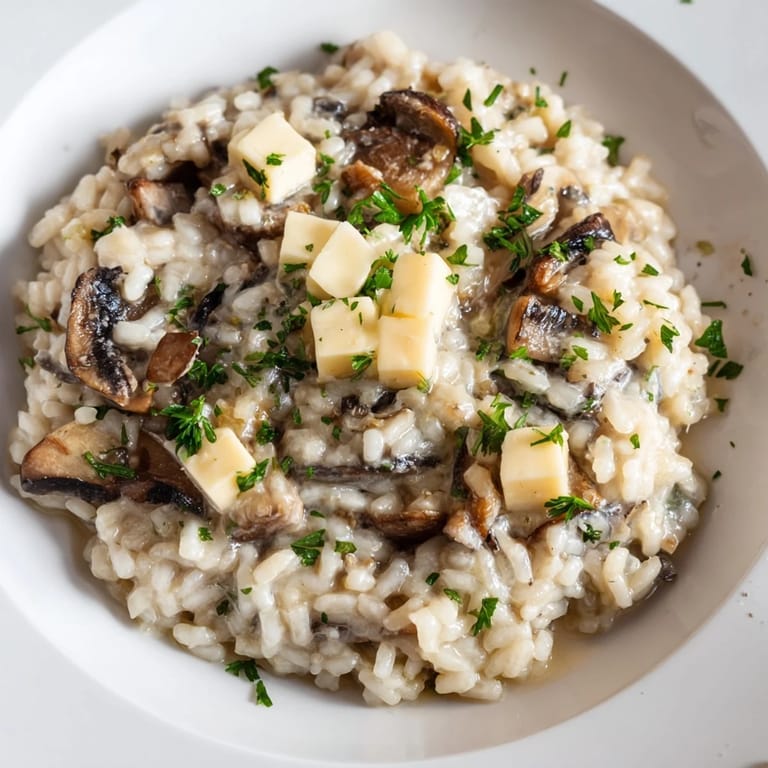
Pin My first risotto was a disaster—watery, gloppy, nothing like the silky dish I'd tasted at a little trattoria in Rome. Years later, standing in my kitchen on a rainy autumn evening, I decided to try again. This time, something clicked when I finally understood that risotto isn't about precision; it's about patience and listening to the rice as it softens. Now, whenever I make it, that same creamy, luxurious magic happens, and I realize it was always about the conversation between you, the heat, and the rice.
I made this for my friend Sarah on a Tuesday night when she needed comfort food more than anything fancy, and watching her face light up after that first bite made me understand why Italians don't rush through meals. She asked for the recipe immediately, and I realized that risotto isn't just dinner—it's a small moment of care you can hold in a bowl.
Ingredients
- Arborio rice (1½ cups): This short-grain rice is essential because its high starch content creates that signature creaminess without cream—don't substitute with long-grain varieties or you'll miss the magic.
- Cremini or button mushrooms (12 oz, sliced): Cremini have deeper flavor than button mushrooms, but either works beautifully; slice them consistently so they cook evenly.
- Olive oil (1 tbsp) and unsalted butter (1 tbsp for sautéing): The combination gives the mushrooms a golden crust while keeping them tender inside.
- Yellow onion (1 medium, finely chopped): Fine chopping lets it dissolve into the rice, creating a subtle sweetness that balances everything else.
- Garlic (2 cloves, minced): Add it after the onion so it doesn't burn; raw garlic can turn bitter if exposed to heat too long.
- Vegetable broth (4 cups, kept warm): Warm broth is non-negotiable—cold broth will shock the rice and interrupt the creaming process.
- Dry white wine (½ cup): This adds acidity and a subtle flavor that makes the dish taste more alive; don't skip it even if you think you don't like wine in food.
- Parmesan cheese (½ cup grated, plus extra for serving): Freshly grated makes a difference you can taste; pre-shredded versions contain anti-caking agents that affect the texture.
- Unsalted butter (2 tbsp for finishing): This final addition is called the mantecatura, and it's what transforms good risotto into silk.
- Salt and black pepper: Add these at the end so you can taste as you go and season to your preference.
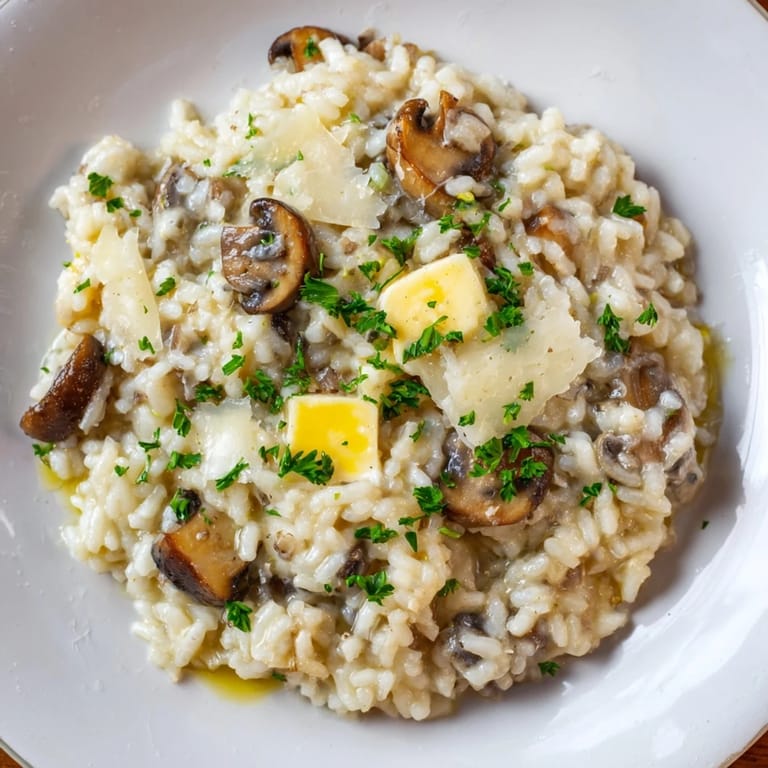
- Fresh parsley (2 tbsp, optional): A sprinkle at the end adds a bright note and catches the light on the plate.
Tired of Takeout? 🥡
Get 10 meals you can make faster than delivery arrives. Seriously.
One email. No spam. Unsubscribe anytime.
Instructions
- Sauté the mushrooms first:
- Heat olive oil and butter together over medium heat until the butter foams, then add mushrooms in a single layer—resist the urge to stir immediately, let them sit for a minute to develop that golden crust. Once they release their moisture and turn tender, about 6 to 8 minutes, move them to a plate and resist eating them straight away, though I can't blame you if you do.
- Build your flavor base:
- In the same pan, add chopped onion and cook until it turns translucent and soft, around 3 minutes, then add garlic and cook for just 1 minute more. You'll smell the garlic wake up—that's your signal to move to the next step before it turns harsh.
- Toast the rice:
- Stir the Arborio rice into the onion mixture and cook, stirring constantly, until the outer edges of each grain turn translucent and the center stays opaque, about 2 minutes. This step coats the rice in fat and prepares it to absorb liquid evenly.
- Deglaze with wine:
- Pour in the white wine and stir until it's almost completely absorbed—you'll watch the liquid reduce and the rice will start to soften. This adds brightness and begins the gradual process of coaxing creaminess from the rice itself.
- Add broth in stages:
- This is where patience becomes your secret weapon: add one ladleful of warm broth, stir, and wait until most of it's absorbed before adding the next ladleful. Continue this rhythm for 18 to 20 minutes, stirring frequently so the rice releases its starch and creates that creamy sauce.
- Finish with the mushrooms and cheese:
- When the rice is creamy and tender but still has a slight bite (al dente), stir in the cooked mushrooms, the final butter, and Parmesan cheese. Cook for 2 more minutes, then season with salt and pepper—taste and adjust because risotto wants your attention.
- Serve immediately:
- Risotto waits for no one; plate it right away while it's still flowing and warm, then top with extra Parmesan and a whisper of parsley if you'd like.
 Pin
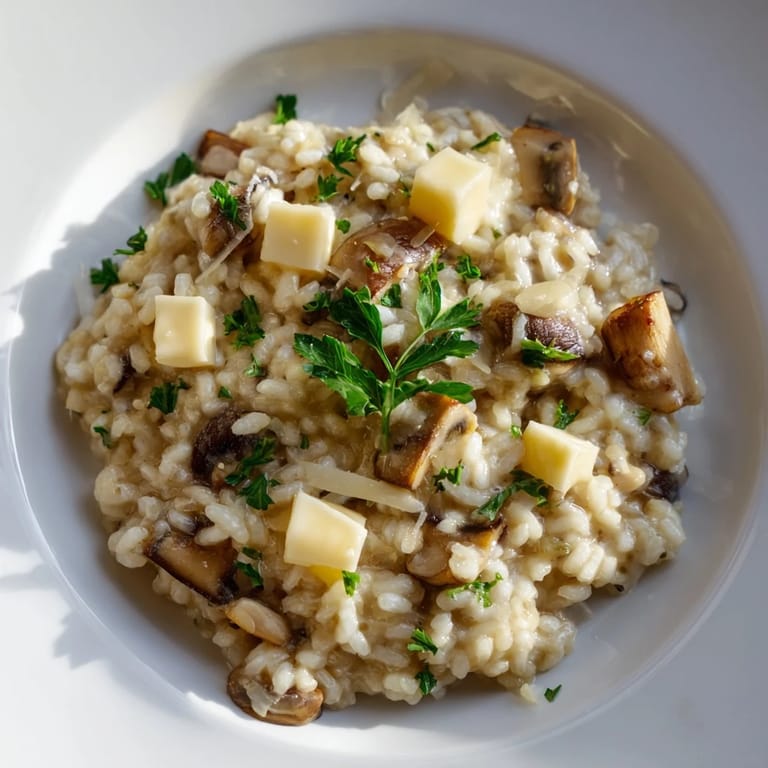
Pin The first time I really understood risotto was when my grandmother watched me make it and said, 'You're not cooking the rice, you're coaxing it,' and suddenly the whole process made sense. It taught me that some of the best food isn't about following rules perfectly but about being present and responsive to what the dish needs as it develops.
Why Mushrooms Make This Special
Mushrooms and risotto were made for each other—the umami-rich fungi sink into the creamy rice and create a depth of flavor that feels almost meaty. When you sauté them first until golden, you concentrate their flavor and give them a slight crust that holds up beautifully in the final dish instead of turning to mush. If you ever find yourself with mixed mushrooms—cremini, shiitake, oyster, whatever's at the market—use them all and let each variety add its own note to the song.
The Magic of the Mantecatura
That final stir of cold butter and Parmesan at the end isn't just a garnish step; it's called the mantecatura, and it's what separates restaurant risotto from home cooking. The cold butter emulsifies into the hot rice, creating a silky, flowing texture that seems impossible until you see it happen right in front of you. I used to think this was unnecessary fancy footwork until the day I skipped it and wondered why my risotto suddenly seemed flat and dense—now I'll never forget it.
Pairing and Serving Ideas
Risotto can stand alone as a complete meal, but it also plays beautifully with others—a simple green salad with lemon vinaigrette cuts through the richness, or roasted asparagus alongside makes it feel seasonal and balanced. Wine-wise, a crisp Pinot Grigio or Sauvignon Blanc is traditional for a reason: the acidity refreshes your palate between bites and echoes the white wine in the dish itself. If you're cooking for someone special, this is the kind of dish that says 'I spent time thinking about you' without feeling pretentious.
- Make extra mushrooms on the side if you're feeding mushroom lovers—they'll thank you for the generosity.
- Leftover risotto can be cooled, shaped into patties, pan-fried until crispy, and served as risotto cakes the next day.
- Save a cup of risotto before adding the Parmesan and butter, cool it, and use it as a base for arancini (fried risotto balls) another time.
 Pin
Pin Risotto taught me that the best dishes aren't the ones that follow recipes religiously—they're the ones where you learn to listen to what's happening in the pan. Make this for someone who needs feeding, make it for yourself on a night when you want to slow down, and let the gentle rhythm of stirring become its own kind of meditation.
Recipe Q&A
- → What type of rice is best for creamy texture?
Arborio rice is ideal because its high starch content creates the creamy consistency essential to this dish.
- → Can I use different mushrooms?
Yes, wild mushrooms or a mix will enhance flavor depth, but cremini or button mushrooms work well for a milder taste.
- → How is the broth added during cooking?
Add warm vegetable broth ladle by ladle, stirring frequently and waiting until mostly absorbed to achieve proper creaminess.
- → What wine pairs well with this dish?
Crisp white wines like Pinot Grigio or Sauvignon Blanc complement the creamy and earthy mushroom flavors nicely.
- → How can I ensure the rice is perfectly cooked?
Cook until al dente by frequently stirring and slowly adding broth, tasting as you go to maintain texture.