 Pin
Pin My coworker brought a Korean beef bowl to lunch one Tuesday, and the whole office smelled like ginger and gochujang before noon. I watched her eat it straight from a container, each bite layered with pickled vegetables and kimchi, and realized I'd been missing something essential in my weeknight rotation. That bowl became my answer to the question of what to make when you want something exciting but don't have hours to spend cooking.
I made this for my partner who claimed to not really like spicy food, and watching him go back for seconds while mumbling about the complexity of the flavors changed how I thought about heat in cooking. It's not about burning your mouth; it's about depth, sweetness, and tang working together on your palate.
Ingredients
- Lean ground beef (1 lb): Choose meat with a bit of marbling so it stays juicy; too lean and you'll end up with a slightly dry texture that even sauce can't fully save.
- Gochujang (3 tbsp): This Korean chili paste is the heart of the dish, bringing heat, umami, and a subtle sweetness that makes people ask what's in the sauce.
- Garlic and ginger: These aren't just background players; mince them fine and let them bloom in the oil first so they release their aromatics fully.
- Soy sauce (2 tbsp): Use a quality version you actually enjoy drinking straight; it makes a noticeable difference in the final flavor.
- Brown sugar and rice vinegar: Together they balance the heat with a touch of caramel and brightness, creating that addictive sweet-spicy-tangy profile.
- Toasted sesame oil (1 tsp): This is a finisher, not a cooking oil, so add it at the very end for maximum nutty fragrance.
- Green onions: Split them between cooking and garnish so you get freshness layered through and on top of the dish.
- Rice vinegar, sugar, and salt for pickling: This simple brine wakes up carrot and daikon in minutes, giving you that restaurant-quality crunch and brightness.
- Cucumber and radish for serving: Slice them thin just before assembly so they stay crisp and cool against the warm beef.
- Kimchi: Don't skip this; its funky fermented funk is what makes the bowl feel complete and authentic.
- Toasted sesame seeds: These add a final textural contrast and a whisper of nutty flavor that ties everything together.
Tired of Takeout? 🥡
Get 10 meals you can make faster than delivery arrives. Seriously.
One email. No spam. Unsubscribe anytime.
Instructions
- Get your vegetables pickling:
- Combine rice vinegar, sugar, and salt in a small bowl and stir until the sugar dissolves completely. Add your julienned carrot and daikon, mix gently, and let them sit while you handle the beef; they'll soften slightly and absorb the brine in the 15 minutes you need.
- Start the aromatics:
- Heat oil in a large skillet over medium-high until it shimmers, then add your minced garlic and ginger. Let them sizzle for about a minute until the kitchen smells incredible and you can practically taste the fragrance.
- Brown the beef:
- Crumble in the ground beef and break it apart with a spoon or wooden spatula as it cooks, about 5 to 6 minutes total. You're looking for it to lose all its pink color and develop a light golden crust on some pieces.
- Sauce and simmer:
- Stir in gochujang, soy sauce, brown sugar, rice vinegar, and sesame oil all at once. Cook for 2 to 3 minutes, stirring often, until the sauce thickens slightly and clings to each piece of beef like a glossy coat.
- Build your bowls:
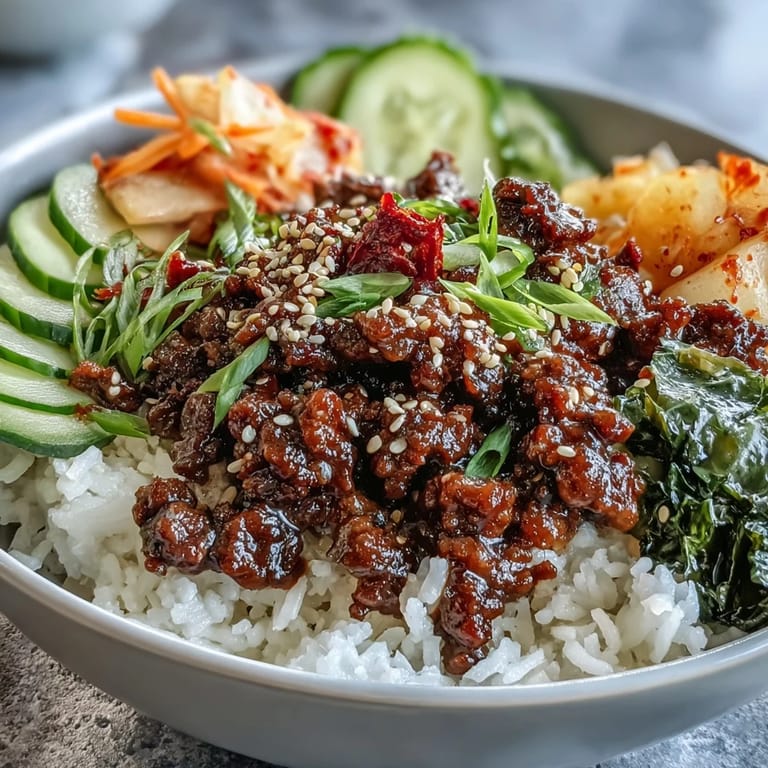
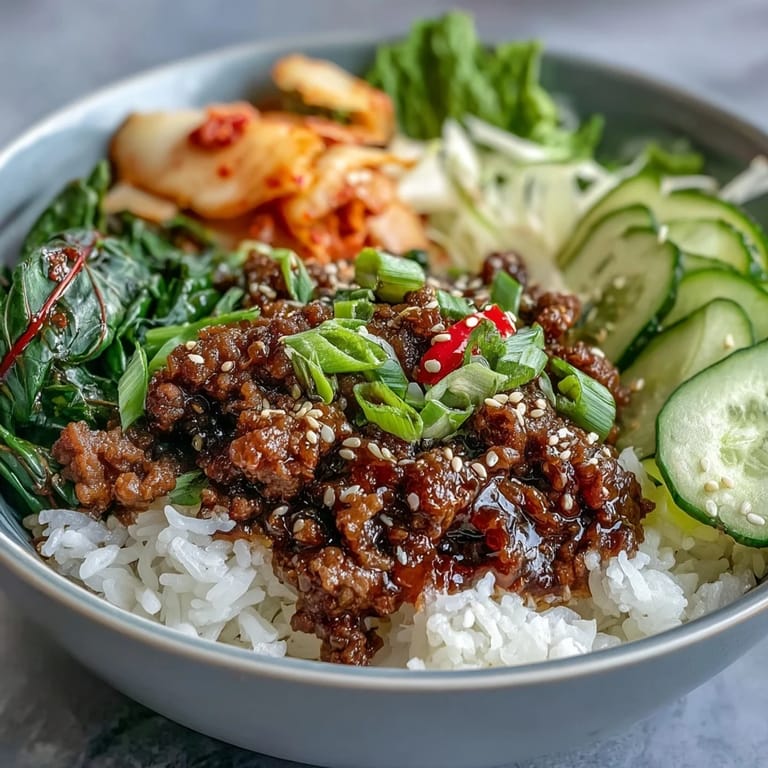
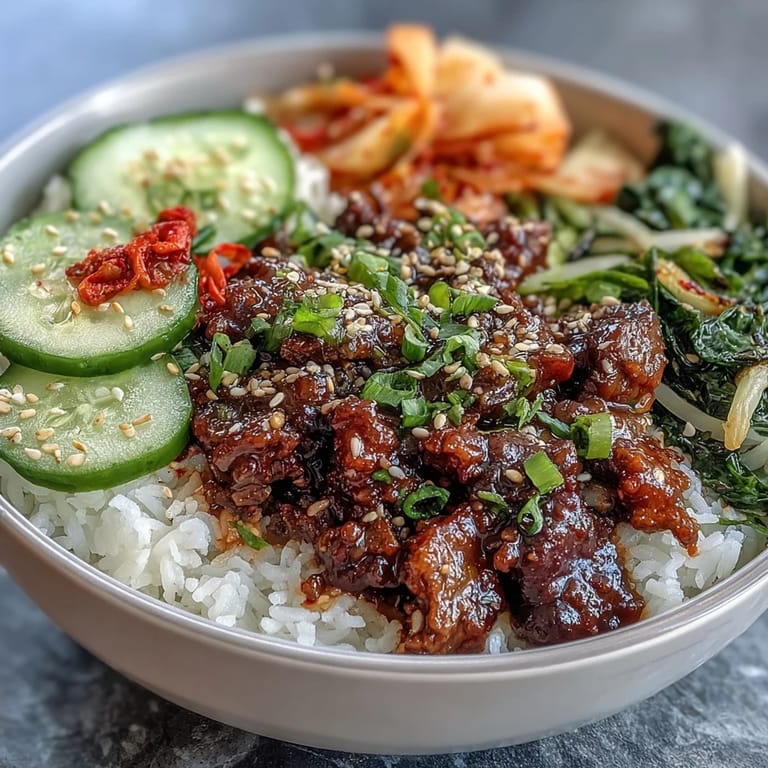
- Divide warm rice into four bowls and top each with a generous handful of the beef mixture. Arrange your pickled vegetables, fresh cucumber slices, radish, and kimchi around the beef in whatever pattern feels right to you.
- Final garnish:
- Scatter the remaining green onions and toasted sesame seeds over top, and serve immediately while the rice is still steaming and everything feels bright and alive.
 Pin
Pin My friend's eight-year-old daughter tried this bowl at a dinner party and spent the next week asking when we were making it again, which made me realize that food this vibrant and textured speaks a language that goes beyond acquired taste. Now it's the first thing she requests when she visits, and that's become its own kind of tradition.
The Heat Isn't Actually That Intense
People hear gochujang and think fiery, but this recipe balances it with brown sugar, soy sauce, and rice vinegar so the heat is present but approachable. The spice builds on your tongue rather than hitting you all at once, and the cool elements like fresh cucumber and kimchi refresh your palate between bites. If you're sensitive to heat, use 2 tablespoons of gochujang instead and add an extra tablespoon of brown sugar to mellow things out.
Why Pickling Changes Everything
Those quick-pickled vegetables aren't just a garnish; they're the textural and flavor counterpoint that makes this bowl sing. The acid cuts through the richness of the beef and rice, the crunch provides relief from soft textures, and the brightness wakes up your mouth in between bites of something warm and savory. I used to overlook this step until I realized that restaurants include pickled elements for a reason: they're doing the heavy lifting of making each bite feel intentional and balanced.
Make It Your Own
This bowl is forgiving enough to play with depending on what you have and what you're craving. The structure stays the same, but the flavors shift beautifully with small changes, and that's what makes it such a reliable weeknight meal.
- Try ground chicken or turkey instead of beef for a lighter version, adjusting the cooking time down by a minute or two since poultry cooks faster.
- Swap brown rice for white rice, or use cauliflower rice if you want to lighten things up without losing the satisfaction.
- Add a drizzle of sriracha or gochujang on top if you want more heat, but taste the beef first before doubling down.
 Pin
Pin This bowl has become my answer to the question of what makes food feel worth cooking on a regular Tuesday, and that's the best kind of recipe to have in your back pocket. Every element matters, nothing is wasted, and you're never bored by the end of the meal.
Recipe Q&A
- → What is gochujang?
Gochujang is a Korean fermented chili paste made from glutinous rice, fermented soybeans, salt, and red chili powder. It adds a complex, spicy-sweet flavor with umami depth to dishes.
- → Can I make this dish less spicy?
Yes, reduce the amount of gochujang to 1-2 tablespoons and add extra brown sugar to balance the flavors. You can also serve with extra rice to dilute the heat.
- → How long do the pickled vegetables last?
The quick-pickled vegetables will keep in an airtight container in the refrigerator for up to 1 week. They actually develop more flavor as they sit.
- → Can I prepare components in advance?
Absolutely. You can pickle the vegetables up to 3 days ahead and cook the beef mixture 1-2 days in advance. Reheat the beef gently before assembling the bowls.
- → What other proteins work well?
Ground chicken, turkey, or pork are excellent substitutes. For a vegetarian version, use crumbled tofu or sautéed mushrooms with extra vegetables.
- → Is this dish gluten-free?
The traditional version contains soy sauce. Make it gluten-free by substituting tamari and ensuring your gochujang brand is certified gluten-free.