 Pin
Pin My first tagine came together on a rainy winter afternoon, when a Moroccan friend dropped off a jar of her homemade spice blend and said, 'You need to make this with lamb.' I had no tagine pot, just a Dutch oven and curiosity, so I improvised. Two hours later, the kitchen was thick with cinnamon and cumin, and when I lifted the lid, the steam carried something that felt like a memory I'd never lived. That dish changed how I think about slow cooking.
I served this to my partner after a long week, and watching them close their eyes on the first spoonful told me everything. The lamb had collapsed into tender threads, the sauce had become glossy and deep, and somehow the honey and saffron had worked their quiet magic without announcing themselves. We ate it straight from the pot, standing by the stove, not bothering with bowls until the third round.
Ingredients
- Lamb shoulder, 1.5 kg: Cut it into chunky 2-inch cubes so they stay intact through the long braise and give you tender pockets to bite into.
- Olive oil, 2 tbsp: Use good oil here; it's the foundation for browning and carries the flavor forward.
- Onions and garlic, large and fresh: The onions melt into the sauce and the garlic disappears, but both are essential scaffolding.
- Fresh ginger, 1-inch piece: Grate it yourself rather than using powdered; it brings a brightness that lifts the whole dish.
- Ground cinnamon, 1 ½ tsp: This is your signature spice, the one that makes people ask what it is.
- Ground cumin, coriander, turmeric, 1 tsp each: They work as a team; don't skip any.
- Ground black pepper and allspice, ½ tsp each: These add depth without showing up obviously.
- Saffron threads, 1 pinch: Optional but worth it if you have it; it brings an almost floral note.
- Beef or lamb broth, 400 ml: Homemade is better, but good store-bought works.
- Canned chopped tomatoes, 400 g: Don't drain them; the liquid becomes part of the sauce.
- Honey, 2 tbsp: It balances the acidity and adds subtle sweetness that rounds everything out.
- Pitted prunes, 200 g: They plump up and become almost jammy; this is where the magic happens.
- Whole blanched almonds, 80 g: Toast them yourself to wake up their flavor.
- Toasted sesame seeds and fresh cilantro: These are your final gesture, the brightness at the end.
Tired of Takeout? 🥡
Get 10 meals you can make faster than delivery arrives. Seriously.
One email. No spam. Unsubscribe anytime.
Instructions
- Get everything ready:
- Set your oven to 160°C and gather all ingredients within reach so you're not hunting mid-cook. Having your lamb cut, spices measured, and broth open makes the next steps flow smoothly.
- Brown the lamb:
- Heat 1 tbsp oil until it shimmers, then add lamb in batches, letting each piece sit undisturbed until golden before moving it. This takes patience but builds flavor; don't crowd the pot.
- Soften the base:
- With the meat set aside, add the remaining oil, onions, garlic, and ginger to the same pot. Cook gently for 5 minutes until they're soft and the kitchen smells like dinner is actually happening.
- Wake the spices:
- Sprinkle in cinnamon, cumin, coriander, turmeric, pepper, allspice, ground ginger, and saffron if using. Stir for a minute until the spices bloom and release their oils, and you'll smell that shift from raw to fragrant.
- Bring it all together:
- Return the lamb, add tomatoes, broth, and honey, then stir until everything is submerged and starting to simmer. Cover and move to the oven or reduce heat to low on the stovetop.
- Let time do the work:
- The tagine braises covered for 1 hour 30 minutes, during which the lamb relaxes into tenderness and the liquid becomes sauce. Stir occasionally if you're home, but don't obsess over it.
- Toast your almonds:
- While the tagine cooks, dry-toast almonds in a skillet over medium heat for 2-3 minutes, shaking often until golden. They'll smell toasted and nutty, which is exactly right.
- Finish with fruit and nuts:
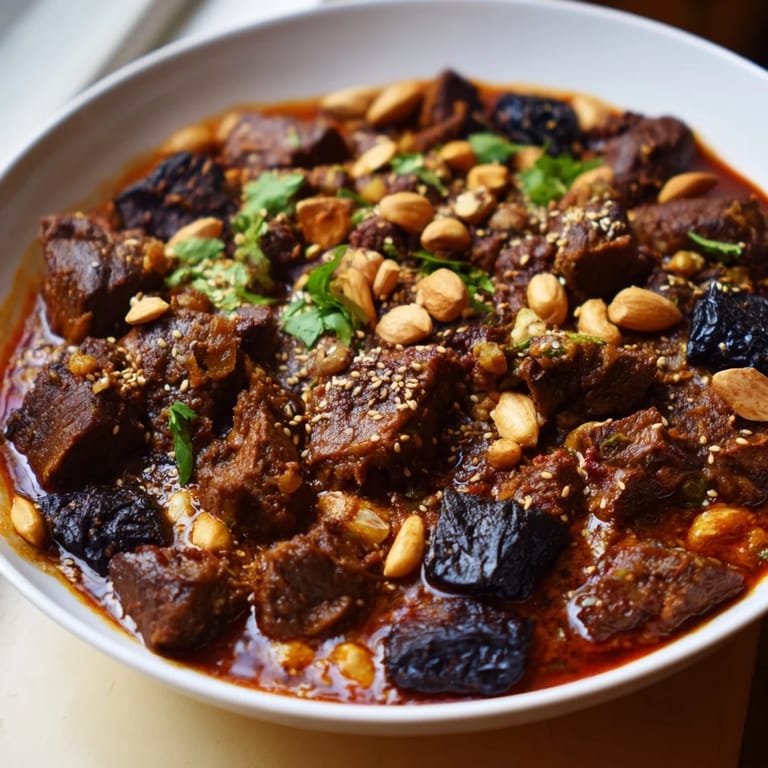
- After 1 hour 30 minutes, add the prunes and toasted almonds, stir, cover again, and cook for another 30-45 minutes. The prunes will plump and slightly dissolve into the sauce, and the lamb will become fall-apart tender.
- Taste and season:
- Taste for salt and adjust as needed. The sauce should be rich and slightly thickened, clinging to the meat.
- Serve with intention:
- Plate the tagine hot, scatter sesame seeds and fresh cilantro on top, and serve with couscous, saffron rice, or bread for soaking up sauce.
 Pin
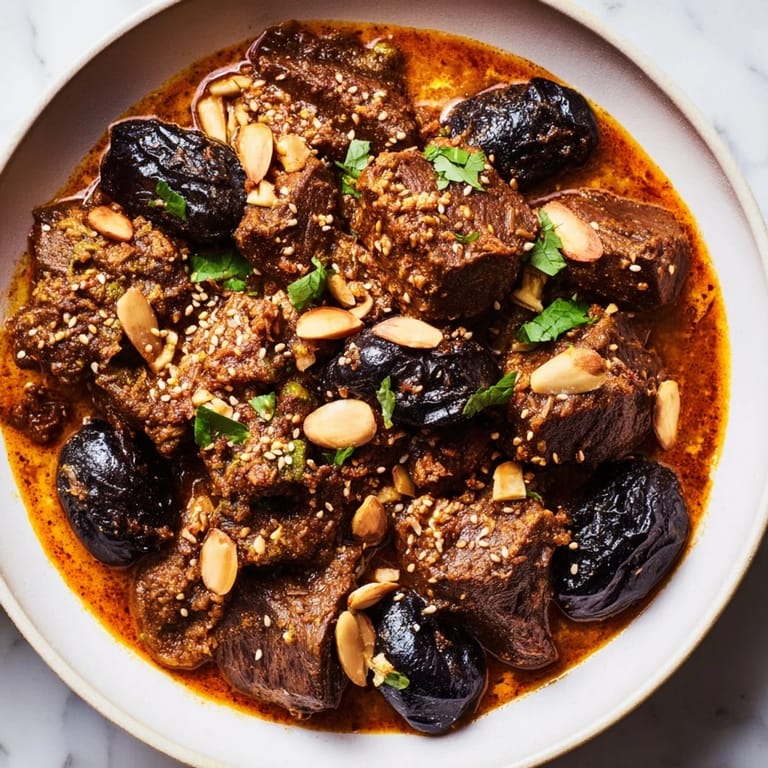
Pin There's a moment near the end when you lift the lid and the steam clears just enough to see the prunes sitting dark and plump on top of the lamb, the sesame seeds catching the light, the whole thing glossy and alive. That's when you know it worked. That's when the recipe becomes a memory.
The Moroccan Spice Balance
What makes this tagine sing is the way the spices layer without one overpowering the others. Cinnamon anchors everything with warmth, cumin and coriander add earthiness, turmeric brings color and subtlety, and the allspice and ginger add complexity that keeps people coming back for another bite wondering what they're tasting. The saffron, if you use it, is the whisper underneath, the note that makes someone say 'what is that?' I learned this by making the dish three times: once too heavy on cinnamon, once with too little spice altogether, and finally with balance. By the third time, I understood that Moroccan cooking isn't about dominance; it's about conversation between flavors.
Why Slow Cooking Matters Here
The long, gentle cook—whether in the oven or on the stovetop—is non-negotiable. Lamb shoulder needs time to break down into tenderness, and the liquid needs time to reduce and concentrate into sauce. Rushing this by raising the temperature or shortening the time will leave you with tough meat and thin sauce, which defeats the entire purpose. The Moroccan tradition of tagine cooking exists because of this patience; it's not fussy, it's wise.
Variations and Serving Ideas
This recipe is a framework, not a prison. I've made it with dried apricots instead of prunes, and it becomes brighter and less sweet. Some nights I add a handful of green olives near the end, and other times I substitute pistachios for almonds. Serve it over couscous if you want the sauce to soak in, over saffron rice if you want something more substantial, or with good bread for wiping bowls clean. Moroccan red wine pairs beautifully, or mint tea, which feels more authentic and helps cut through the richness without fighting the spices.
- Try substituting dried apricots for a brighter, less sweet version.
- A splash of orange juice added at the end brightens everything without being obvious.
- Leftovers taste even better the next day after flavors have settled and deepened overnight.
 Pin
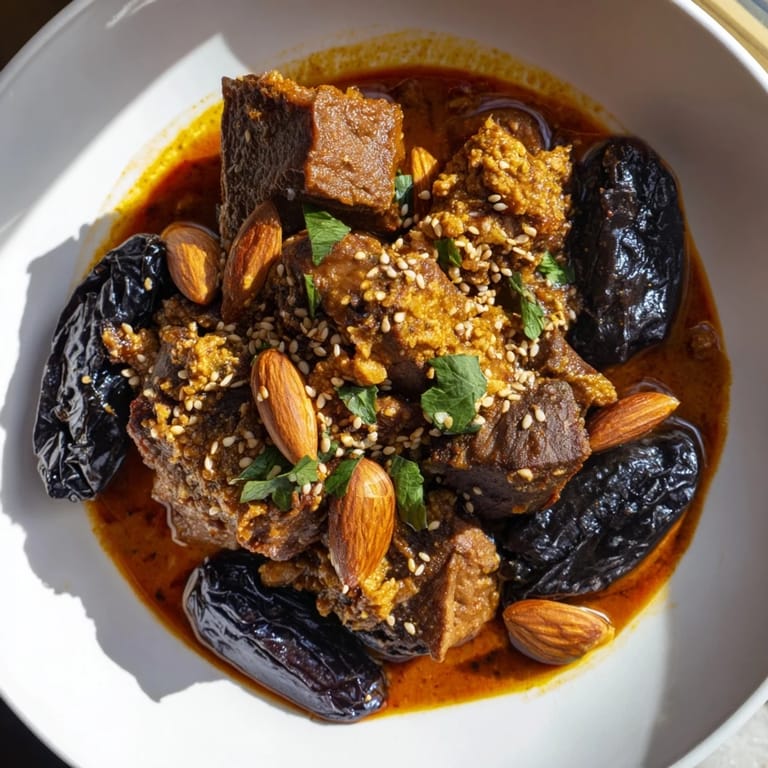
Pin This tagine is the kind of dish that fills the house with something more than aroma—it fills it with the feeling of care, of time taken, of flavors that traveled far to land on your table. Make it for people you want to slow down with.
Recipe Q&A
- → What cut of meat works best for this dish?
Lamb shoulder cut into cubes is ideal for slow cooking, yielding tender and flavorful results.
- → Can I substitute prunes with another fruit?
Apricots can be used instead of prunes for a slightly different sweetness and texture.
- → How do the spices influence the flavor?
Spices like cinnamon, cumin, coriander, and turmeric create a warm, fragrant profile characteristic of Moroccan cuisine.
- → Is it necessary to toast the almonds?
Toasting almonds enhances their nuttiness and adds a crunchy contrast to the tender meat and fruit.
- → What are suitable side dishes for this meal?
Serve with steamed couscous, saffron rice, or crusty bread to complement the rich sauce and spices.
- → Can this dish be made on a stovetop instead of the oven?
Yes, cooking it slowly over low heat in a covered pot replicates the tender, melded flavors achieved in the oven.