 Pin
Pin I was standing in my kitchen on a cold November evening, exhausted from a long week, when I realized I had nothing but pantry staples to work with. A can of chickpeas, a bag of lentils, and a half-wilted bunch of parsley stared back at me. I threw them into a pot with some spices I'd picked up at a Middle Eastern market months earlier, not expecting much. The smell that filled my kitchen twenty minutes later—earthy, tangy, warmth laced with lemon—made me stop chopping mid-motion. That night, I ate two bowls standing at the stove, and I've been making this stew ever since.
I brought this stew to a potluck once, worried it was too simple, too plain-looking compared to the casseroles and roasts. But people kept coming back for seconds, scraping their bowls clean and asking what spice made it taste so different. One friend told me it reminded her of her grandmother's cooking in Beirut. I hadn't set out to recreate anything traditional, but somehow, the combination of sumac, lemon, and slow-simmered legumes had unlocked something familiar and comforting. That's when I realized this recipe had become more than just a weeknight dinner for me.
Ingredients
- Dried brown or green lentils: These hold their shape beautifully during simmering and soak up all the spiced broth without turning mushy, giving the stew body and texture.
- Canned chickpeas: They add a creamy contrast to the lentils and save you from soaking beans overnight, making this recipe truly doable on a whim.
- Olive oil: Use a good one here because it's the base of your flavor, coating the aromatics and carrying the spices through every bite.
- Yellow onion: When you sauté it low and slow, it sweetens and mellows, creating a savory foundation that balances the tanginess to come.
- Garlic cloves: Minced fresh, they release a sharpness that softens into warmth as they cook, anchoring the whole dish.
- Carrots and celery: These two bring a subtle sweetness and earthiness that rounds out the stew, plus they soften into tender little bites.
- Ground sumac: This is the secret star, a tart, lemony spice that makes the stew taste bright and a little mysterious.
- Cumin, coriander, smoked paprika: Together they build a warm, smoky depth that makes the broth taste like it's been simmering for hours.
- Vegetable broth and water: The broth adds savory backbone while the water keeps things from getting too salty, letting the spices shine.
- Lemon juice: Stirred in at the end, it wakes everything up and ties the sumac's tartness into a cohesive, vibrant finish.
- Fresh parsley: Chopped and folded in, it adds a grassy brightness that cuts through the richness and makes each bowl feel fresh.
Tired of Takeout? 🥡
Get 10 meals you can make faster than delivery arrives. Seriously.
One email. No spam. Unsubscribe anytime.
Instructions
- Soften the aromatics:
- Heat the olive oil in a large pot over medium heat and add the chopped onion, stirring occasionally until it turns soft and translucent, about four or five minutes. The kitchen will start to smell sweet and inviting.
- Build the vegetable base:
- Toss in the garlic, carrots, and celery, and let them cook together for a few minutes until the garlic is fragrant and the vegetables just begin to soften at the edges. You'll notice the colors deepening slightly.
- Bloom the spices:
- Stir in the sumac, cumin, coriander, smoked paprika, salt, black pepper, and cayenne if you like heat, and let everything cook for about a minute. This step is magic because it releases the oils in the spices and makes the whole pot smell incredible.
- Simmer the legumes:
- Add the lentils, chickpeas, vegetable broth, and water, then bring it all to a boil. Once it's bubbling, lower the heat, cover the pot, and let it simmer gently for twenty-five to thirty minutes until the lentils are tender and the broth has thickened.
- Finish with brightness:
- Stir in the lemon juice and half the parsley, then let it cook uncovered for a couple more minutes. Taste it now and adjust the salt or lemon if needed.
- Serve it warm:
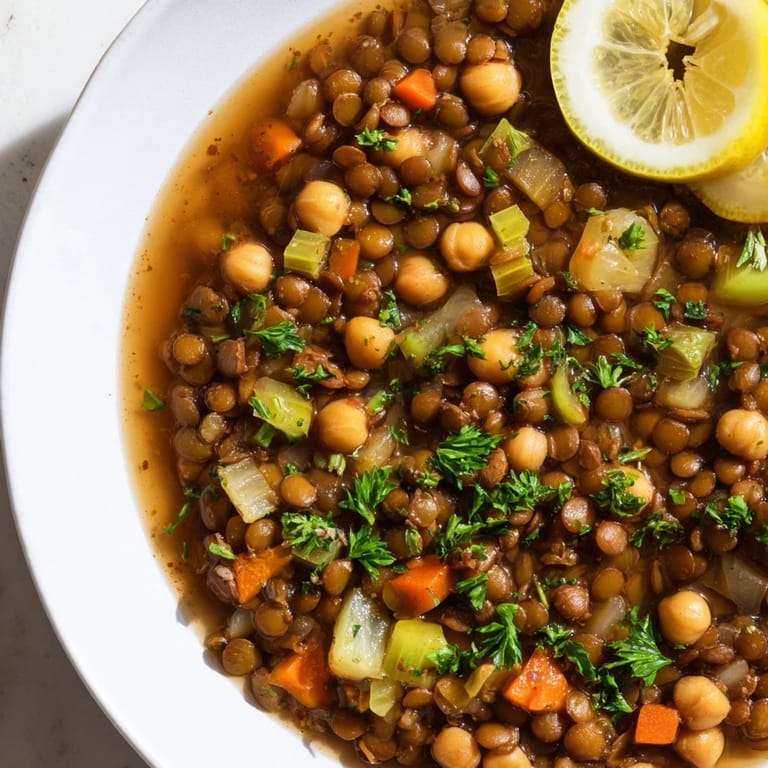
- Ladle the stew into bowls, scatter the remaining parsley on top, and tuck a lemon wedge on the side. Serve it hot, maybe with some warm flatbread to soak up the broth.
 Pin
Pin One rainy Sunday, I made a double batch of this stew and froze half of it in glass jars. A few weeks later, when I was sick with a cold and too tired to cook, I pulled one out and reheated it on the stove. The smell alone made me feel cared for, like someone had cooked for me even though I was alone. That's when I understood that this recipe wasn't just food, it was a kind of comfort I could give myself whenever I needed it.
Variations to Try
Sometimes I stir in a handful of chopped spinach or kale during the last five minutes of cooking, which adds a pop of green and makes the stew feel even more nourishing. If you want it richer, swirl in a spoonful of tahini or drizzle extra olive oil on top before serving. I've also served this over a scoop of warm rice or with a piece of torn flatbread on the side, and it turns into a meal that feels more substantial without much extra effort.
Storage and Reheating
This stew keeps beautifully in the fridge for up to five days, and the flavors actually deepen as it sits. I store it in a big glass container and reheat individual portions on the stove with a splash of water to loosen it up. It also freezes well for up to three months, so I like to make extra and stash some away for nights when I don't feel like cooking. Just thaw it overnight in the fridge and warm it gently, stirring in a little fresh lemon juice to bring back the brightness.
Serving Suggestions
I love serving this stew with warm pita or lavash on the side, something soft to dip and scoop with. A simple cucumber and tomato salad with a lemony dressing makes a perfect contrast to the richness of the legumes. If you want to make it feel like a feast, set out small bowls of olives, pickled turnips, and a dollop of thick yogurt, though the stew is vegan as written.
- Top each bowl with a drizzle of good olive oil and a pinch of extra sumac for a beautiful finishing touch.
- Serve it alongside roasted vegetables or a grain like bulgur or couscous for a heartier spread.
- Don't forget the lemon wedges, because that extra squeeze right before eating makes all the difference.
 Pin
Pin Every time I make this stew, I'm reminded that the best recipes are the ones that meet you where you are, whether you're tired, hungry, or just craving something warm and real. I hope this one becomes a comfort in your kitchen, too.
Recipe Q&A
- → What lentils work best for this stew?
Brown or green lentils hold their shape well and develop a rich texture suitable for hearty stews.
- → Can I adjust the spice levels?
Yes, cayenne pepper is optional and can be increased or omitted to suit your preferred heat level.
- → How does sumac enhance the flavor?
Sumac adds a tangy, lemony brightness that balances the earthiness of the lentils and chickpeas.
- → What are good accompaniments for this dish?
Serving it with warm flatbread or fluffy rice complements the stew's rich flavors and texture.
- → Can I add greens to the stew?
Yes, stirring in chopped spinach or kale during the last few minutes adds freshness and nutrients.