 Pin
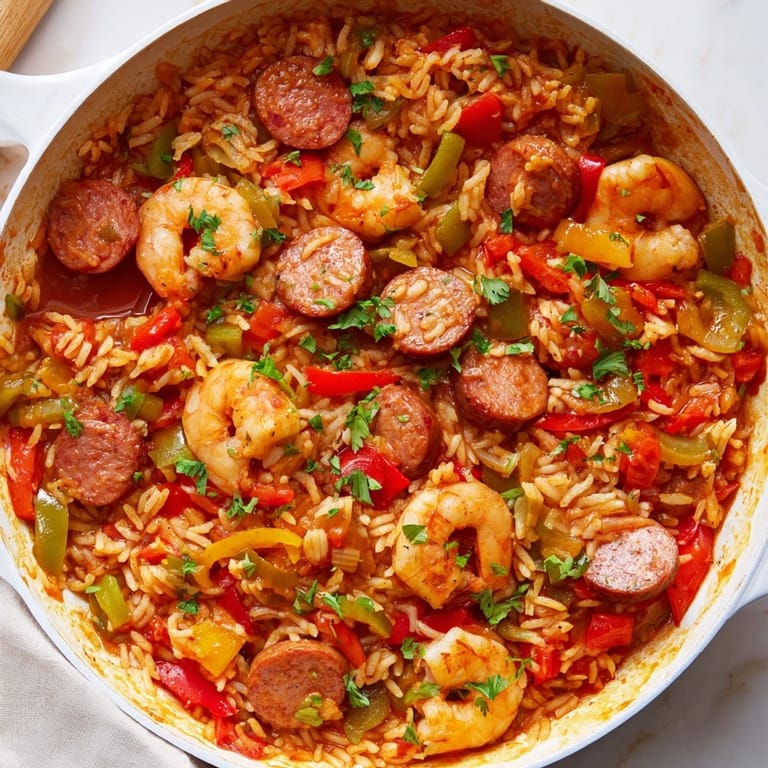
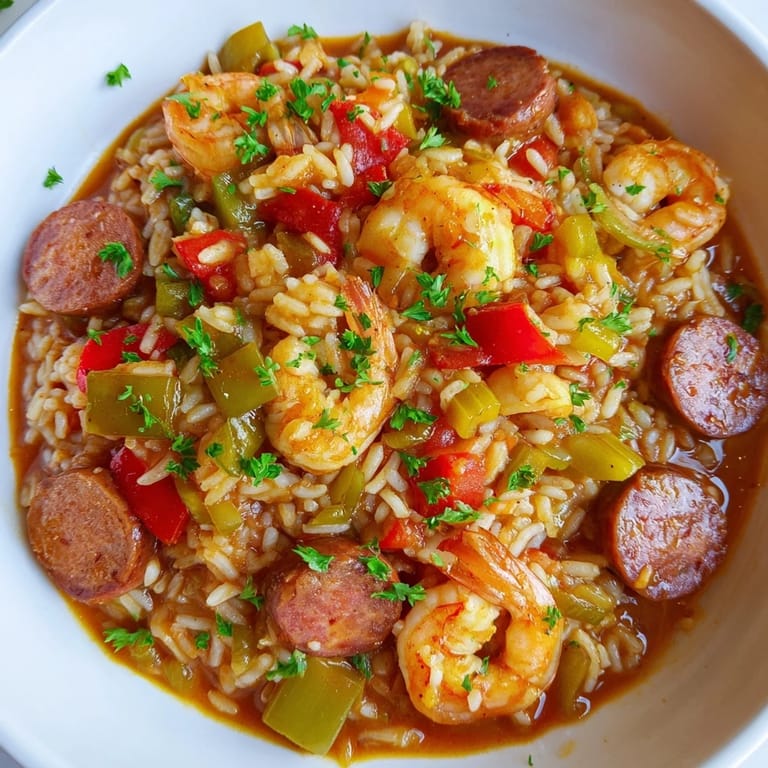
Pin One humid evening, my neighbor stopped by with a bag of fresh shrimp from the farmer's market, and I suddenly had to figure out what to do with them. I remembered a skillet meal my aunt made years ago—something with rice, sausage, and that unmistakable smoky warmth that made the whole kitchen smell like New Orleans. Digging through my spice cabinet, I realized I had everything I needed. That first attempt taught me that jambalaya isn't fussy; it's forgiving, honest cooking that rewards you for showing up with good ingredients and a willingness to let flavors build together.
I made this for a small dinner party once, and watching my friends go quiet after the first few bites told me everything. Someone asked for the recipe that night, and I loved how the dish managed to feel both approachable and restaurant-worthy. It's the kind of meal that makes people linger at the table, asking for seconds and talking about flavors instead of recipes.
Ingredients
- Andouille sausage (225 g / 8 oz): This smoky, spiced sausage is the backbone of the dish—it's what gives jambalaya its signature depth, so don't skip it or swap for mild varieties.
- Large shrimp (225 g / 8 oz), peeled and deveined: Fresh shrimp added near the end ensures they stay tender and succulent without turning rubbery.
- Yellow onion (1 medium), diced: The sweet base that balances the spice and heat in the sauce.
- Red and green bell peppers (1 each), diced: These are the holy trinity's colorful partners, adding brightness and a gentle sweetness that mellows the cayenne.
- Celery stalks (2), diced: Often overlooked, celery adds an earthy undertone that rounds out all the other flavors beautifully.
- Garlic (3 cloves), minced: Add it after the vegetables soften so it perfumes the oil without turning bitter.
- Long-grain white rice (200 g / 1 cup): Choose a quality brand; it absorbs all the broth and seasoning without turning mushy.
- Low-sodium chicken broth (400 ml / 1⅔ cups): The liquid that cooks the rice and carries all the spice flavor through each grain.
- Diced tomatoes (400 g / 1 can), undrained: The juice matters as much as the tomatoes—it adds acidity and body to the sauce.
- Smoked paprika (1 tsp): This is where the smoke comes from; regular paprika won't give you the same warm depth.
- Dried thyme and oregano (½ tsp each): These herbaceous notes tie the whole dish together without overpowering the sausage and seafood.
- Cayenne pepper (½ tsp): Adjust to your comfort level—this brings gentle heat that builds as you eat, not a sharp jolt.
- Freshly ground black pepper and salt (½ tsp and 1 tsp): Season in layers so the flavors develop naturally as the rice cooks.
- Olive oil (2 tbsp total): Use it to build flavor by cooking the sausage first, then sautéing the vegetables in what remains.
- Fresh parsley (2 tbsp), chopped: A bright finish that catches the light on the plate and adds a fresh note against all those warm spices.
Tired of Takeout? 🥡
Get 10 meals you can make faster than delivery arrives. Seriously.
One email. No spam. Unsubscribe anytime.
Instructions
- Brown the sausage first:
- Heat 1 tablespoon olive oil in your largest skillet over medium-high heat and add the sausage slices. You'll hear them sizzle immediately, and after 3–4 minutes, they'll develop a caramelized edge that's golden and slightly crispy. Set them aside on a plate and don't wash that pan—all those browned bits are liquid gold for flavor.
- Build your aromatic base:
- Add the remaining oil to the same skillet and add your onion, peppers, and celery all at once. Stir them around for 4–5 minutes until they start to soften and release their sweetness. You'll smell the shift happen—the raw vegetal sharpness softens into something sweeter. Add the garlic, give it one more minute, and watch how the whole kitchen fills with warmth.
- Toast the rice with the spices:
- Pour in the rice and all your dried spices at once—paprika, thyme, oregano, cayenne, black pepper, and salt. Stir constantly for about 1 minute so every grain gets coated in the oil and the spices bloom. This step matters more than you'd expect; it wakes up the flavors.
- Combine and simmer:
- Return the sausage to the skillet and add the tomatoes (with all their juice) and chicken broth. Stir everything together, bring it to a simmer, then reduce the heat to low. Cover the skillet and let it cook undisturbed for 20 minutes—the rice will drink in all that liquid and the flavors will marry into something cohesive.
- Add the shrimp at the end:
- After 20 minutes, arrange the shrimp on top of the rice mixture (don't stir them in yet), cover the skillet, and cook for another 5–7 minutes. You'll watch them turn from gray to pink, and the moment they're no longer translucent, they're done. Overcooked shrimp is the one mistake worth avoiding here.
- Finish and serve:
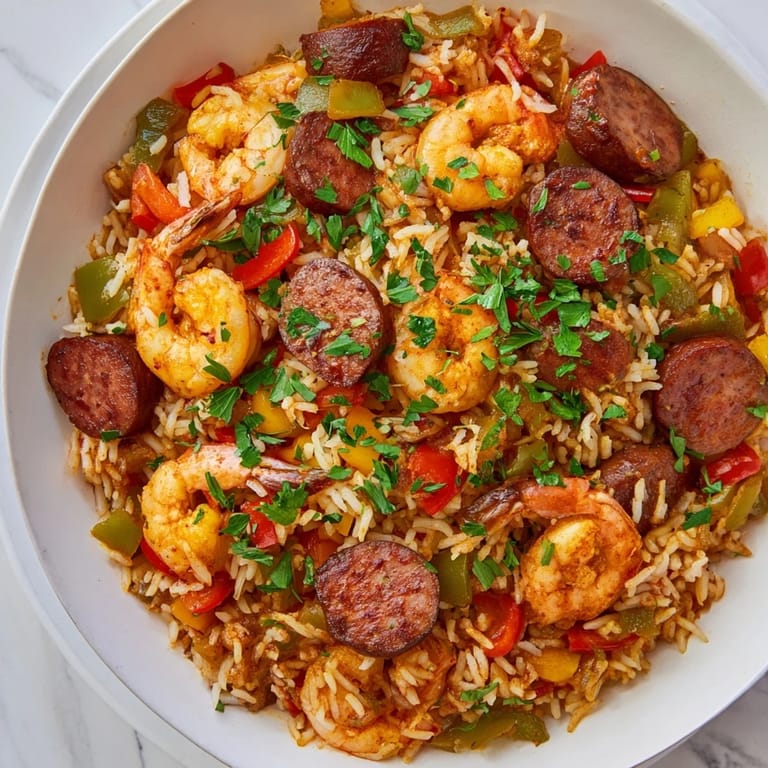
- Use a fork to gently fluff the rice, scatter fresh parsley over the top, and serve straight from the skillet if your table allows it. There's something about one-pan meals that feels celebratory.
 Pin
Pin I served this to my family last winter, and my sister asked if we could make it a regular thing. Now whenever someone says they need comfort food that feels a little bit fancy, this is what I suggest. It's the kind of dish that reminds you why one-skillet meals became classics.
Why This Recipe Works Every Time
The magic of jambalaya lives in layering—you brown the sausage first to build a flavor foundation, then create an aromatic base with vegetables, then bloom the spices in hot oil so they release their full potential. By the time the rice goes in, your skillet is humming with depth. The shrimp come last because they need only minutes, and they add a delicate sweetness that balances the smoke and heat. This sequence means you're not juggling multiple pans or timers; instead, you're building flavors strategically in one vessel.
Adjusting the Heat and Flavor
Cayenne pepper brings warmth that builds gradually rather than shocking your palate, so taste as you season and adjust before the rice goes in. If you prefer more punch, increase the cayenne slightly or serve hot sauce on the side so people can control their own heat level. Some families love a dash of Worcestershire sauce stirred in after the rice is cooked, or a pinch of file powder (ground sassafras) scattered over the top. The baseline recipe here is approachable for most tables, but it's also forgiving enough to evolve with your preferences.
Serving Suggestions and Pairings
Jambalaya is crowded enough that it doesn't need much accompaniment, but crusty bread on the side is never a mistake—there's always a little broth and sauce at the bottom of the skillet worth soaking up. A crisp white wine like Sauvignon Blanc or a cold lager beer complements the smoky spice beautifully. If you're feeding a crowd, consider a simple green salad afterward to cut through the richness, though honestly, most people are satisfied enough after one bowl that conversation becomes the main course.
- Serve this straight from the skillet if you're cooking casually; it looks abundant and tastes even better when shared family-style.
- Leftovers keep well in the refrigerator for 3–4 days and actually taste better the next day as the spices settle.
- You can meal-prep portions for the week if you're cooking ahead, though the rice will continue to absorb liquid, so add a splash of broth when reheating.
 Pin
Pin This recipe became my go-to for nights when I wanted something that felt special without requiring stress. It's the kind of meal that proves the best cooking often lives in simplicity and good timing.
Recipe Q&A
- → Can I substitute chicken for the shrimp?
Yes, you can replace shrimp with chicken pieces for a different protein option while maintaining similar cooking times.
- → What type of sausage works best in this dish?
Andouille or smoked sausage adds the ideal smoky flavor and firmness to complement the other ingredients.
- → How spicy is the dish and can it be adjusted?
The dish has a mild heat from cayenne pepper, which you can reduce or increase to suit your taste preferences.
- → What is the best way to prevent the rice from sticking to the skillet?
Use a deep skillet and cook on low heat with a lid to allow even simmering, and stir gently before serving to fluff the rice.
- → Can I prepare this meal ahead of time?
Yes, this dish reheats well and can be made in advance; just store it in an airtight container and warm gently before serving.
- → Is there an alternative seasoning mix I can use?
You may substitute the individual spices with Cajun seasoning for convenience and a similar flavor profile.