 Pin
Pin I discovered the power of a slate board at a cramped gallery opening where a caterer had arranged cured meats and cheeses in such severe, architectural lines that guests couldn't stop staring. There was something magnetic about the restraint—no frills, no fussy garnishes, just perfect rectangles of prosciutto meeting perfect rectangles of aged cheddar. That night, I realized that sometimes the most impressive thing you can serve is also the simplest to make.
I made this for a dinner party where I'd somehow agreed to bring appetizers with zero notice. Standing in my kitchen at five o'clock with an armload of groceries, I realized I had no fancy serving dish—just that cold slate tile I'd pulled up during a renovation. Thirty minutes later, when my friend walked in and set it down as the centerpiece of her table, she didn't even ask if I'd made it myself. The presentation spoke louder than any explanation could.
Ingredients
- Smoked Prosciutto, 100 g: The delicate backbone that melts on your tongue; slice it thin and drape it to catch the light.
- Soppressata, 100 g: This one has personality—peppery and dense, it holds its shape in clean lines better than softer cured meats.
- Coppa, 100 g: Marbled and richly flavored, it adds warmth and depth to balance the sharper cheeses nearby.
- Mortadella, 100 g: If you can find the good stuff, it becomes almost sweet against the blue cheese; it's the surprise in the arrangement.
- Aged Cheddar, 100 g: Go for something with real bite—the sharper the better to cut through the richness of the meats.
- Manchego, 100 g: Nutty and firm, it slices cleanly without crumbling and adds a gentle sweetness that rounds out the board.
- Gruyère, 100 g: The umami anchor; its savory complexity makes people pause and ask what that flavor is.
- Blue Cheese, 100 g: Crumble it or slice it thick—either way, it's bold enough to command attention without apology.
- Seedless Red Grapes, 1 small bunch: Their sweetness becomes a palate cleanser between the meats and cheeses; scatter them in small clusters for visual rhythm.
- Cornichons, 50 g: These tiny pickles give you a bright, vinegary moment that resets your mouth for the next bite.
- Whole Grain Mustard, 50 g: A touch here and there—it's a whisper of heat, not a shout.
- Mixed Olives, 50 g: Use a mix of green and black for visual contrast; their brininess is the wake-up call on the board.
- Freshly Cracked Black Pepper: This matters more than it sounds; coarse pepper adds texture and aroma that gentle grinding never delivers.
Tired of Takeout? 🥡
Get 10 meals you can make faster than delivery arrives. Seriously.
One email. No spam. Unsubscribe anytime.
Instructions
- Prepare Your Canvas:
- Set your slate or heavy stone board on the table or counter where you'll be working—these boards are substantial and shouldn't be moved once you've started. If you have time, chill it in the refrigerator for thirty minutes so everything stays cold longer.
- Arrange the Meats:
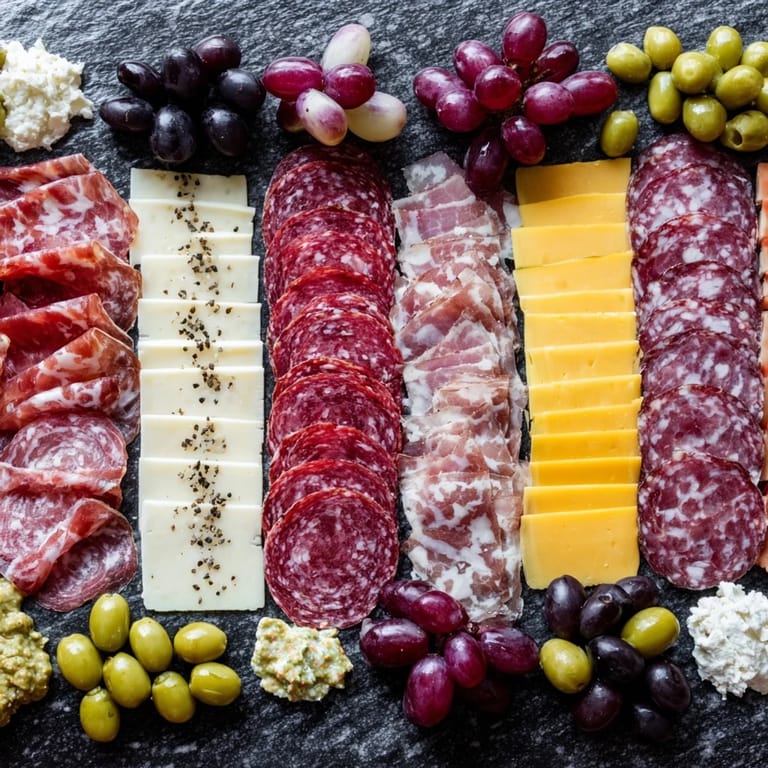
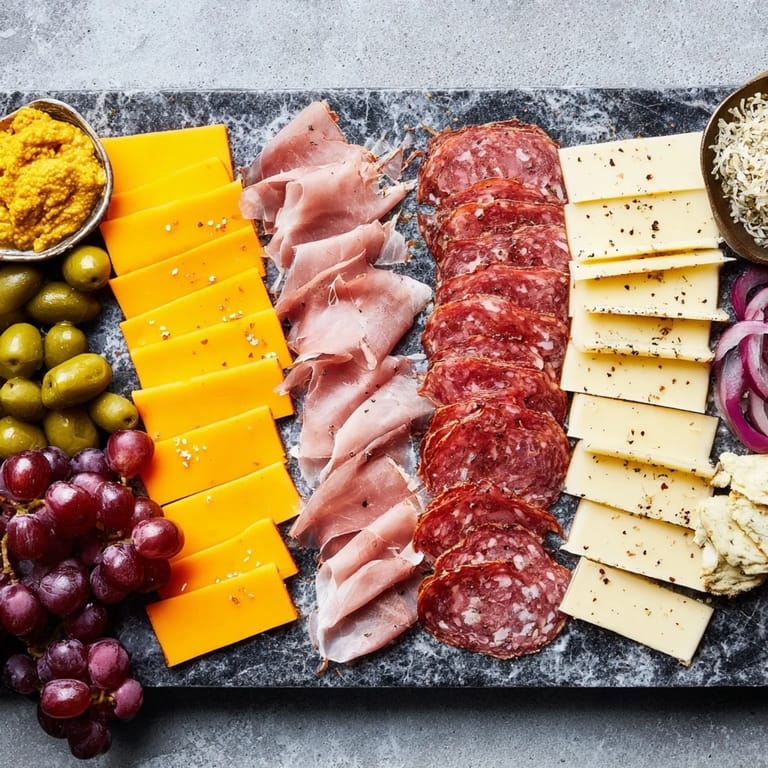
- Start with one side of the board and lay down the first cured meat in a straight line, overlapping slices slightly to create a ribbon of color and texture. Work methodically through each meat type, keeping them parallel and visually distinct so someone looking at the board can tell exactly where one flavor ends and another begins.
- Line Up the Cheeses:
- On the opposite side, slice your cheeses into uniform pieces and arrange them in matching parallel lines—aged cheddar in one line, Manchego in the next, and so on. The geometric precision is what makes this feel intentional rather than thrown together.
- Fill the Spaces:
- Now the board should look like two opposing armies, and the middle ground is yours to fill with grapes, cornichons, and olives in small clusters. Think of them as the glue that ties the composition together without overwhelming it.
- Add the Mustard:
- Dollop whole grain mustard in a thin line parallel to the other elements, or keep it in a small bowl at one corner—the symmetry here is what keeps the whole arrangement feeling controlled and intentional.
- Finish with Pepper:
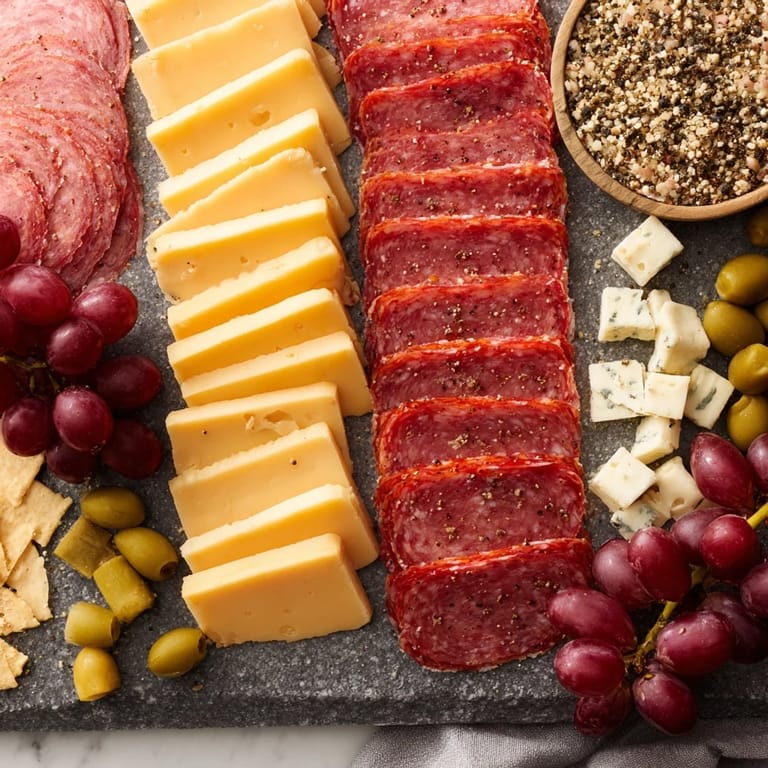
- A generous sprinkle of freshly cracked black pepper across the meats and cheeses adds not just flavor but visual texture that photographs beautifully and promises complexity with every bite.
- Serve Immediately:
- Set this down in front of your guests and step back—the arrangement is the opening statement, and people will dig in with much more respect than if you'd just dumped everything on a plate.
 Pin
Pin The real moment came when my sixteen-year-old nephew, who I'd written off as someone who only ate pizza and chicken nuggets, asked for thirds and wanted to know exactly what the blue cheese was. He spent ten minutes just eating around the board, learning each flavor, making tiny combinations. Food that looks this confident somehow gives people permission to be brave with their choices.
Why Slate Changed Everything
Before I understood the power of presentation, I would buy beautiful ingredients and serve them on whatever clean plate was closest. But unpolished stone has a weight to it—literally and metaphorically. It announces that you've thought about what you're serving, that you respect the food enough to give it a stage. The slate doesn't compete with the food; it amplifies it by refusing to be decorative.
Building Your Board
The geometry of this board is actually a kind of conversation with your guests. Instead of making decisions for them by creating crowded flavor combinations, you're presenting options in clear lines so they can taste each element separately or build their own combinations. It's generous in a way that feels almost respectful—you're not curating their experience so much as offering them the tools to create their own.
Wine and Pairing Wisdom
I learned early on that serving this without considering the drink beside it is like buying a beautiful frame and hanging it in a dark room. A crisp Sauvignon Blanc cuts through the richness of the aged cheddar and the fattiness of the mortadella with such elegance, while a bold Cabernet Sauvignon plays rough and tumble with the blue cheese and soppressata in the best possible way.
- Chill your wine glasses ahead of time so the temperature stays true from first sip to last.
- Offer both options if you can—let people discover which they prefer as they move through the board.
- A touch of sparkling water between bites keeps the palate honest and ready for the next flavor.
 Pin
Pin This board has become my favorite thing to make for people because it's honest food, beautifully arranged, and almost impossible to mess up. It asks only that you respect the ingredients and take two minutes to arrange them with intention.
Recipe Q&A
- → What meats are ideal for this platter?
Smoked prosciutto, soppressata, coppa, and mortadella provide varied textures and flavors for a balanced cold meat selection.
- → Which cheeses work best with cold meats?
Aged cheddar, Manchego, Gruyère, and blue cheese offer sharp, robust flavors that pair well alongside cured meats.
- → How can I keep the platter cold during serving?
Chill the stone slab before arranging ingredients to maintain a fresh, cool temperature throughout the event.
- → What accompaniments enhance this selection?
Seedless grapes, cornichons, mixed olives, and whole grain mustard add sweetness, tang, and depth between the meats and cheeses.
- → Are there vegetarian substitutions?
Omit the meats and add marinated artichoke hearts and roasted nuts for a flavorful vegetarian variation.