 Pin
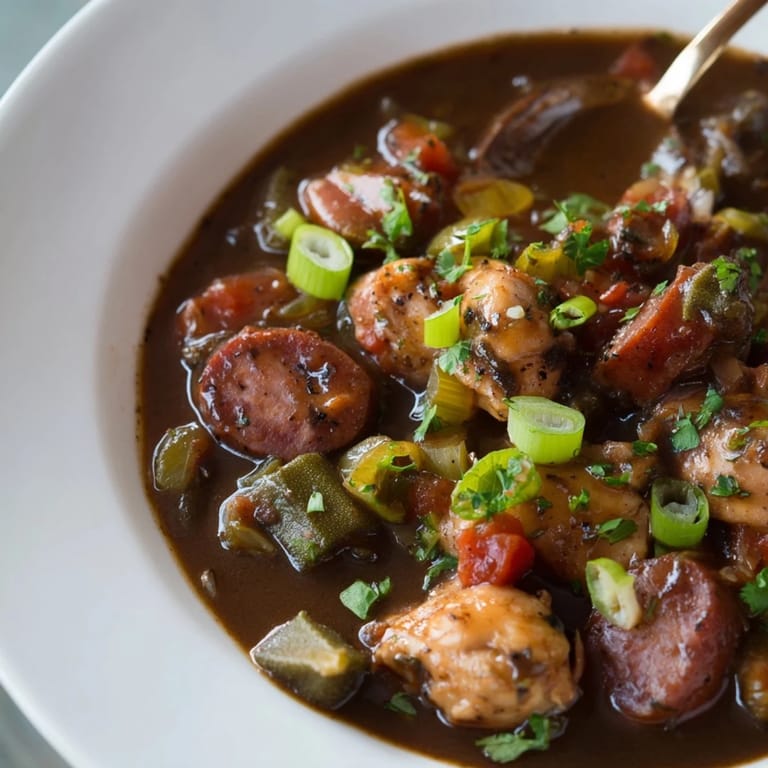
Pin The first time I made gumbo, I was standing in a borrowed kitchen in New Orleans, watching my friend's grandmother stir that roux like she was conducting an orchestra. She never took her eyes off it, wouldn't let me touch the spoon—just kept whispering, "Dark chocolate, cher, dark chocolate." That moment taught me that gumbo isn't just food; it's patience made edible, a dish that demands your presence and rewards it with warmth that goes straight to your bones.
I made this for my neighbors on a cold February evening, and something magical happened—the whole building smelled like Louisiana by the time they knocked on my door. We ate it standing in the kitchen, spoons clinking against bowls, everyone quieter than usual because you don't interrupt a moment like that. It became the dish I reach for when I want to feel connected to something bigger than myself.
Ingredients
- Boneless, skinless chicken thighs (350 g): Thighs stay tender and juicy through the long simmer, unlike breasts which can turn stringy—this is the secret to restaurant-quality gumbo at home.
- Smoked andouille sausage (225 g): Its smoky spice is non-negotiable for authentic flavor, but any quality smoked sausage will work if andouille isn't available.
- Fresh or frozen okra (250 g): This vegetable is the soul of gumbo—it thickens naturally and adds a subtle, earthy sweetness that brings everything together.
- Onion, bell pepper, and celery (chopped): This holy trinity is the aromatic foundation of Creole cooking, and there's no shortcut here—they need time to soften.
- Garlic (3 cloves, minced): Added after the soffritto keeps it bright and fresh rather than burnt and bitter.
- Tomatoes (2 fresh or 1 can, 400 g drained): They add acidity and body without overpowering the roux's deep, savory character.
- All-purpose flour and vegetable oil (60 g each): This 1:1 ratio is the foundation of a proper roux—don't eyeball it or rush the browning process.
- Chicken stock (1.5 liters): Quality stock makes the difference between gumbo and something that tastes like dishwater, so use the best you can find.
- Bay leaves, thyme, smoked paprika, cayenne, Worcestershire (as listed): Together they build layers of flavor—warm spice, earthiness, and a subtle smoky undertone.
- Spring onions and parsley (for garnish): Fresh herbs at the end cut through the richness and remind you this is still a vegetable-forward dish.
Tired of Takeout? 🥡
Get 10 meals you can make faster than delivery arrives. Seriously.
One email. No spam. Unsubscribe anytime.
Instructions
- Build your roux—the foundation:
- Heat the oil over medium heat, then add flour and whisk constantly for 15 to 20 minutes until it's a deep chocolate brown. This isn't multitasking time—keep your eyes on it, keep your hand moving, and stop just before it tips into burnt. The darker it is, the richer your gumbo will taste.
- Sauté the holy trinity:
- Once your roux is ready, add the chopped onion, bell pepper, and celery right away to stop the cooking. They'll soften in 3 to 4 minutes, then stir in the garlic for another minute until it's fragrant and golden.
- Brown the proteins:
- Add the okra:
- Slide in the sausage and chicken pieces and let them get a little color—5 minutes gives you a better flavor foundation. Then add the okra for 3 to 4 minutes so it starts releasing its natural thickener.
- Build the broth:
- Add tomatoes, stock, bay leaves, thyme, paprika, cayenne, Worcestershire, salt, and pepper, then bring to a boil. Immediately drop the heat to low and let it simmer uncovered for 45 to 50 minutes, stirring now and then to make sure nothing sticks on the bottom.
- Finish and taste:
- Remove the bay leaves, taste carefully, and adjust seasoning—you might want more cayenne for heat or more salt for depth. If you want it thicker, sprinkle in filé powder off the heat and stir until it's dissolved.
- Serve with gratitude:
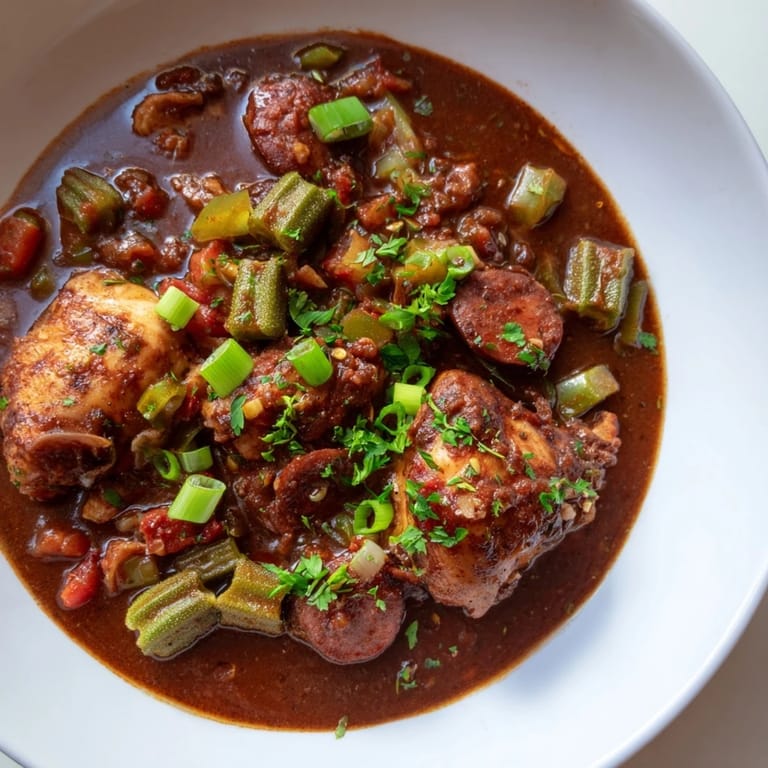
- Ladle it over warm white rice, top with spring onions and parsley, and let everyone add hot sauce to their liking. This is food meant to be shared.
 Pin
Pin I learned the real meaning of this dish when my partner's grandmother was sick, and I brought her a bowl of gumbo I'd made at home. She took one spoonful and just closed her eyes—didn't say anything, just sat there with her hand on her heart. That's when I understood: gumbo is how we say "I'm thinking of you" and "everything will be okay" without using any words at all.
The Art of the Roux
Making a roux is meditation disguised as cooking. The oil and flour transform together, bubbling and darkening minute by minute, and there's something almost hypnotic about watching it—you have to stay present, keep stirring, and trust the process. I've found that a wooden spoon is gentler than a whisk for the final stages, and low-medium heat gives you more control than you'd think. Once it's that deep chocolate brown, you've created the flavor base that makes gumbo taste like home, regardless of whose kitchen you're cooking in.
Why Okra Matters
Okra got a bad reputation from people who cooked it wrong—boiled it to death, made it slimy and sad. But in gumbo, it's magic. The vegetable releases its natural mucilage slowly, thickening the broth from the inside out, and adding a subtle green earthiness that balances the smoky sausage. Fresh okra is wonderful, but I've had equally beautiful results with frozen, as long as you thaw and drain it first. The point is, don't skip it thinking you need something fancier—okra is what makes gumbo, gumbo.
Serving and Storing
Gumbo is best served hot over a generous scoop of white rice, letting the broth soak into the grains while you're still eating. The flavors deepen as it sits, so leftovers are often better the next day—store it in an airtight container in the fridge for up to four days, or freeze it for up to three months. Reheat gently on the stovetop, adding a splash of stock if it's thickened too much, and remember that hot sauce is always optional but somehow always necessary.
- Crusty French bread is non-negotiable for soaking up every drop of that precious broth.
- For a seafood gumbo, add shrimp or crab meat in the last 10 minutes of cooking to keep them tender.
- Make extra roux and freeze it in ice cube trays so you can start a pot of gumbo anytime a craving hits.
 Pin
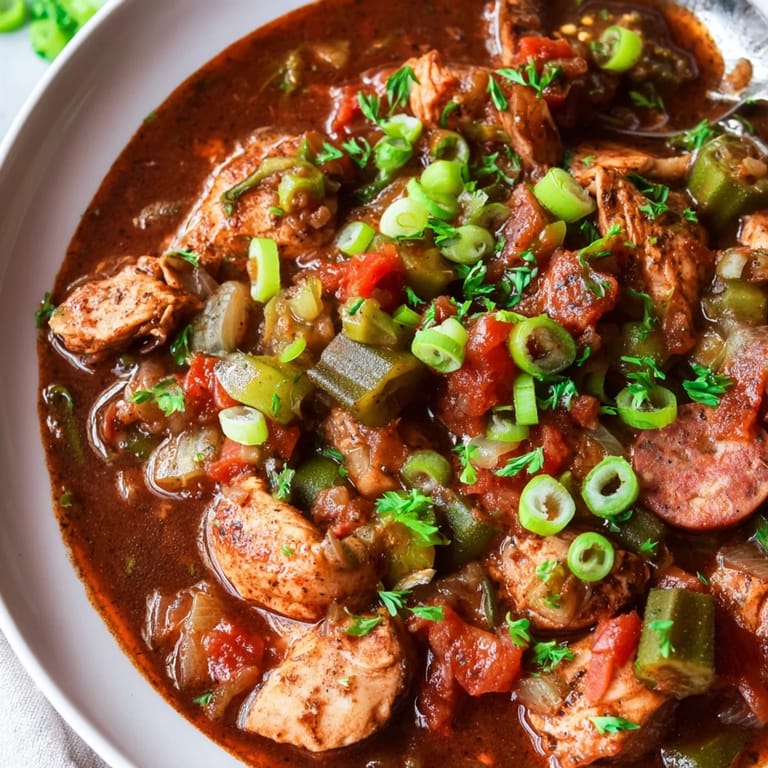
Pin Gumbo teaches you that the best meals are made slowly, tasted carefully, and shared generously—and that sometimes the most comforting food isn't fancy, it's just made with enough love that everyone knows it. Make this for people you care about, and watch it do what it's always done: bring warmth and connection to the table.
Recipe Q&A
- → What is the purpose of the dark roux in this dish?
The dark roux provides a deep, nutty flavor and thickens the broth, forming the signature base of the dish's rich texture and color.
- → Can frozen okra be used in place of fresh?
Yes, frozen okra can be used; just be sure to thaw and drain it thoroughly before adding to prevent excess moisture.
- → What types of sausage work best here?
Smoked andouille sausage is traditional for its smoky, spicy notes, but other smoked sausages can be substituted if unavailable.
- → How can the dish be thickened further if desired?
Sprinkling filé powder off the heat towards the end of cooking thickens the broth and adds a subtle earthy flavor.
- → Is this dish typically served with any accompaniments?
It is commonly served hot over cooked white rice and pairs well with crusty French bread for a complete meal.
- → Can seafood be incorporated in this preparation?
Yes, adding peeled shrimp or crab meat in the last 10 minutes of simmering introduces a delicious seafood dimension.