 Pin
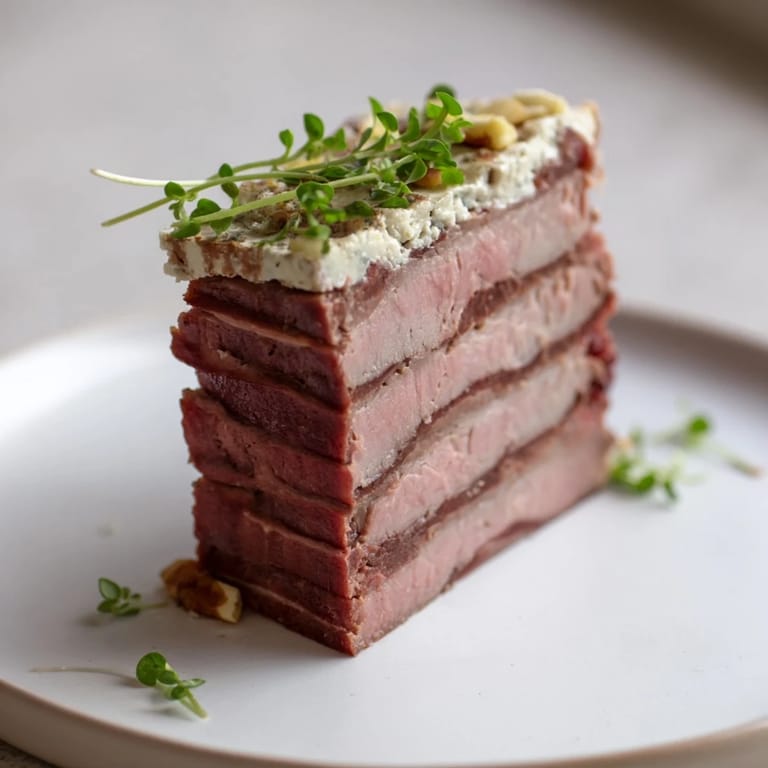
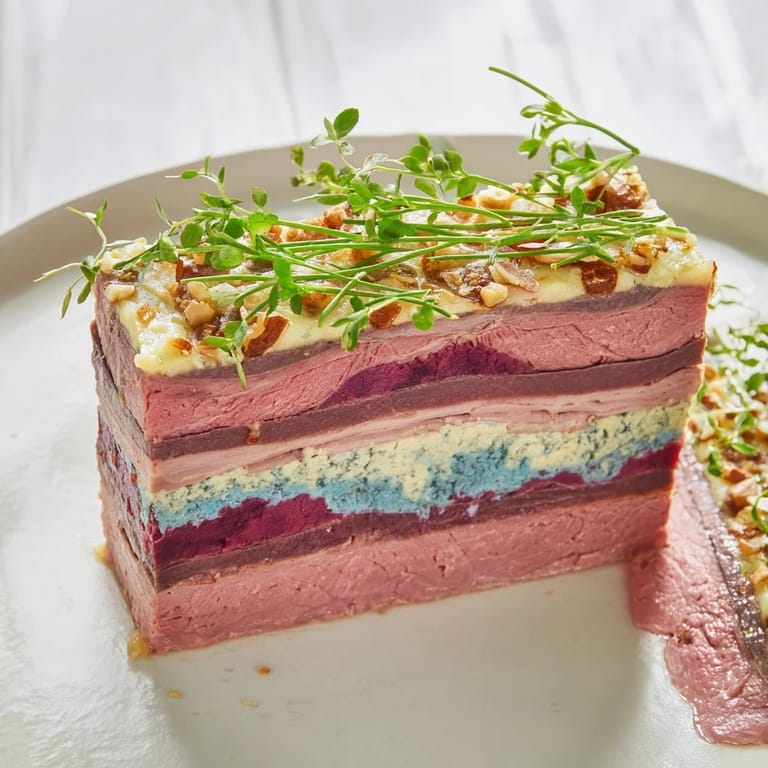
Pin The first time I saw the Grand Canyon, I was struck silent by its impossibility—these layers of rust and gold and shadow stacked so perfectly they seemed to defy nature. Years later, standing in my kitchen with a collection of fine meats and a wedge of pungent blue cheese, I wondered if I could capture that feeling on a plate. This terrine became my answer: a architectural marvel that tastes as bold as it looks, with a river of blue cheese running through its heart like the Colorado itself.
I made this for a dinner party on a late autumn evening, and I remember standing at the counter arranging those meat slices like I was painting, trying to get them to slope just right. My friend Sarah watched from the kitchen stool and said it looked like something from a natural history museum. When we finally sliced into it after those long chilling hours, the room went quiet for a moment—not because it looked strange, but because it was genuinely beautiful.
Ingredients
- Beef sirloin, thinly sliced (300 g): The backbone of your terrine, bringing an earthy, mineral quality that anchors the whole composition.
- Turkey breast, thinly sliced (250 g): This is your delicate layer, pale and mild, providing contrast and preventing the terrine from becoming too heavy.
- Smoked ham, thinly sliced (200 g): Don't underestimate how much personality this adds—it's the smoke that lingers on your palate after each bite.
- Pork loin, thinly sliced (200 g): Tender and slightly sweet, it bridges the gap between the beef's depth and the turkey's lightness.
- Blue cheese, crumbled (150 g): This is your moment to be bold; don't hold back on the funk and intensity, it's what makes this special.
- Cream cheese, softened (100 g): It keeps the blue cheese mousse smooth and spreadable, preventing it from becoming grainy.
- Heavy cream (30 ml for mousse, plus 60 ml for binding): Both portions matter; the first aerates the cheese, the second binds the whole structure together.
- Fresh chives, finely chopped (1 tbsp): This bright onion note cuts through the richness in a way that feels almost revelatory.
- Fresh parsley, finely chopped (1 tbsp): Your gentle herbal whisper, there to remind you this came from the earth.
- Eggs (4 large): The secret binder that holds everything together without anyone really noticing it's there.
- Whole milk (120 ml): Dilutes the egg mixture just enough to keep it from scrambling when it touches the warm meats.
- Salt and black pepper to taste: Season as you layer, tasting as you go; this is not a recipe where you season blindly at the end.
Tired of Takeout? 🥡
Get 10 meals you can make faster than delivery arrives. Seriously.
One email. No spam. Unsubscribe anytime.
Instructions
- Prepare your stage:
- Preheat your oven to 160°C and line a standard loaf pan with plastic wrap, leaving enough overhang to seal it closed later. This low, slow heat is essential; too hot and your terrine will weep and separate.
- Make the binding elixir:
- Whisk together the eggs, milk, cream, salt, and pepper in a small bowl until the mixture is pale and slightly foamy. This is your edible glue.
- Blend the blue cheese river:
- In another bowl, blend the blue cheese, cream cheese, 30 ml heavy cream, chives, parsley, and pepper until it's smooth and mousse-like. Taste it—you want it bold enough that it's almost confrontational.
- Begin the canyon walls:
- Start arranging beef slices in the bottom of your pan, overlapping them slightly and angling them slightly downward along one side. Think of how geological strata lean; let your meat do the same.
- Build your layers with intention:
- Add turkey, then ham, then pork, then back to beef if you have enough, always angling them to suggest depth and slope. After every 2 to 3 meat layers, brush lightly with your binding mixture; this is what makes everything hold.
- Create the river:
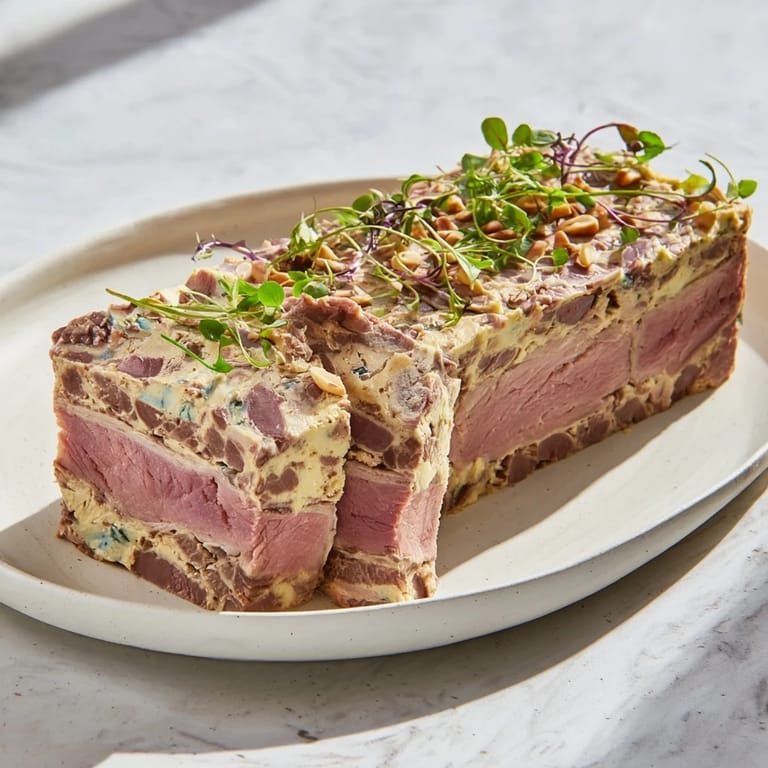
- About halfway up the pan, spoon that blue cheese mousse in a thick, deliberate river down the center. Then continue layering meats around and over it, maintaining your canyon wall effect. This moment is where the ordinary becomes theatrical.
- Seal and bake:
- Fold the plastic wrap over the top to seal everything in, cover tightly with foil, and place the loaf pan in a larger roasting dish. Fill the roasting dish with hot water until it reaches halfway up the sides of your pan; this bain-marie keeps everything gentle and even.
- Let time do the work:
- Bake for 1 hour 15 minutes, then let it cool to room temperature, which takes patience. Once cool, refrigerate for at least 4 hours—preferably overnight—so the structure can set and the flavors can marry.
- The reveal:
- Unmold it onto a serving platter by carefully pulling back the plastic and turning it out onto a cutting board first if you're nervous. Slice it thick with a sharp, warmed knife so the layers don't tear.
 Pin
Pin That dinner party ended with people asking for the recipe, which made me laugh because how do you explain in words what actually matters—that it's about patience, about layering not just flavors but intention? One guest said it tasted the way the canyon felt, which I think is the highest compliment this dish could ever receive.
Variations That Work
This terrine is more flexible than it appears. If blue cheese feels too aggressive for your table, swap it for herbed goat cheese or even a smooth pâté for something earthier and less funky. For smoke, trade some of the pork for prosciutto or smoked duck breast, or add a teaspoon of smoked paprika to the binding mixture. The structure stays the same; only the personality changes.
What to Serve Alongside
Thick slices of toasted brioche are almost mandatory—they soften under the weight of the terrine and catch all those gorgeous juices. A bright, peppery arugula salad with lemon vinaigrette cuts through the richness perfectly, and wine is essential: reach for something light like a Pinot Noir or a crisp Albariño. The slight acidity keeps your palate awake.
A Final Note on Presentation
The beauty of this dish is that it does most of the work for you. A few microgreens scattered across the top, perhaps an edible flower if you can find them, and toasted walnut pieces for crunch and earthiness—these touches honor what you've built without overshadowing it. Remember, this terrine spent hours becoming what it is; let it shine.
- Chill your serving plates beforehand so the slices don't warm up and start to soften immediately.
- Use a long, thin, very sharp knife for slicing, and wipe it clean between cuts so each slice looks deliberate and clean.
- Let people cut into it themselves if you're serving it family-style; that moment of discovery is part of the magic.
 Pin
Pin This terrine is patient food for patient people, the kind of dish that asks you to slow down and think about how flavors and textures can live together in harmony. Make it when you want to impress, but make it even more when you want to remind yourself that cooking is sometimes architecture, sometimes art, and sometimes both.
Recipe Q&A
- → How do I create the layered cliff effect?
Arrange the sliced meats in overlapping layers, alternating types and sloping them slightly downward to mimic canyon cliffs.
- → What is the purpose of the blue cheese mixture?
The blue cheese, combined with cream cheese and herbs, forms a mousse-like river that runs through the terrine, adding vibrant color and flavor.
- → How should the terrine be cooked for best results?
Bake the terrine in a bain-marie at a low temperature (160°C/320°F) to ensure gentle, even cooking and prevent drying out.
- → Can I substitute the meats used in the layers?
Yes, smoked duck or prosciutto can replace some meats for a smoky twist while maintaining the layered texture.
- → How long should I chill the terrine before serving?
Chill in the refrigerator for at least 4 hours, preferably overnight, to allow it to set and develop flavors fully.
- → What garnishes complement this layered terrine?
Microgreens, edible flowers, and toasted walnuts add freshness, color, and a crunchy contrast to the savory layers.