 Pin
Pin There's something about the sizzle of cold rice hitting a hot pan that makes me feel like I'm actually cooking something worthwhile, even on nights when I'm exhausted and have nothing in the fridge except yesterday's rice and a couple of eggs. My neighbor taught me this dish years ago by literally standing in my kitchen and narrating the whole thing—she'd say, 'Listen for that sound, that's when you know the rice is getting crispy,' and somehow that one detail made me stop rushing through it. Now whenever I make fried rice, I slow down just enough to hear it, and it always turns out better.
I made this for my partner one random Tuesday when we were tired of eating out, and watching him take that first bite and actually pause—not to be polite, but because he was genuinely surprised it tasted this good—that moment convinced me I was onto something worth repeating. He's asked for it at least once a week since then, which is both flattering and slightly hilarious given how simple it actually is.
Ingredients
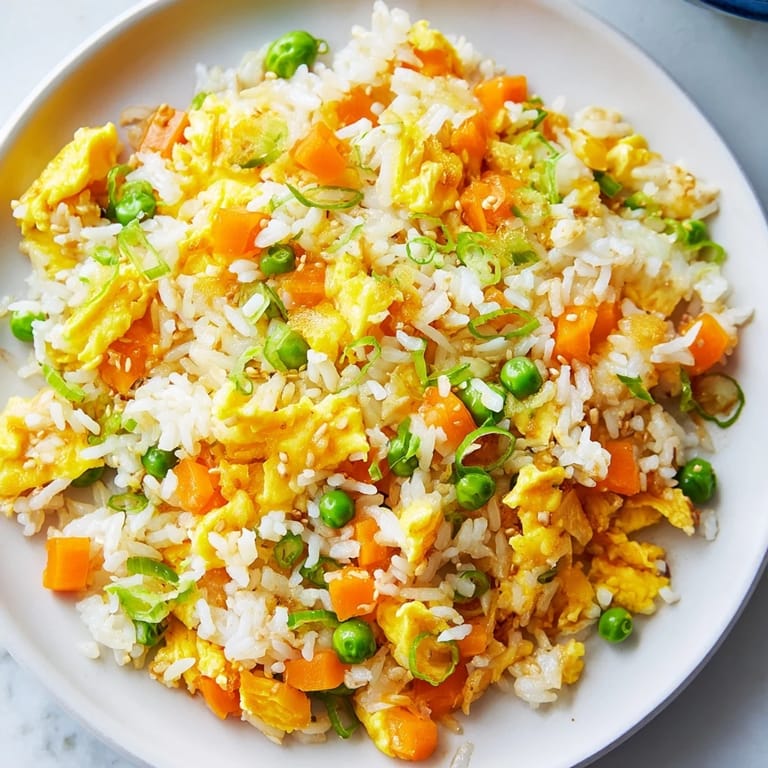
- Cooked leftover rice (2 cups): Day-old rice is crucial because the starches have set, making each grain separate and fluffy instead of clumpy—if you only have fresh rice, spread it on a plate and let it cool for 20 minutes before cooking.
- Large eggs (2): Room temperature eggs scramble more evenly than cold ones, and breaking them into a bowl first saves you the mess of shell fragments later.
- Diced carrots (1/2 cup): They add sweetness and color, and cutting them small means they'll soften in the same time it takes everything else to cook.
- Frozen peas (1/2 cup, thawed): Thaw them briefly under warm water so they don't drop the temperature of the pan and slow everything down.
- Chopped scallions (1/4 cup): Split this in half—half goes in during cooking for flavor, half goes on top at the very end so you get those bright, fresh bites.
- Bell pepper (1/2 cup, optional): Any color works, but I love using red because it stays a little crisp and looks beautiful scattered through the rice.
- Soy sauce (2 tablespoons): Low-sodium tastes better to me because you can actually taste the other ingredients, not just salt.
- Sesame oil (1 teaspoon): This tiny amount is what makes it taste like fried rice and not just scrambled eggs mixed with rice—don't skip it or double it, the balance matters.
- Ground white or black pepper (1/4 teaspoon): White pepper is milder and blends in; black pepper is more assertive and adds visible flecks.
- Vegetable oil (2 tablespoons): Use something neutral like canola or grapeseed so the sesame oil is the only strong flavor.
Tired of Takeout? 🥡
Get 10 meals you can make faster than delivery arrives. Seriously.
One email. No spam. Unsubscribe anytime.
Instructions
- Get everything ready:
- Chop all your vegetables into roughly the same size so they cook evenly, crack the eggs into a bowl and beat them with a fork until the yolks and whites are completely mixed together.
- Cook the eggs first:
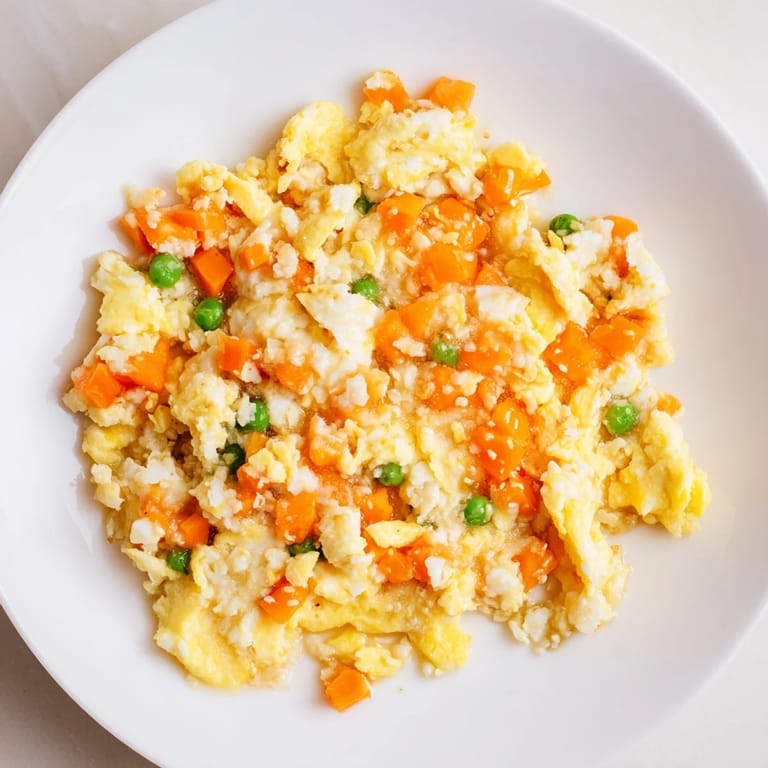
- Heat 1 tablespoon of oil in your skillet over medium-high heat until you can feel the warmth radiating from the pan—pour in the beaten eggs and scramble them constantly with a spatula, breaking them into small pieces as they cook. The moment they're just set but still soft, push them onto a plate and wipe the pan clean with a paper towel.
- Start the vegetables:
- Add the remaining oil to the now-empty pan, let it heat for about 20 seconds, then add the carrots and bell pepper—they'll sizzle immediately, which is the sound you want to hear. Stir them constantly for about 2 minutes until they're just starting to soften but still have a tiny bit of crunch.
- Build the base:
- Toss in the peas and half of your scallions, let them warm through for 1 minute, then add all your cold rice at once. Break up any clumps with your spatula and keep stirring—you're not trying to brown the rice, just warm it through and coat each grain evenly with the hot oil, which takes about 2 to 3 minutes.
- Season and pull together:
- Drizzle the soy sauce and sesame oil over the rice, stirring constantly so the flavors distribute evenly throughout—you'll smell it getting richer and more fragrant. Return the scrambled eggs to the pan and toss everything together for about 1 minute so the eggs warm back up and break into small pieces that get scattered through the rice.
- Finish it:
- Taste it, add pepper and a tiny pinch of salt if it needs it, then turn off the heat and scatter the remaining scallions on top so you get that fresh onion flavor in every bite.
 Pin
Pin My favorite memory of this dish is when my teenage niece asked if she could make it herself, and I realized somewhere along the way it had become simple enough that she actually could—she was so proud of how it turned out, and I realized I'd accidentally passed on more than just a recipe. Sometimes the best things we cook aren't about impressing anyone, they're just about feeding people you love with something that came from your own hands.
Vegetable Swaps That Actually Work
The beauty of fried rice is that it's genuinely forgiving—I've made it with corn instead of peas, snap peas instead of bell peppers, and broccoli florets cut tiny and it all comes together beautifully. The only rule is cut everything roughly the same size and don't use vegetables with too much water content (like tomatoes or zucchini) because they'll make the rice soggy. I once made it with mushrooms sautéed separately and that was a game-changer—the umami from them deepened the whole dish.
Adding Protein and Making It Bigger
This recipe easily doubles when you have guests, and it's the perfect vehicle for leftover chicken, cooked shrimp, or crumbled tofu stirred in at the very end—I usually add it when the eggs go back in so it has a minute to warm through. For shrimp I've learned to cook them separately first because if they go straight into the pan with everything else they get a little rubbery, but chicken and tofu are fine added cold at the end. If you want to go really fancy, a soft-fried egg on top instead of scrambled eggs throughout is restaurant-level and honestly not much harder to pull off.
Flavor Layers You Can Play With
A tiny minced garlic clove or a pinch of fresh ginger stirred in when you add the vegetables changes the whole character of the dish—I was hesitant about this at first because it felt like I was messing with something that worked, but it actually just gives it more depth and makes it feel less plain. White pepper gives it a different feel than black pepper, kind of smoother and more elegant, so try both and see which one you prefer.
- A drizzle of chili oil or a pinch of red pepper flakes at the end adds heat without overpowering the other flavors.
- If you have oyster sauce in your pantry, use 1 teaspoon alongside the soy sauce for a richer, slightly sweet undertone.
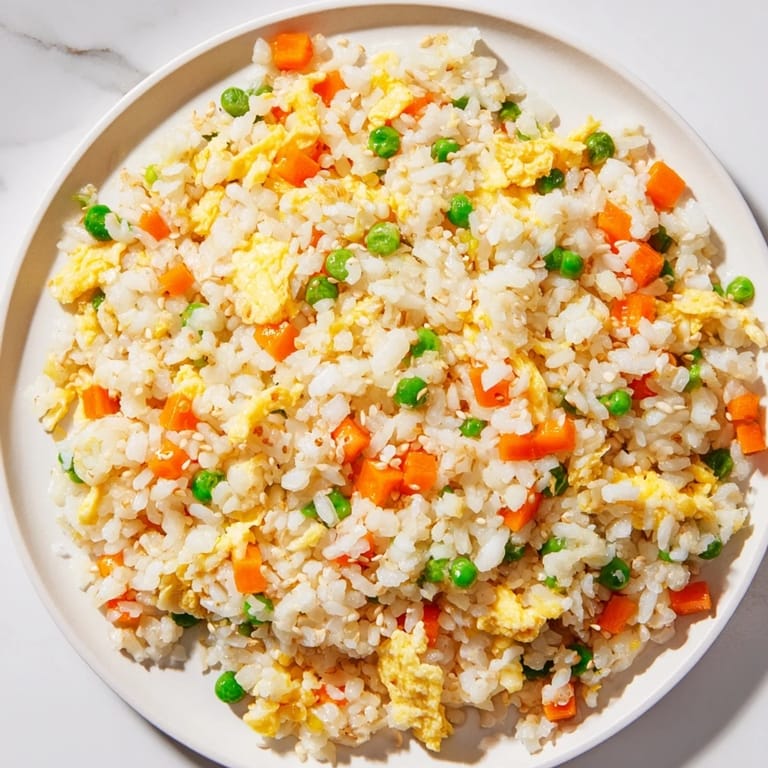
- Toasted sesame seeds scattered on top at the very end add a subtle nuttiness and look intentional in the best way.
 Pin
Pin This is the meal I reach for when I need proof that delicious food doesn't require fancy ingredients or hours of time, just a hot pan and the willingness to listen for that perfect sizzle. Every version tastes a little different depending on what I had available that day, and somehow that's always been the point.
Recipe Q&A
- → What type of rice works best for this dish?
Day-old, cold rice is ideal as it prevents clumping and helps achieve a fluffy texture when stir-fried.
- → Can I substitute the vegetables?
Yes, vegetables like corn, snap peas, or broccoli make excellent alternatives depending on availability and preference.
- → How should the eggs be cooked?
Beat eggs lightly and scramble quickly over medium-high heat until just set, then combine with the rice and veggies.
- → What oils are recommended for stir-frying?
Neutral oils like vegetable or canola work well, along with a touch of sesame oil for flavor.
- → How can I add protein to this meal?
Adding cooked chicken, shrimp, or tofu enhances nutrition and complements the existing flavors.