 Pin
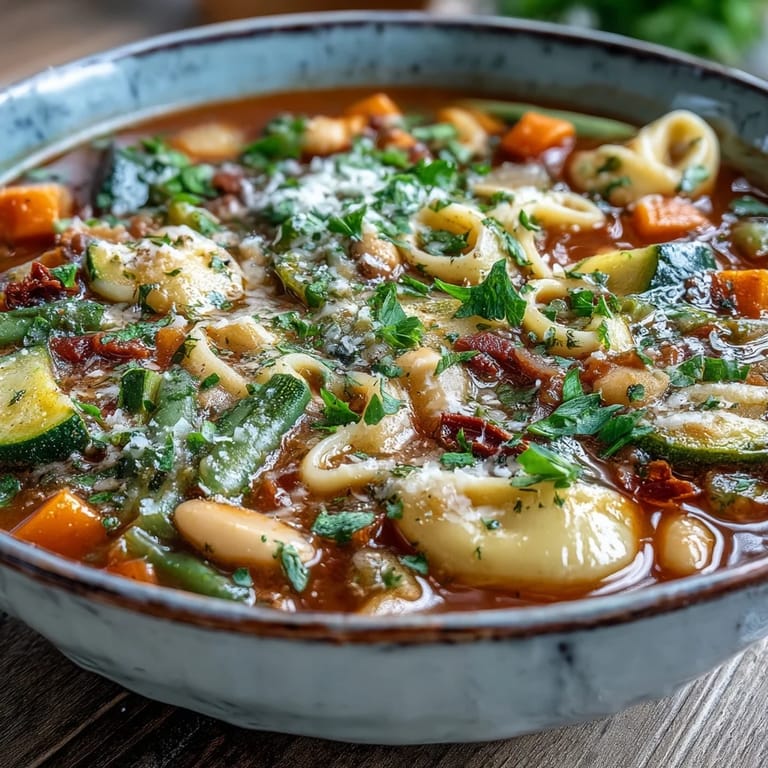
Pin My neighbor Maria taught me that minestrone isn't something you perfect—it's something you adjust. She'd make it every Sunday with whatever vegetables were lingering in her crisper drawer, humming along to old Italian radio while her kitchen filled with steam. The first time I watched her cook it, I was struck by how she treated the recipe like a conversation with the seasons rather than a rigid instruction manual. Now, whenever I make this soup, I think of her saying, 'The vegetables talk to you if you listen.'
I made this for my friend Daniel on a cold November evening when he'd been having a rough week. He arrived looking exhausted, and I ladled soup into bowls while the kitchen smelled warm and alive. He ate two servings without saying much, but halfway through the second bowl, he looked up and smiled—not because the soup was fancy, but because it felt like someone had made time for him. That's when minestrone stopped being just dinner for me.
Ingredients
- Olive oil: Two tablespoons is enough to build flavor without making the soup slick; extra virgin is worth it here since you taste it in every spoonful.
- Onion, carrots, and celery: This classic trio (soffritto) is the foundation—don't skip the sauté step, as it develops sweetness and depth that carries through the whole pot.
- Garlic: Mince it fine so it distributes evenly and doesn't announce itself in surprising chunks.
- Zucchini or butternut squash: Summer or winter versions both work beautifully; squash adds earthiness when the weather turns cold and zucchini stays bright when it's warm.
- Green beans or leafy greens: These add texture and color, and they're flexible—use what your market has that day.
- Diced tomatoes: Canned is actually better than fresh here because the cooking process concentrates the flavor, giving the broth a subtle tang.
- Potato: Optional, but it adds body and makes the soup feel more substantial without needing cream.
- Vegetable broth: A good quality broth matters; it's the backbone of everything else.
- Cannellini or borlotti beans: Drained and rinsed so they don't make the soup starchy—they add protein and a creamy texture that makes it feel hearty.
- Small pasta: Ditalini, elbow, or shells work because they're sized to fit on the spoon with everything else.
- Bay leaf: Just one—it flavors the broth quietly without overwhelming it.
- Oregano and basil: Dried herbs are fine; add them later so they don't lose their brightness to long cooking.
- Fresh parsley: Stirred in at the end, it brings a green note that wakes up the whole pot.
- Parmesan cheese: Optional for serving, but if you use it, grate it fresh—the difference is noticeable.
Tired of Takeout? 🥡
Get 10 meals you can make faster than delivery arrives. Seriously.
One email. No spam. Unsubscribe anytime.
Instructions
- Build the base:
- Warm the olive oil in a large pot over medium heat, then add your diced onion, carrots, and celery. Let them soften for about five minutes—you'll notice the onion turning translucent and the whole pot smelling sweeter. This is the moment where the foundation gets laid.
- Add the tender vegetables:
- Stir in the minced garlic, zucchini or squash, and green beans or kale, cooking for three minutes until everything becomes fragrant and the garlic loses its raw edge. Don't let the garlic brown; just let it warm and release its flavor into the oil.
- Begin the simmer:
- Pour in the diced tomatoes and potato if you're using one, add the bay leaf, and let everything cook together for two minutes before adding the vegetable broth. The tomatoes will break down slightly and meld with the softer vegetables, creating a richer base for the broth to build on.
- Let it bubble gently:
- Bring the pot to a boil, then lower the heat to a gentle simmer and let it go for fifteen minutes. This gives the vegetables time to become tender and allows all the flavors to get to know each other.
- Add the beans and pasta:
- Stir in the drained beans and pasta, then simmer uncovered for ten to twelve minutes until the pasta is soft and the vegetables are completely tender. Watch it gently—you want the soup to bubble quietly, not aggressively.
- Season and finish:
- Remove from heat and fish out the bay leaf, then stir in the oregano, basil, salt, and pepper to taste. Finally, add the fresh parsley and let it brighten everything you've made.
 Pin
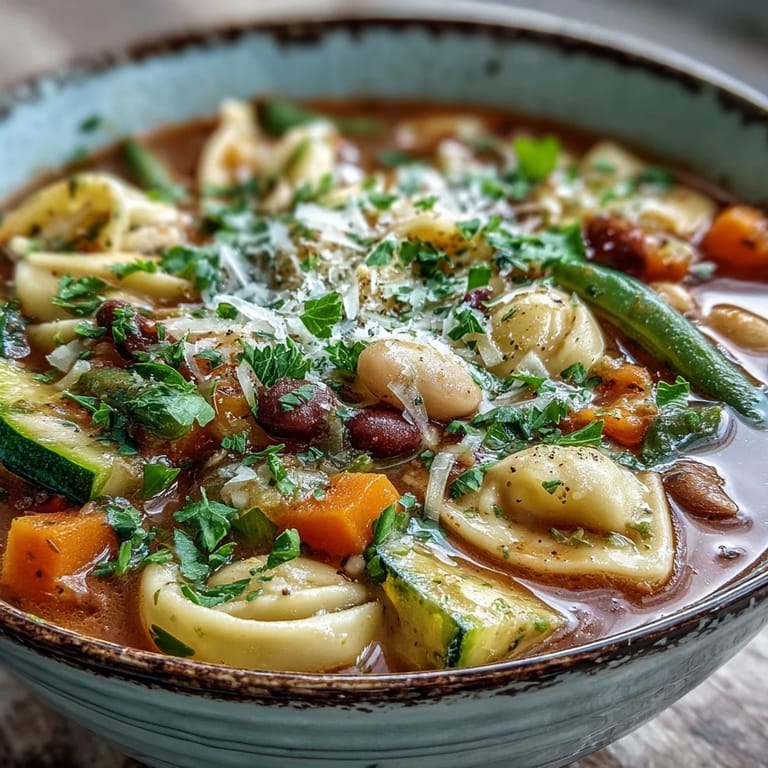
Pin There's a moment near the end of making this soup when you stand over the pot and breathe in the steam—when the garlic and basil and tomato and all those vegetables have melted into something bigger than themselves. That's the moment I know it's going to be good, not because it looks a certain way, but because it smells like someone's home kitchen, not a recipe.
Making It Your Own Through Seasons
Minestrone is a soup that changes with what grows around you. In spring, I add fresh peas and tender leeks; in summer, I load it with zucchini and green beans; by autumn, I'm reaching for butternut squash and kale. Winter is when I add cabbage or savory cabbage and root vegetables. The technique stays the same, but the soul of the soup shifts. This flexibility is what keeps it from feeling tired—each season tastes completely new even though you're making essentially the same thing.
The Parmesan Rind Secret
If you've saved a Parmesan rind in your freezer (and you should), drop it into the broth while the soup simmers. It dissolves slowly, adding a savory depth that most people can't identify but definitely taste. Remove it before serving, but know that this small addition transforms the whole bowl. It's the kind of trick that separates a good bowl of soup from one that makes people ask for the recipe.
Serving and Storing
Serve it warm in deep bowls with crusty bread torn into pieces and a generous glug of extra virgin olive oil drizzled on top. The oil sits on the surface, carrying more flavor with every spoonful. This soup keeps beautifully in the refrigerator for four days and tastes even better the next day when all the flavors have settled. You can also freeze it (though the pasta will soften more when thawed, so you might add fresh pasta to reheated portions instead).
- Fresh parsley should be added just before serving so it stays bright green and doesn't darken in the pot.
- If the soup thickens too much in the refrigerator, thin it with a splash of broth or water when reheating.
- Grate fresh Parmesan directly over each bowl—it melts slightly into the heat and tastes completely different than pre-grated.
 Pin
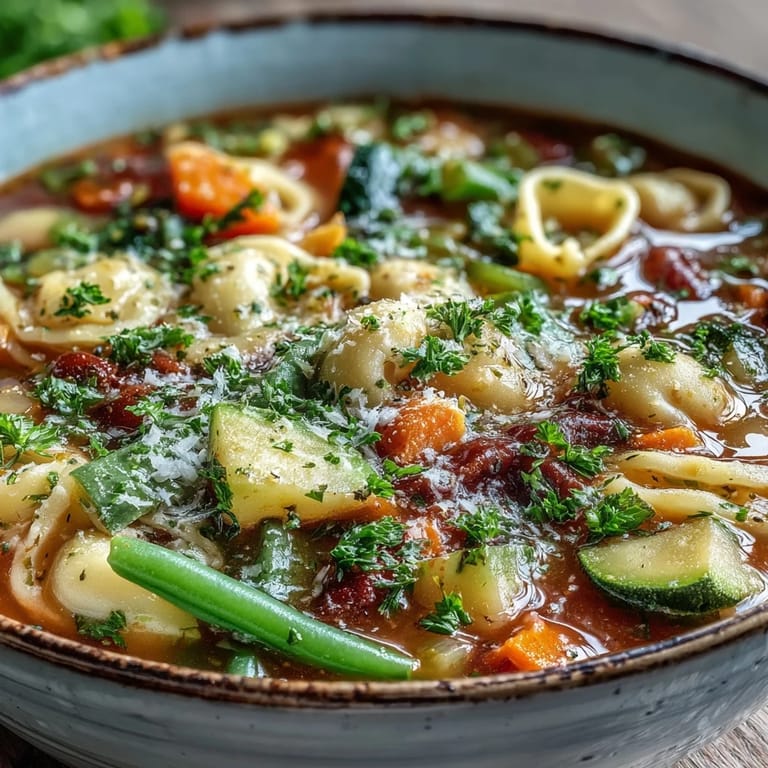
Pin This soup asks nothing complicated of you, just presence and attention. Make it when you want to feel grounded, or when someone you care about needs more than just food.
Recipe Q&A
- → What vegetables work best in minestrone?
Classic minestrone includes onions, carrots, celery, zucchini, and green beans. For winter variations, substitute butternut squash, kale, or spinach. Spring additions like peas, leeks, or fresh cabbage work beautifully. The key is using whatever seasonal vegetables you have available.
- → Can I make this vegan?
Absolutely. Simply omit the Parmesan cheese or use a dairy-free alternative. The base soup is naturally plant-based, using olive oil instead of butter and vegetable broth as the liquid.
- → What pasta shapes are traditional?
Small pasta shapes like ditalini, elbow macaroni, or small shells work best. They're the perfect size to scoop up with a spoon and hold onto the flavorful broth. You can also break spaghetti into shorter pieces if that's what you have on hand.
- → How long does minestrone keep in the refrigerator?
Stored in an airtight container, minestrone keeps well for 3-4 days. The flavors often deepen and improve after a day. Note that the pasta will continue to absorb liquid, so you may need to add more broth when reheating.
- → Can I freeze minestrone?
Yes, but it's best to freeze without the pasta. Cook the soup base, cool completely, and freeze for up to 3 months. When ready to serve, thaw, reheat, and cook fresh pasta in the simmering soup for the best texture.
- → What makes minestrone authentic?
Authentic minestrone relies on the soffritto base of onions, carrots, and celery sautéed in olive oil, quality vegetable broth, and the addition of beans for protein and creaminess. The Parmesan rind simmering technique adds deep umami flavor without overwhelming the vegetables.