 Pin
Pin My first encounter with proper baklava wasn't in Turkey, but in a crowded Istanbul spice market transplanted to a corner shop in my neighborhood. The owner's grandmother was visiting, and she stood behind the counter with a knowing smile, offering me a piece that had been soaking in honey for hours. The moment the phyllo shattered between my teeth, I understood why this dessert has endured for centuries. That afternoon, sticky fingers and all, I decided I had to learn to make it.
I made this for my best friend's dinner party last autumn, and watching her eyes close when she took that first bite told me everything. Her guests kept reaching for just one more piece, and within an hour, the batch I'd carefully assembled that morning had nearly vanished. She asked for the recipe before dessert was even finished, which felt like the highest compliment.
Ingredients
- Walnuts, finely chopped: The backbone of the filling, offering an earthy depth that anchors the sweetness.
- Pistachios, finely chopped: These add brightness and a subtle salty note that balances the honey beautifully.
- Almonds, finely chopped: They contribute a delicate sweetness and help create the right texture in the filling.
- Granulated sugar: Mixed into the nuts to create pockets of flavor that caramelize slightly during baking.
- Ground cinnamon: The unsung hero, warming every layer with its familiar embrace.
- Phyllo dough, thawed: This is where patience matters; thawed, not room-temperature phyllo is forgiving.
- Unsalted butter, melted: Each brushstroke creates the promise of crispness; don't skimp on this step.
- Honey: Use the best quality you can find, as it's the soul of the syrup.
- Water: Dilutes the honey just enough so the syrup soaks in rather than sitting on top.
- Lemon juice and zest: These lift the sweetness with a whisper of brightness that makes people pause and wonder what they're tasting.
- Cinnamon stick: Infuses the syrup with a warmth that ties everything together.
Tired of Takeout? 🥡
Get 10 meals you can make faster than delivery arrives. Seriously.
One email. No spam. Unsubscribe anytime.
Instructions
- Set your stage:
- Preheat your oven to 350°F and butter that baking dish thoroughly. Have your phyllo dough thawed and ready, covered with a damp towel so it doesn't dry out while you work.
- Build your nut mixture:
- Toss together the walnuts, pistachios, almonds, sugar, and cinnamon in a bowl. Taste a tiny pinch—you're looking for that warm spice note to sing through the nuttiness.
- Layer with intention:
- Lay down the first phyllo sheet, brush it generously with melted butter, and feel how it wants to cling to the brush. Repeat until you have eight buttery layers creating your base.
- Introduce the nuts:
- Sprinkle one-third of your nut mixture evenly across the phyllo, breaking up any clumps so the filling distributes fairly. Add five more buttered layers of phyllo on top, then another third of the nuts.
- Final build:
- Layer five more buttered phyllo sheets, add the last of the nuts, then top with the remaining eight to ten phyllo sheets, buttering each one as you go. By the end, your stack should feel substantial and slightly damp from the butter.
- Cut before baking:
- Using a sharp, steady knife, cut the baklava into diamonds or squares in one confident motion—hesitant sawing tears the phyllo. You're looking for pieces about two inches across.
- Bake to golden:
- Slide it into the oven for 45 minutes until the top is deep golden and you can hear the phyllo crackling slightly when you listen closely. The kitchen will smell impossibly good.
- Prepare your syrup:
- While the baklava bakes, combine honey, water, sugar, lemon juice, zest, and cinnamon stick in a saucepan. Bring to a boil, then let it simmer gently for ten minutes so the flavors marry.
- The crucial moment:
- The moment the baklava comes out of the oven, strain the warm syrup and pour it slowly and evenly over the hot pastry. This is where the magic happens—the hot phyllo absorbs the syrup like it was meant to.
- The hardest part—waiting:
- Let it cool completely at room temperature, resisting the urge to slice into it for at least four hours. This patience is what transforms good baklava into unforgettable baklava.
 Pin
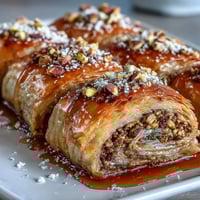
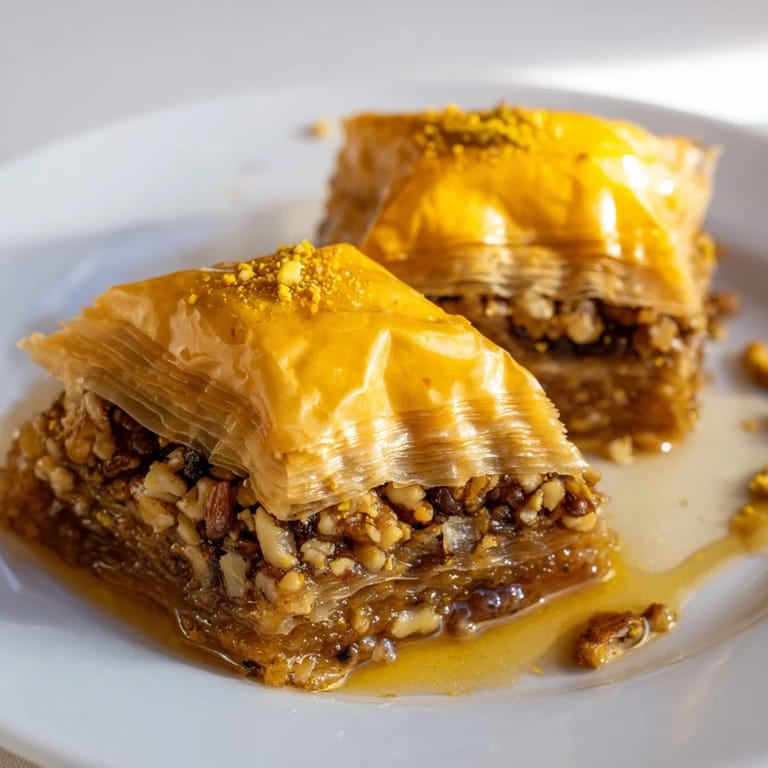
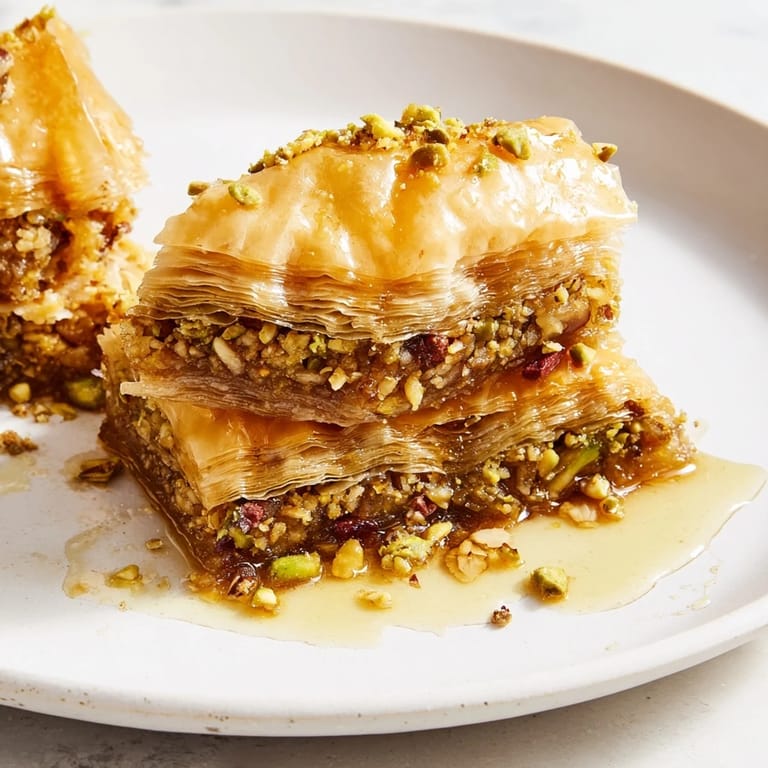
Pin There's a moment in every successful baklava making when you pull it from the oven and the whole thing glistens like amber. I remember standing there, syrup in hand, thinking how something so simple—nuts, butter, honey—could become something so elegant and beloved across so many kitchens and centuries.
Secrets to Crispy Phyllo
The difference between baklava that shatters beautifully and baklava that chewy comes down to butter and technique. Each sheet needs a generous but even coating—not so much that it pools, but enough that every inch of phyllo gets contact with the melted butter. I learned this the hard way after my first attempt came out looking more like a soggy pastry than a crisp one.
Why the Honey Syrup Matters
The syrup isn't just sweetness; it's the binding agent that transforms separate layers into a unified dessert. The lemon juice and cinnamon in mine were afterthoughts at first, but they completely changed the flavor profile, adding complexity that honey alone could never achieve. That's when I realized baklava is less about following a formula and more about understanding how each component elevates the others.
Serving and Storing
Baklava is one of those rare desserts that actually improves as it sits, the flavors melding and deepening over a few days. I keep mine covered at room temperature, and it stays fresh and perfectly moist for up to a week—though it rarely lasts that long in my house. The best time to serve it is warm, alongside a small cup of strong Turkish coffee or fragrant tea, allowing that bittersweet pairing to heighten every sensation.
- Cut fresh pieces just before serving if you want that crisp shattering moment.
- If you want to substitute some honey with orange blossom water for a lighter flavor, do it drop by drop and taste as you go.
- Make extra and wrap pieces individually in parchment; they freeze beautifully and thaw at room temperature in about an hour.
 Pin
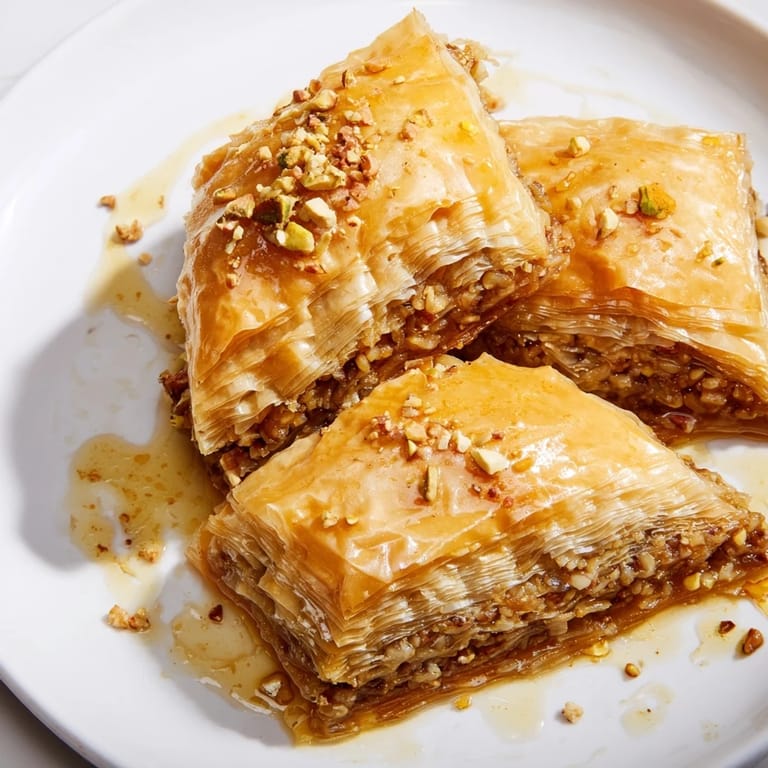
Pin Every time I make baklava, I'm struck by how this humble dessert has traveled through time and across continents, arriving at my kitchen table as something sacred and shared. It's the kind of recipe that reminds you why cooking for others matters.
Recipe Q&A
- → What nuts are traditionally used in this dessert?
Walnuts, pistachios, and almonds are finely chopped and layered to create a rich nut filling.
- → How is the honey syrup prepared?
It's made by boiling honey with water, sugar, lemon juice, lemon zest, and a cinnamon stick, then simmered to infuse flavor.
- → What is the best way to layer the phyllo dough?
Butter each sheet generously and layer multiple sheets before adding the nut mixture to ensure crispness and flakiness.
- → How long should the dessert soak in the syrup?
Allow at least four hours for the syrup to soak fully, ensuring a moist and flavorful texture.
- → Any tips for storing leftovers?
Keep covered at room temperature for up to one week to maintain freshness and texture.