 Pin
Pin My neighbor knocked on my kitchen door one autumn evening with a single enormous cabbage from her garden, almost apologetic about its size. She mentioned offhandedly that roasting it changed everything, but I dismissed the idea until desperation struck during a dinner party and I had nothing else to work with. That first attempt, when I sliced the cabbage thick and watched it transform in the oven into something golden and almost caramelized, felt like discovering a secret. The tahini drizzle came later, a natural pairing that made the whole dish feel intentional rather than improvised.
I made these for a potluck at my daughter's school, nervous that vegetable-forward dishes always end up neglected on the side. By the end of the evening, the platter was completely empty and someone actually asked for the recipe written down. That moment when people realize they're eating cabbage but genuinely don't care because it tastes so good—that's when you know you've found something worth making again and again.
Ingredients
- 1 large green cabbage: Choose one that feels dense and heavy for its size, with tight leaves and no soft spots, because a quality cabbage roasts more evenly and caramelizes beautifully.
- 3 tbsp olive oil: Good olive oil matters here since it's a main player in creating those crispy, golden edges that make this dish memorable.
- 1 tsp ground cumin: This spice adds a warm earthiness that somehow makes cabbage taste more like itself, if that makes sense.
- 1 tsp smoked paprika: The smokiness tricks your brain into thinking something more complex happened in the kitchen than just roasting.
- ½ tsp garlic powder: Use real garlic powder, not garlic salt, so you control the seasoning precisely.
- Salt and freshly ground black pepper, to taste: Taste as you go because cabbage absorbs seasoning differently depending on how moist it is.
- ⅓ cup tahini: Room temperature tahini whisks smoothly without seizing up, so don't use it straight from the cold.
- 2 tbsp freshly squeezed lemon juice: Fresh juice makes an actual difference here—bottled has a different acidity that throws off the balance.
- 1 small garlic clove, finely minced: A little goes a long way, so resist the urge to add more unless you taste it first.
- 2–4 tbsp cold water: Add it slowly while whisking because tahini can go from pourable to thick in seconds if you're not careful.
- 2 tbsp chopped fresh parsley: The fresh herb cuts through the richness and adds a bright, alive feeling to each bite.
- 2 tbsp toasted sesame seeds, optional: They add texture and nuttiness, but honestly the dish shines without them if you don't have them on hand.
- Lemon wedges: For serving, so people can adjust the tartness to their preference.
Tired of Takeout? 🥡
Get 10 meals you can make faster than delivery arrives. Seriously.
One email. No spam. Unsubscribe anytime.
Instructions
- Get your oven ready and set the stage:
- Preheat to 425°F and line your baking sheet with parchment paper so cleanup stays minimal and nothing sticks.
- Prepare the cabbage with intention:
- Remove any damaged outer leaves, then slice the cabbage into 1-inch thick rounds, aiming for 4 to 5 substantial steaks that hold together as they roast. You'll notice some rounds have the core running through them, which is fine—it keeps them intact.
- Season generously and let it rest:
- Arrange the steaks on the sheet, brush both sides with olive oil, then sprinkle the cumin, smoked paprika, garlic powder, salt, and pepper evenly. Don't hold back on seasoning the second side because it needs to taste good all the way through.
- Roast until the magic happens:
- Into the oven for 25 to 30 minutes, flipping halfway through, until the edges turn a deep golden brown and the centers feel tender when you pierce them with a fork. This is where patience pays off—rushing means you miss that caramelized sweetness.
- Whisk the tahini sauce into silky submission:
- While the cabbage roasts, combine tahini, lemon juice, minced garlic, and a pinch of salt in a bowl, whisking as you add cold water one tablespoon at a time until the sauce flows smoothly off a spoon. Taste and adjust the lemon or salt because the sauce should be balanced enough to enhance without overpowering.
- Bring it all together:
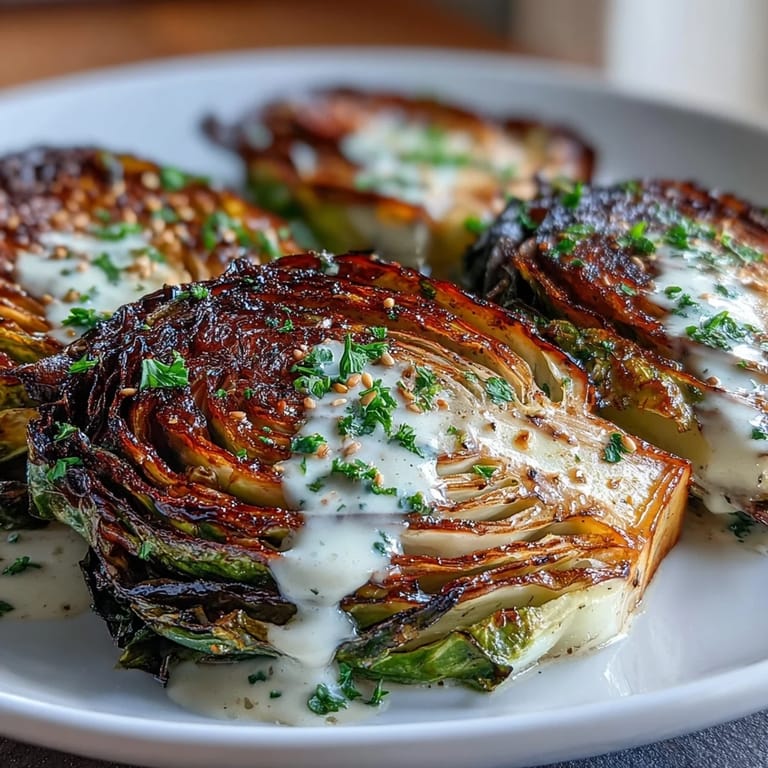
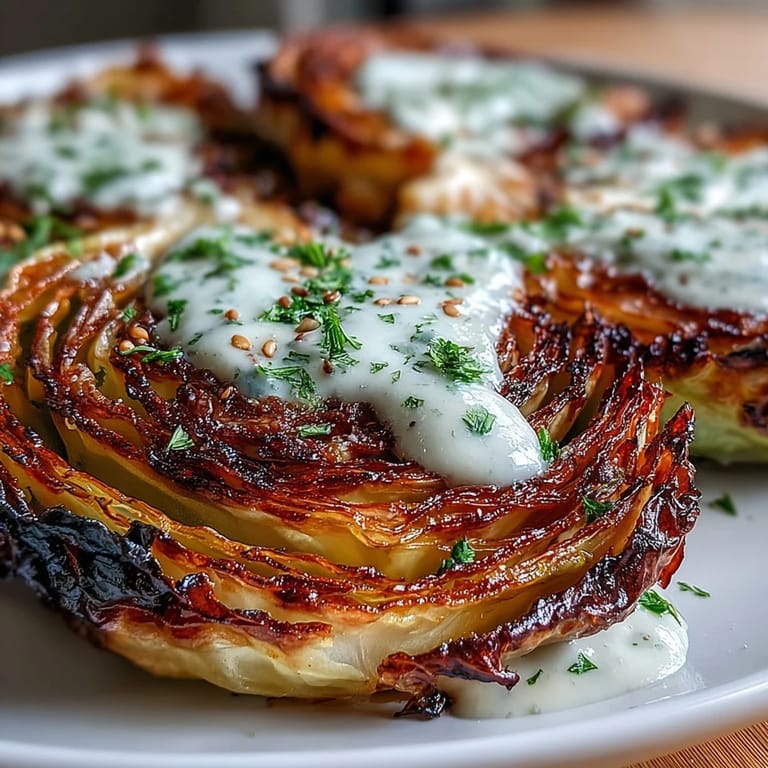
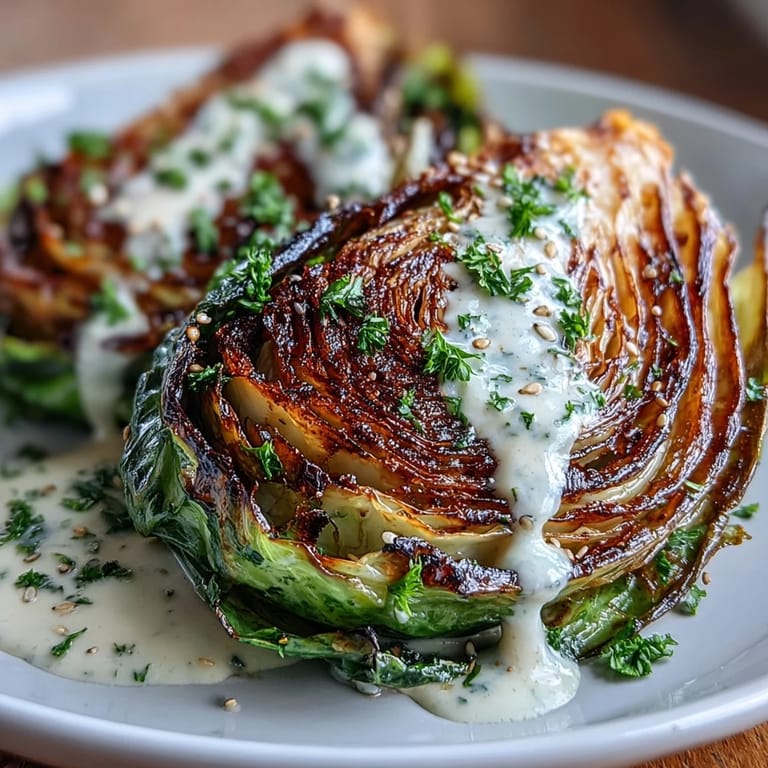
- Transfer the roasted cabbage steaks to a serving platter, drizzle generously with the tahini sauce, then scatter parsley, sesame seeds if using, and lemon wedges across the top.
 Pin
Pin I served these once to someone who'd never eaten tahini before, and watching their face shift from skepticism to genuine delight was one of those small kitchen victories that stays with you. They realized that night that food doesn't need to be complicated or contain animal products to feel nourishing and worth savoring.
When to Serve This Dish
These steaks work beautifully as a main course for plant-based eaters, or they become the star side dish when you're grilling proteins for omnivores. I've also seen them appear as part of a Mediterranean spread alongside grain salads and roasted vegetables, fitting in wherever there's room. The beauty is flexibility—serve them warm straight from the oven or at room temperature if you're planning ahead.
Simple Variations That Keep Things Interesting
Once you've made this once, you'll start imagining additions and swaps that feel natural. A scatter of crispy chickpeas adds protein and texture, or you could dust the cabbage with zaatar before roasting for a more herbaceous profile. The tahini sauce tolerates substitutions too—swap half the water for pomegranate molasses if you want a tangy, slightly fruity drizzle, or add a teaspoon of harissa for heat.
Storage and Make-Ahead Tips
Roasted cabbage keeps beautifully in the refrigerator for three days, which means you can prep these ahead for busy weeknights or meal prep. The tahini sauce lasts just as long separate, so store them apart and combine before serving so the steaks stay crispy rather than getting soggy. Reheat the cabbage gently in a 350°F oven for about ten minutes if you want to restore some of that fresh-roasted warmth.
- Make the tahini drizzle up to two days ahead and keep it in an airtight container to save yourself work during dinner prep.
- If the sauce thickens as it sits, whisk in a tiny splash of water to loosen it back to pourable consistency.
- The cabbage is equally delicious cold or room temperature, so don't stress if serving warm doesn't fit your timeline.
 Pin
Pin This dish proved to me that sometimes the most memorable meals come from embracing what's simple and letting good ingredients speak for themselves. Make it once and you'll find reasons to make it again.
Recipe Q&A
- → How do I cut cabbage into steaks?
Stand the cabbage upright on its root end. Using a sharp chef's knife, slice horizontally through the entire head to create 1-inch thick rounds. Each round is a steak. You'll typically get 4–5 steaks from one large cabbage, with the outer layers holding together best during roasting.
- → Can I make the tahini sauce ahead?
Absolutely. The tahini drizzle keeps well in the refrigerator for up to 5 days. Store it in an airtight container and give it a good whisk before serving—you may need to add a splash of water to thin it again as it thickens when chilled.
- → What's the best way to reheat leftover cabbage steaks?
Reheat in a 375°F oven for 10–12 minutes until warmed through. Avoid microwaving, which can make the cabbage soggy. For extra crispness, finish under the broiler for 1–2 minutes. Store leftover sauce separately and drizzle fresh when serving.
- → Can I use red cabbage instead of green?
Yes, red cabbage works beautifully and adds vibrant purple color to your platter. Note that red cabbage may take slightly longer to become tender and has a slightly sweeter flavor profile. The visual contrast with the creamy tahini is stunning.
- → Is this dish freezer-friendly?
The roasted cabbage freezes reasonably well for up to 2 months. Cool completely before wrapping individually in plastic and foil. Thaw overnight in the refrigerator, then reheat in the oven. The tahini sauce does not freeze well—make it fresh when serving leftovers.