 Pin
Pin The first time I tasted knafeh, the cheese stretched like warm taffy between my fingers, and I understood why my Lebanese grandmother kept the recipe so close. She'd make it for family gatherings on Sunday afternoons, the smell of orange blossom and butter filling the entire house by the time anyone arrived. There's something almost magical about how the crispy phyllo shell gives way to that molten, salty-sweet cheese inside, all bound together by syrup that's somehow both delicate and indulgent. I spent years watching her make it before she finally handed over the secrets—not in writing, but through her hands guiding mine as I separated the kataifi strands.
I made this for a dinner party last spring when my friend Sarah mentioned she'd never had Middle Eastern desserts before, and watching her eyes light up when she bit into that first warm piece was worth every minute of prep work. The moment the syrup soaked into the crispy layers, she actually closed her eyes and smiled in that way that tells you food has done its job. It became the dessert she requested every time after that, which is both flattering and slightly terrifying because now I'm permanently her knafeh person.
Ingredients
- Akawi cheese: The traditional choice with that perfect salty, slightly tangy flavor—soak it thoroughly because excess salt will ruin everything, trust me on this one.
- Ricotta cheese: Adds creamy texture and balances the Akawi's intensity, use good quality and drain it well before mixing.
- Kataifi (shredded phyllo): This crispy-when-baked noodle-like pastry is what gives knafeh its signature crunch, thaw it completely before working with it.
- Unsalted butter, melted: Coats every single strand to ensure even browning and maximum crispiness, cheap butter will taste cheap here.
- Sugar and water: The base of your syrup, the ratio matters because too much water and it's thin, too little and it becomes candy.
- Lemon juice: Cuts through the sweetness with brightness and prevents the syrup from tasting flat.
- Orange blossom water: This is the soul of the dish—floral, sophisticated, impossible to replicate with anything else.
- Rose water: A secondary floral note that adds depth, use sparingly because it can overpower if you're heavy-handed.
- Pistachios: The final flourish that catches the eye and adds a tiny nutty crunch to each bite.
Tired of Takeout? 🥡
Get 10 meals you can make faster than delivery arrives. Seriously.
One email. No spam. Unsubscribe anytime.
Instructions
- Start with your oven and cheese:
- Heat your oven to 180°C and begin soaking the Akawi cheese immediately if using it, changing the water every hour or so to coax out the saltiness. The fresher the cheese the better it stretches, and you want it to stretch because that's where the magic happens.
- Prepare the cheese filling:
- Mix your drained Akawi (or mozzarella if you're taking the easier route) with ricotta until combined but still slightly chunky—smooth is the enemy here because you want pockets of pure cheese flavor. Set it aside and don't second-guess yourself.
- Butter the kataifi strands:
- Pour melted butter over the thawed kataifi and gently separate and toss until every single strand is glistening with butter, this takes patience but it's the key to that crispy exterior. Don't be afraid to get your hands in there and make sure nothing is clumped together.
- Build the base layer:
- Press half the buttered kataifi into your greased baking dish, creating an even layer that will cradle your cheese. This base needs to be compact enough to hold the filling but still promise crispiness.
- Add the cheese:
- Spread your cheese mixture evenly over the kataifi base, leaving about a quarter inch from the edges so it won't squeeze out during baking. Think of it like building a delicious edible mattress.
- Top and seal:
- Cover the cheese with the remaining buttered kataifi, gently pressing down so the layers meld slightly but the top stays loose enough to crisp up. You want it snug but not suffocated.
- Bake until golden:
- Slide it into the oven for 30–35 minutes, watching until the top turns deep golden brown and smells absolutely incredible. You'll know it's done when the edges are darker than the center and the whole thing smells like a Middle Eastern bakery.
- Make the syrup while baking:
- Combine sugar, water, and lemon juice in a saucepan and bring to a boil, then let it simmer for 8–10 minutes until it's noticeably thicker but still pourable. Remove it from heat and stir in the orange blossom and rose water—do this off heat because you want the delicate floral notes to stay bright.
- The critical inversion:
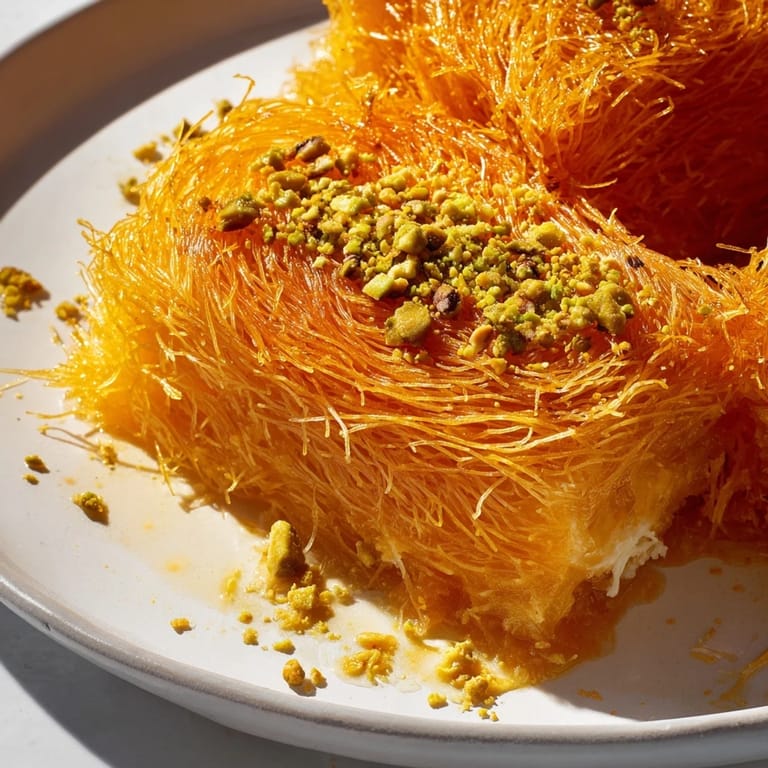
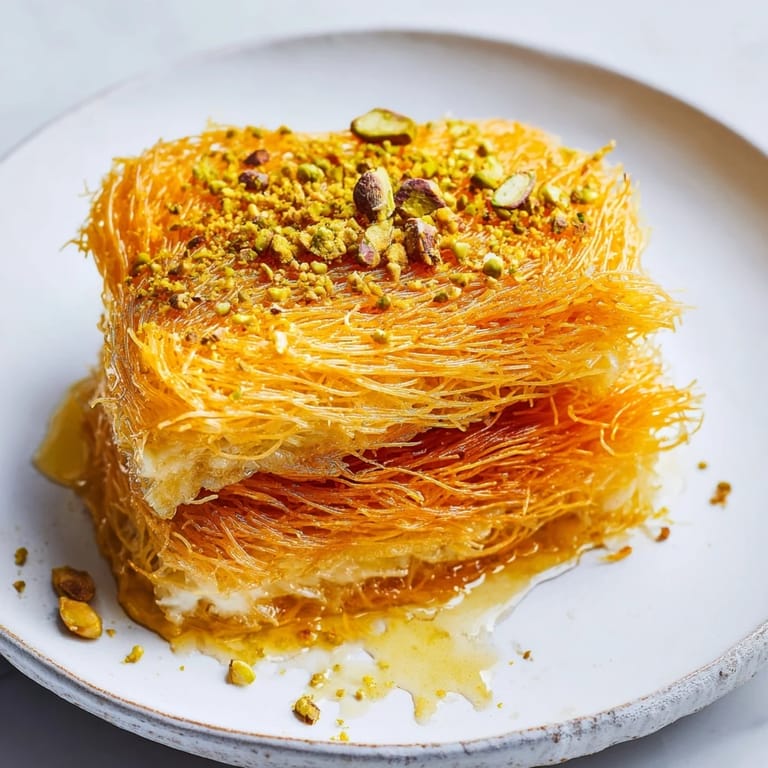
- This is the moment that feels terrifying but works perfectly every single time: remove the hot knafeh from the oven and immediately flip it onto your serving platter so the crispy golden side is now on top. The cheese will be perfectly melted and hold everything together.
- Syrup and garnish:
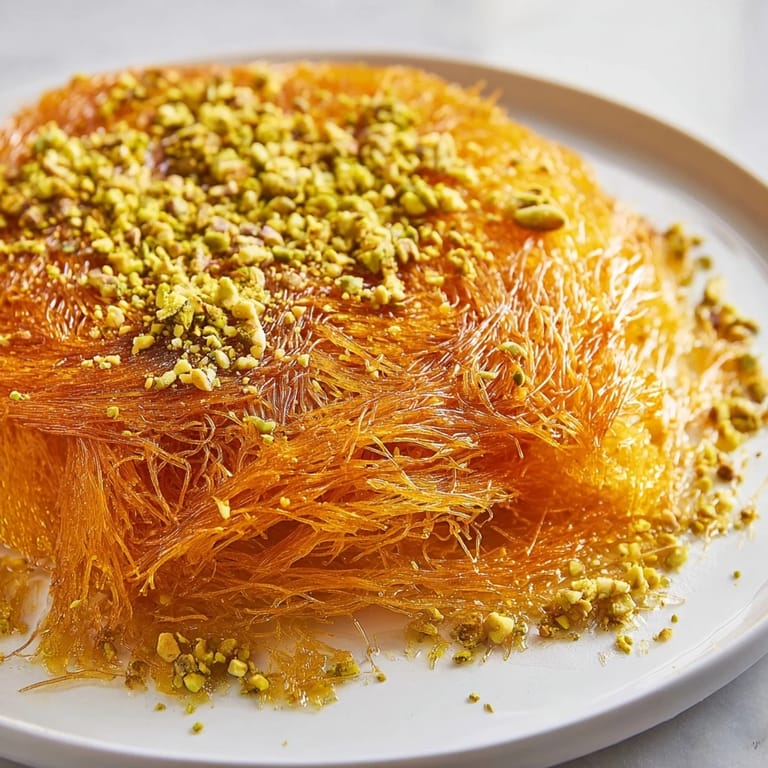
- Pour about half the cooled syrup over the hot knafeh so it soaks in immediately, then scatter pistachios across the top and drizzle with honey if using. Serve warm with extra syrup on the side for people who want more sweetness.
 Pin
Pin There was an afternoon when my sister tried to make this without me, didn't soak the cheese long enough, and the result was so salty that even the honey couldn't save it. We laughed about it while eating ice cream instead, but that disaster taught me more about the recipe than any successful batch ever could. Now when I make it, every step feels intentional because I understand exactly why each one matters.
The Art of the Syrup
The syrup is deceptively simple but impossibly important—it's not just sweetness, it's the bridge that brings every element together. I learned this when I made it too thick once and it just pooled on top instead of soaking into the layers, completely changing the texture experience. The trick is that perfect middle ground where it's thick enough to feel luxurious but thin enough to soak in and infuse every bite with that floral sweetness. Orange blossom and rose water aren't interchangeable—they're different characters in the same story, and together they create something that tastes vaguely familiar even if you've never had it before.
Choosing Your Cheese
If you can find Akawi cheese, use it without hesitation, but I've made this with low-moisture mozzarella when I couldn't, and it works just fine, just differently. Akawi has more personality and a slight tang that makes the dessert taste more grown-up, while mozzarella plays it straight and lets the phyllo and syrup do more of the talking. The ricotta is the real secret weapon though—it prevents the filling from being too dense and reminds you that you're eating something that melts on your tongue rather than rubber. I've experimented with a tiny pinch of salt and even cardamom in the filling, and both work, but the original combination is genuinely perfect.
When You Need It to Shine
This dessert is forgiving in most ways but unforgiving in a few, so pay attention when it matters most. The baking time is flexible—a few minutes either way won't ruin it, but under-baking means it won't hold together when you flip it, and over-baking means the crispy edges turn bitter. For special occasions, I sometimes broil the top for just a minute after baking to add extra color and crunch, but only if I'm paying close attention because phyllo can go from golden to burned in about six seconds.
- Make the syrup earlier in the day so it has time to cool completely before using.
- Have your serving platter ready before the knafeh comes out of the oven because you need to flip it immediately.
- If the cheese isn't quite melted when you flip it, you're taking it out too early—it should jiggle slightly when you move the pan.
 Pin
Pin This dish is the kind of food that bridges traditions and brings people together in the best possible way. Serve it warm with strong Turkish coffee or fragrant mint tea, and watch how it transforms a regular meal into an occasion.
Recipe Q&A
- → What cheeses are ideal for this dish?
Akawi cheese is traditional for its stretchiness and mild saltiness, but unsalted mozzarella combined with ricotta works well as a substitute.
- → How should the kataifi be prepared before baking?
Gently separate the strands and coat them thoroughly with melted unsalted butter to ensure crispiness when baked.
- → What flavors are infused in the syrup?
The syrup carries fragrant notes from orange blossom and rose waters, balanced with lemon juice’s subtle tang.
- → How can I achieve a crunchier top layer?
After baking, broil the top for 1–2 minutes to add extra golden crispiness without drying out the layers.
- → What are some suitable pairings for serving?
Enjoy alongside Turkish coffee or refreshing mint tea to complement the sweet and floral flavors.