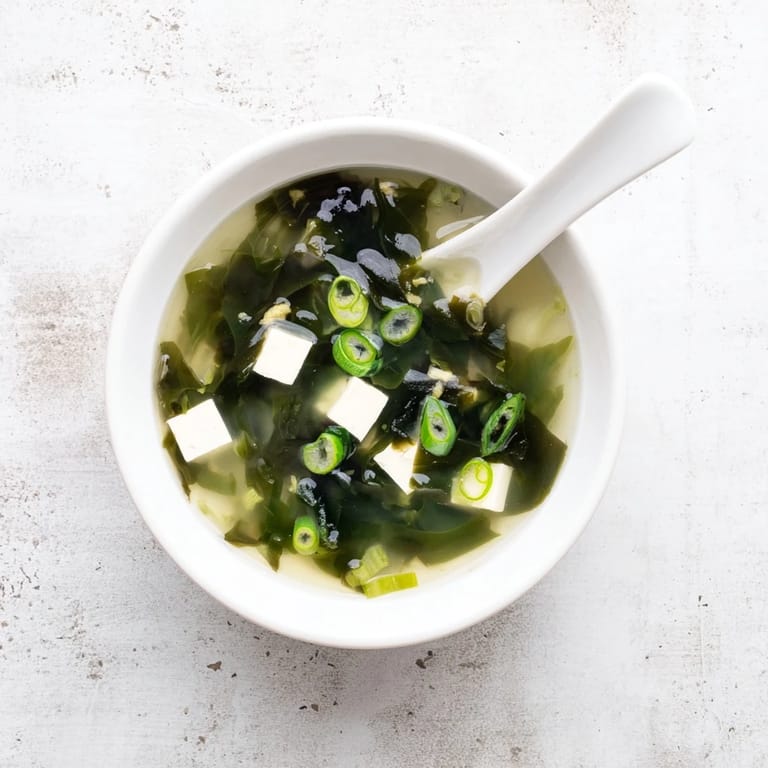
 Pin
Pin Standing in my tiny Tokyo apartment kitchen, steam rising from a pot on my single burner, I finally understood why miso soup feels like home. It was a rainy Tuesday evening after an exhausting day at work, and I had all of three ingredients in my refrigerator. That first bowl changed everything about how I approached comfort food.
Last winter, my neighbor who had lived in Kyoto for fifteen years came over for lunch. She watched me stir in the miso and immediately corrected me. That small adjustment transformed my soup from something perfectly fine into something that made her eyes light up with recognition.
Ingredients
- 8 g dried wakame seaweed: This expands dramatically when rehydrated, so do not be alarmed by how small the portion seems
- 4 cups dashi stock: Use vegetarian dashi made from kombu and shiitake mushrooms to keep this plant based
- 100 g silken or firm tofu: I prefer silken for its delicate texture that practically melts in your mouth
- 2 scallions: Fresh scallions add a crucial bright contrast to the earthy broth
- 2 tbsp white miso paste: White miso has a gentler, slightly sweet flavor compared to darker varieties
- 1 tsp soy sauce: This adds depth and a subtle savory note that rounds out the broth
- 1 tsp sesame oil: Completely optional but adds a wonderful nutty aroma to finish
Tired of Takeout? 🥡
Get 10 meals you can make faster than delivery arrives. Seriously.
One email. No spam. Unsubscribe anytime.
Instructions
- Prepare the seaweed:
- Place the dried wakame in a small bowl and cover with cold water. Let it soak for about five minutes until it becomes tender and expands to several times its original size. Drain well and set it aside on a plate.
- Heat the dashi:
- Pour the dashi stock into a medium saucepan and bring it to a gentle simmer over medium heat. You want it hot but not aggressively boiling.
- Add tofu and wakame:
- Carefully slide the cubed tofu into the simmering broth along with the rehydrated wakame. Let everything cook together for two to three minutes to allow the flavors to start mingling.
- Prepare the miso:
- Ladle about half a cup of the hot broth into a separate small bowl. Whisk in the miso paste until completely smooth and dissolved.
- Combine and season:
- Pour the miso mixture back into the saucepan and stir gently to incorporate. Add the soy sauce and sesame oil if using. Let it heat through for one final minute.
- Serve immediately:
- Ladle the hot soup into bowls and scatter the sliced scallions over the top as a garnish. Enjoy while steaming hot.
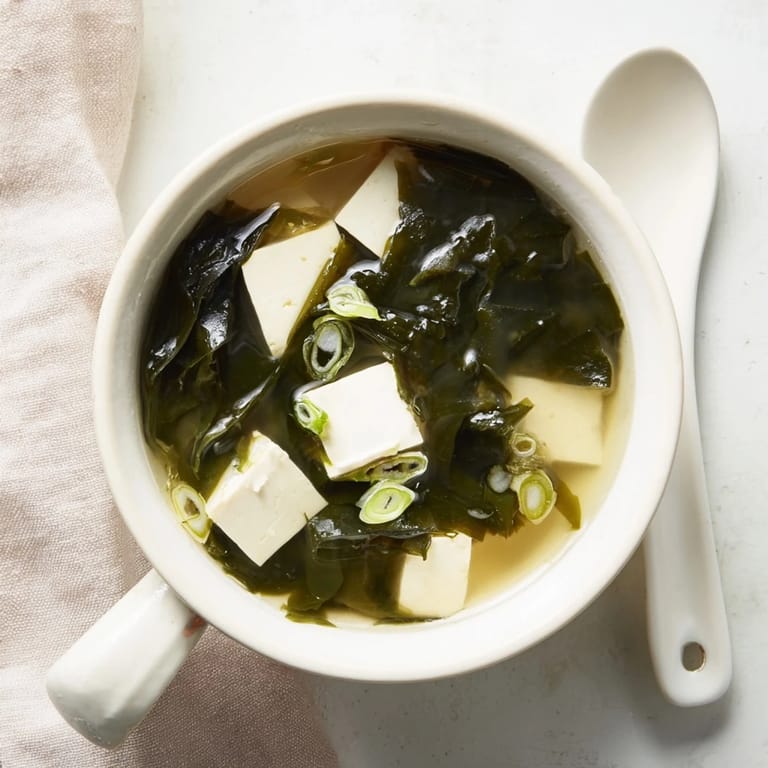 Pin
Pin This soup has become my go-to remedy for days when nothing seems right. Something about that warm, savory broth resets everything from the inside out.
Making It Your Own
While the classic version is beautiful on its own, I have discovered that adding shiitake mushrooms during the simmering phase adds an earthy richness that takes this soup to another level completely.
The Secret to Perfect Tofu
I learned to press the tofu briefly before cubing it so the pieces hold their shape better in the hot broth. Just ten minutes with a light weight makes a noticeable difference in texture.
Serving Suggestions
A steaming bowl of this wakame soup alongside a simple bowl of rice and perhaps some pickled vegetables creates one of those deeply satisfying meals that leaves you feeling nourished rather than stuffed. The balance of temperatures and textures is exactly what makes Japanese home cooking so comforting.
- Keep extra miso paste refrigerated in an airtight container
- Try stirring in a handful of baby spinach during the last minute of cooking
- Leftovers can be gently reheated but never brought to a rolling boil
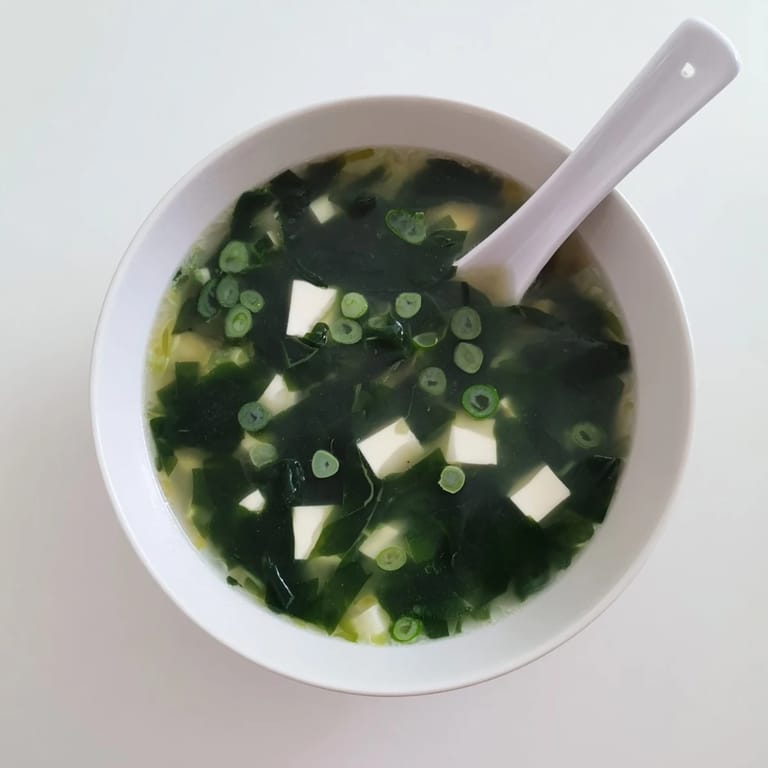 Pin
Pin Something magical happens when you take twenty minutes to make soup from scratch. Even on the most ordinary Tuesday evening, it becomes a small act of care for yourself.
Recipe Q&A
- → What does wakame taste like?
Wakame has a mild, slightly sweet ocean flavor with a tender texture. It's not overpowering and absorbs the flavors of the dashi broth beautifully.
- → Can I make this vegan?
Yes, use kombu and shiitake mushroom dashi instead of traditional fish-based dashi. Most miso paste is naturally vegan, but always check the label to be sure.
- → Why add miso at the end?
Adding miso paste at the end preserves its beneficial enzymes and probiotics. Boiling miso can destroy these health benefits and alter its delicate flavor profile.
- → How long does dried wakame last?
Dried wakame keeps for up to a year in a cool, dry place in an airtight container. It expands significantly when rehydrated, so a small package goes a long way.
- → What can I add for more substance?
Sliced mushrooms, carrots, spinach, or snow peas work wonderfully. For protein, add cooked edamame or small shrimp if not following a vegetarian diet.