 Pin
Pin There's something almost magical about how garlic transforms when it cooks slowly, shedding its sharp edge for something sweet and almost buttery. I stumbled onto this soup on an October evening when my farmer's market haul was heavy with leeks and I had more garlic than sense, honestly. The kitchen filled with this gentle, aromatic haze while the vegetables softened, and by the time I blended everything together, I'd created something I couldn't stop making—a soup so simple it feels like a secret.
I made this for my sister during a surprise visit, and she sat at my kitchen counter with a steaming bowl, just quiet and content. She asked what was in it, and when I listed the ingredients, she laughed because it sounded so ordinary. But that's the thing about this soup—it teaches you that sometimes the most comforting meals come from restraint, not complexity.
Ingredients
- 1 large onion, finely chopped: The foundation—it dissolves into the broth and adds subtle sweetness that balances the garlic's assertiveness.
- 1 large leek, white and light green parts only, sliced: More delicate than onion, leeks bring an earthiness that rounds out the flavor profile beautifully.
- 10 large garlic cloves, peeled and sliced: This is your star; slicing instead of mincing keeps the pieces whole so they soften evenly and turn silky rather than sharp.
- 2 medium potatoes, peeled and diced: They thicken the soup naturally and add body without any cream or flour tricks.
- 4 cups vegetable broth: Use good quality broth—it becomes the voice of your finished soup, so let it matter.
- 1 cup whole milk or plant-based milk: Adds richness and mellows everything into comfort; add it after cooking so it doesn't curdle.
- 2 tablespoons fresh thyme leaves, chopped: Thyme's woodsy notes prevent the soup from becoming one-dimensional or too sweet.
- 2 tablespoons fresh parsley, chopped, plus extra for garnish: Fresh parsley is the brightness at the end, the reminder that this is alive and vibrant.
- 1 tablespoon fresh chives, chopped: A whisper of onion flavor that doesn't compete with the garlic—use them mainly for garnish to preserve their delicate sharpness.
- 2 tablespoons olive oil: Good olive oil matters here since it's not being heated intensely; it coats the vegetables and carries flavor.
- Salt and pepper, to taste: Add salt early so vegetables release their moisture; adjust pepper at the end when you can taste it properly.
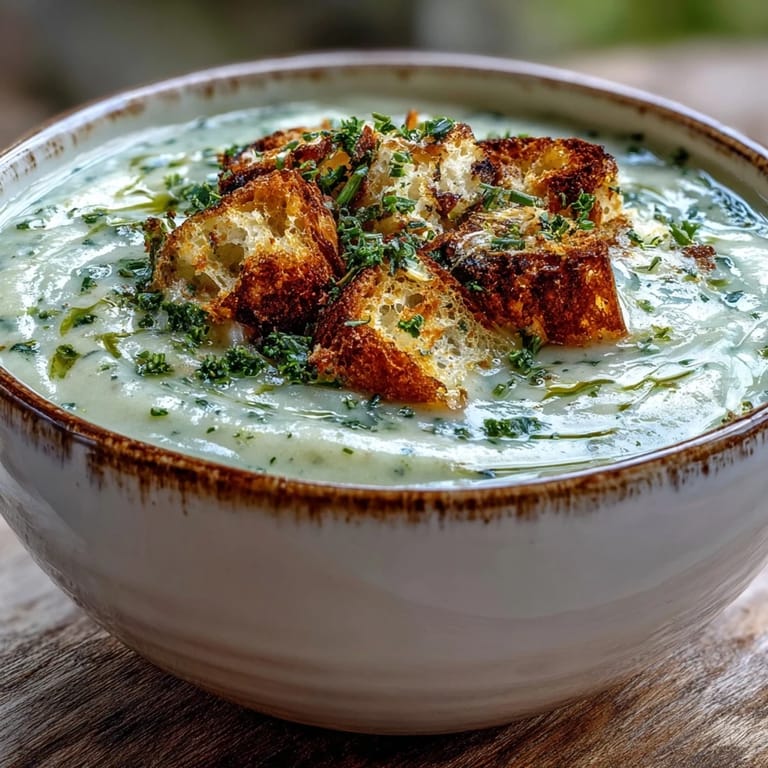
- Optional: Parmesan cheese and croutons: Parmesan adds a savory depth; croutons give textural contrast that transforms a smooth soup into something more interesting.
Tired of Takeout? 🥡
Get 10 meals you can make faster than delivery arrives. Seriously.
One email. No spam. Unsubscribe anytime.
Instructions
- Heat the oil and soften your aromatics:
- Warm olive oil in a large saucepan over medium heat, then add chopped onion and sliced leek. You'll hear them sizzle and smell something wonderful start to develop—let them cook for 4 to 5 minutes, stirring occasionally, until they're completely soft but still pale. This isn't a browning stage; you're coaxing out sweetness, not color.
- Introduce the garlic gently:
- Add your sliced garlic cloves and reduce the heat slightly if needed, cooking for 2 to 3 minutes while stirring constantly. This is where you pay attention—garlic can shift from sweet to bitter in moments, and the aroma will tell you when it's ready. You want the kitchen to smell like caramelized comfort, not burnt edges.
- Build the base:
- Build the Base:
- Stir in diced potatoes, chopped thyme, and a generous pinch of salt and pepper, then cook for 2 minutes so the herbs release their oils. The potatoes will begin to absorb flavors immediately, even before the liquid arrives.
- Simmer until tender:
- Pour in vegetable broth and bring to a boil, then reduce heat and let it simmer gently for about 20 minutes. The potatoes should be completely tender when pierced with a fork—they're your signal that it's time to move forward. The broth will have taken on a subtle golden hue.
- Cool slightly and add the milk:
- Remove from heat and let it rest for a moment, then stir in milk and most of the fresh parsley and chives, holding back some for garnish. The warmth will meld everything without curdling the milk.
- Blend to your preference:
- Use an immersion blender to purée until completely smooth, or pulse a few times if you prefer a slightly chunky texture with some vegetable pieces visible. If using a countertop blender, work in batches and never fill it more than halfway. Taste and adjust seasoning—you might need a little more salt or a grind of pepper.
- Serve with intention:
- Ladle into bowls and scatter remaining herbs, Parmesan if using, and croutons across the top. The garnish isn't decoration; it's your final flavor statement, adding freshness and texture to each spoonful.
 Pin
Pin My neighbor once asked why I made this so often, and I realized it's because it requires nothing fancy but delivers something that feels like a hug. It's become the soup I make when someone needs comfort, when the weather turns cool, or honestly, just because I crave the sound of the blender and the warmth it creates.
The Magic of Mellow Garlic
Most people think garlic should be assertive and sharp, but that's only true if you treat it roughly. Cook it slowly, slice it instead of mincing, and let it simmer in broth for long enough, and it becomes something entirely different—almost sweet, creamy in texture, almost caramelized without any browning at all. I learned this by accident, really, the first time I made this soup and forgot to chop the garlic fine. What I thought was a mistake turned into the foundation of every version I've made since.
Why Fresh Herbs Matter Here
Dried herbs would taste flat in this soup because the dried versions become dusty against the smooth puree. Fresh herbs are non-negotiable—thyme stays in during cooking to infuse deeply, while parsley and chives go in mostly at the end so they taste bright instead of cooked down. I used to think this was fussy, but now I understand it's the difference between a good soup and a memorable one.
Texture, Serving, and Variations
The smoothness of this soup is entirely up to you—some versions I've made were completely velvety, others I've left slightly chunky because I wanted to taste the actual vegetables. Both are right; it depends on your mood and what you're hungry for. I've made it with cream instead of milk when I wanted something richer, with plant-based milk when friends visited who didn't eat dairy, and even with the potatoes left partially whole when I wanted more texture.
- For a richer version, replace half the milk with heavy cream and you'll have something luxurious enough for dinner guests.
- Plant-based milk works beautifully and won't curdle, though oat milk tastes slightly sweeter than almond if you're particular about flavor.
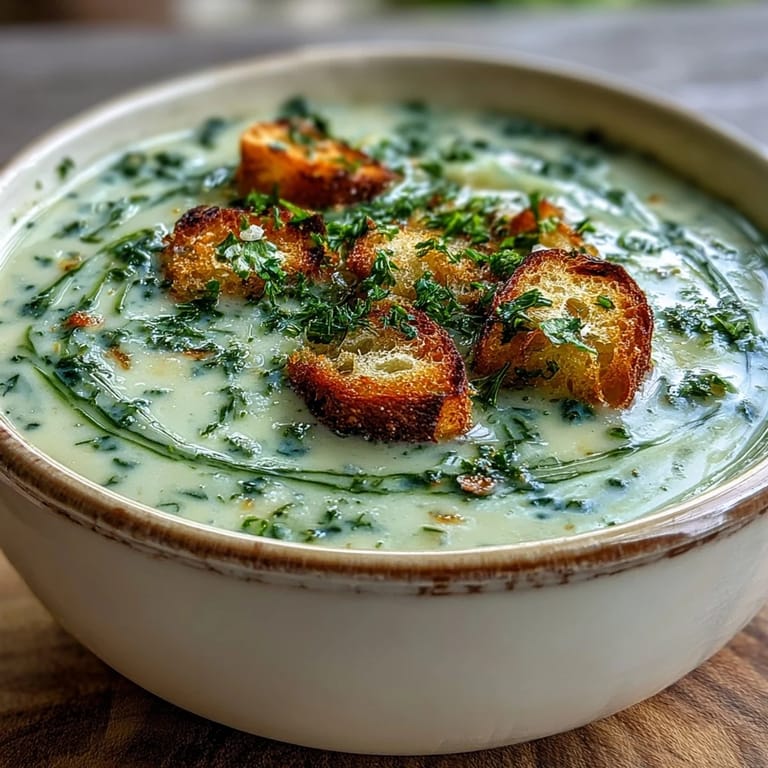
- Serve with crusty bread or add croutons if you want to turn a side dish into something more substantial and satisfying.
 Pin
Pin This soup has become one of those recipes I reach for automatically, the one that reminds me how much comfort can live in simplicity. Make it once and you'll understand why.
Recipe Q&A
- → Can I freeze this soup?
Yes, this soup freezes beautifully. Let it cool completely, then store in airtight containers for up to 3 months. Thaw overnight in the refrigerator before reheating gently on the stove.
- → How can I make it vegan?
Simply replace the whole milk with your favorite unsweetened plant-based milk like oat, almond, or soy. Omit the Parmesan cheese or use a vegan alternative.
- → Will the garlic make it too strong?
No, the garlic becomes mellow and sweet when cooked gently. The long cooking time transforms its pungent flavor into something aromatic and comforting.
- → Can I use dried herbs instead of fresh?
You can substitute dried herbs, but use one-third the amount since they're more concentrated. Fresh herbs really shine in this simple preparation.
- → What bread goes best with this soup?
A crusty baguette, sourdough, or rustic whole grain bread works wonderfully. For gluten-free diners, toasted gluten-free bread or homemade croutons are perfect.
- → How do I store leftovers?
Keep refrigerated in an airtight container for up to 4 days. Reheat gently on the stove, adding a splash of milk or broth if it's too thick.