 Pin
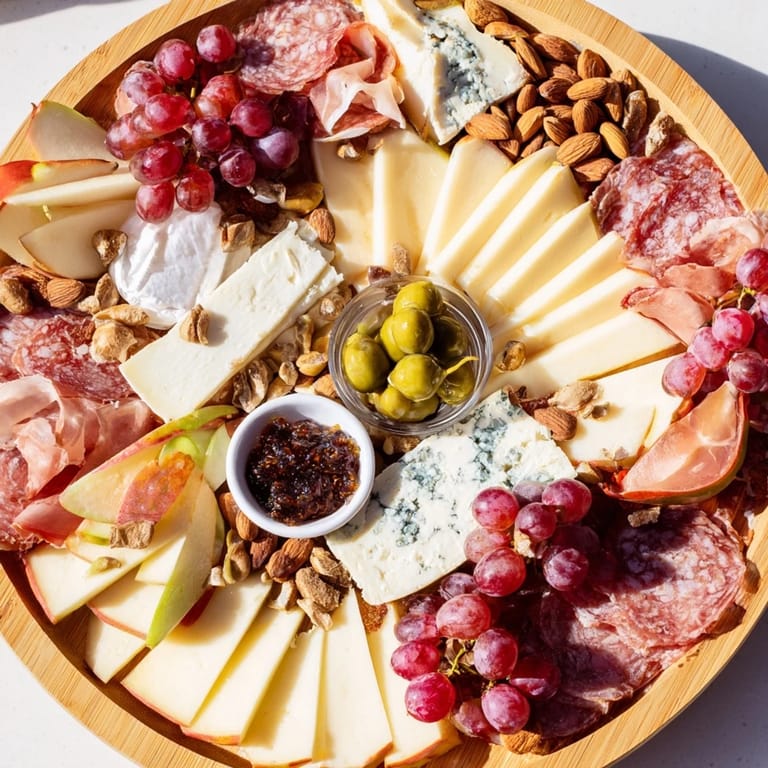
Pin I remember the first time I created a board that stopped everyone mid-conversation. It was my friend's engagement party, and I wanted to serve something that felt both celebratory and intimate. That's when I discovered the magic of the gilded edge—arranging everything along the perimeter of a beautiful board, leaving the center completely bare like a canvas waiting to be appreciated. It felt elegant, almost architectural, and when people gathered around it, the empty space somehow made the food feel more precious, more intentional.
I'll never forget watching my sister's face when she saw this board at her anniversary dinner. She kept saying, 'You made this?' as if it was too beautiful to have come from our kitchen. That's when I realized—an elegant board isn't about having fancy ingredients, it's about respecting them enough to showcase them properly. The empty center became our conversation starter that night.
Ingredients
- Triple-cream Brie, 120g: This is the butter of cheeses—it melts on your tongue and deserves prime real estate on your board. Cut it into slim wedges so it catches the light.
- Aged Manchego, 120g: The nutty, crystalline texture of good Manchego tells a story. Slice it fresh just before serving so the edges stay crisp.
- Blue cheese, 100g: Whether crumbled or sliced, blue cheese is your flavor anchor—it should make people pause and savor.
- Goat cheese, 100g: Form these into small rounds by using two spoons; they become elegant little jewels on the board.
- Prosciutto, 100g: Fold each slice into ribbons loosely—tight folds look tense, loose ones look generous and confident.
- Thinly sliced salami, 120g: The thinner you slice it, the more elegant it becomes. Ask your butcher to slice it paper-thin.
- Coppa or bresaola, 100g: These are your jewel tones on the board—deep reds that create visual drama against the pale cheeses.
- Red and green grapes, 1 small bunch each: Keep them in small clusters; they roll too easily if separated and become visual anchors.
- Pear and apple, thinly sliced: Slice these last and toss gently with a squeeze of lemon juice to prevent browning—it's a small gesture that shows care.
- Dried apricots, 1 small handful: Their jewel-like color bridges the gap between fruit and charcuterie visually.
- Marcona almonds, 1/4 cup: These are butter almonds—roasted and salted perfection. They're worth the splurge.
- Salted pistachios, 1/4 cup: The green color is essential to your palette; scatter them strategically.
- Castelvetrano olives, 1/4 cup: Buttery and mild, these olives welcome rather than challenge.
- Cornichons, 1/4 cup: These tiny pickles are your textural surprise—crisp and acidic in the best way.
- Fig jam or quince paste, 1/4 cup: This is the sweet note that makes people understand why cheese boards matter. Spoon it into a small bowl as part of the perimeter arrangement.
- Honeycomb or honey drizzle: Real honeycomb feels more luxurious than a honey bottle; present it in a small ramekin nestled into the rim.
- Baguette, thinly sliced and lightly toasted: Toasting it prevents sogginess but keeps it yielding in the middle. The aroma alone sets the mood.
- Assorted crackers, 1 box: Choose crackers that vary in texture and flavor—some herbed, some plain, some seeded. They're the supporting cast that makes every cheese shine differently.
Tired of Takeout? 🥡
Get 10 meals you can make faster than delivery arrives. Seriously.
One email. No spam. Unsubscribe anytime.
Instructions
- Choose your stage:
- Select a large round or oval wooden or marble board with a prominent rim. The rim is your frame—it should be substantial enough to hold your arrangement. Run your hand along it; you want to feel like you're honoring the board's architecture.
- Map out your perimeter:
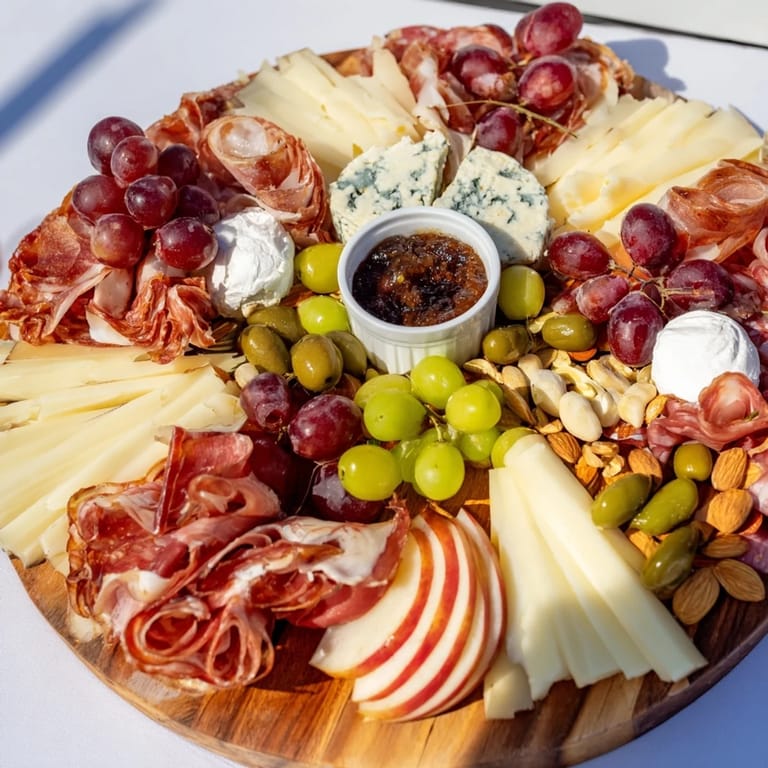
- Imagine the clock face on your board's rim. Start placing your cheeses at 12 o'clock, moving clockwise. Space them generously but close enough that they create a continuous ribbon of elegance around the edge. This is where precision becomes poetry.
- Weave in the charcuterie:
- Fold your prosciutto into loose ribbons and nestle it between cheeses. Let the salami curl naturally—don't force flatness. The bresaola or coppa should cascade slightly, creating depth and movement. You're not decorating; you're choreographing.
- Anchor with fresh fruit:
- Place grape clusters at strategic points—they become visual resting places for the eye. Slip the apple and pear slices in between cheeses, tilting them slightly so light catches their surfaces. The dried apricots fill gaps with unexpected warmth.
- Scatter your nuts and pickles:
- Distribute the almonds and pistachios around the perimeter like little treasures. The pistachios especially should be visible from across the room. Position the cornichons in small clusters; they're too delicate to be scattered singly.
- Claim your ramekins:
- Nestle small bowls for jam, honey, and olives directly into the rim arrangement, as if they always belonged there. This makes them feel intentional rather than afterthoughts.
- Arrange crackers and bread:
- Fan the toasted baguette slices along one section of the rim, slightly overlapping them like fallen leaves. Position the assorted crackers in another section, varying their angles so they look abundant and inviting.
- Honor the empty center:
- Step back. The emptiness isn't a void—it's the soul of the board. It's what makes every ingredient on the rim feel precious and appreciated. Leave it pristine.
- Serve with intention:
- Place cheese knives and tongs nearby. Serve everything at room temperature, which is when flavors sing their truest notes.
 Pin
Pin The moment that crystallized this board for me was watching my mother, who never has two words for most dishes, sit down and notice the empty center. She understood immediately what I was doing—not showing off, but creating space for people to breathe and appreciate. That's when food became more than sustenance in our family.
There's an unexpected lesson in creating a gilded edge board: constraint creates elegance. By choosing to use only the perimeter, you're forced to think about proportion, rhythm, and the weight of each element. Too many people crowd their boards chaotically, and the viewer's eye doesn't know where to land. Here, your eye travels smoothly around the rim, discovering new flavors and textures with each turn. It's less about the ingredients and more about the conversation between them.
Room temperature transforms cheese from a solid into an experience. When Brie is properly warmed to room temperature, it doesn't just sit on your tongue—it coats it with buttery richness. Blue cheese becomes less sharp, more complex. Even the crackers taste better because they're not shocking cold surfaces against warm flavors. This isn't fussiness; it's chemistry. The 30 minutes between refrigerator and table is where magic happens silently in the background.
I've learned that the most memorable boards are the ones served with a story. Maybe it's 'the Manchego is from a specific region in Spain,' or 'I discovered these pistachios at a market downtown,' or simply 'I chose the empty center because I wanted you to feel like each ingredient was selected just for you.' People eat with their hearts first, their mouths second. A board like this asks people to slow down, to notice, to connect. That's what makes it elegant.
- Serve this board with Champagne or a crisp Sauvignon Blanc—the acidity cuts through the richness and makes every flavor pop
- Have cheese knives available but encourage people to use their hands for some elements; informality mixed with elegance is the most comfortable way to eat
- Refill the ramekins as they empty; this isn't a set-and-forget dish, it's an evolving conversation on your table
 Pin
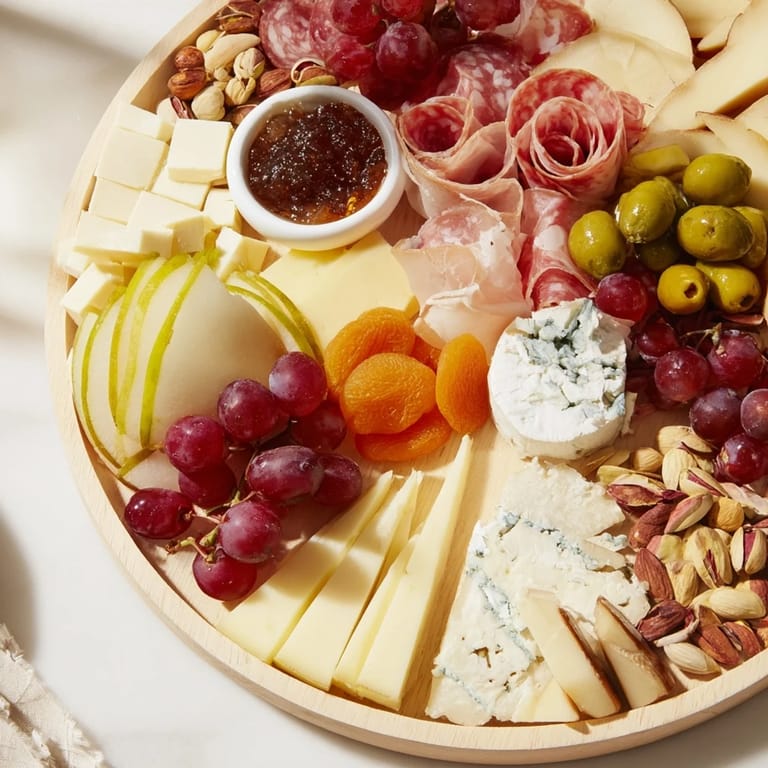
Pin This board taught me that elegance isn't about complexity—it's about knowing what to leave out. Every time I create one now, I'm reminded that the most sophisticated thing you can do at a table is make your guests feel unhurried and appreciated.
Recipe Q&A
- → How do I arrange items for visual appeal?
Place cheeses, meats, fruits, nuts, and accompaniments closely along the board’s outer edge, alternating colors and textures to create visual contrast.
- → Can this be adapted for vegetarian guests?
Yes, omit cured meats and add marinated artichokes, roasted peppers, or extra cheese varieties to maintain variety and flavor.
- → What is the best way to serve nuts and jams?
Serve nuts scattered along the board and place jams or honey in small ramekins positioned along the perimeter for easy access.
- → Which wines pair well with this board?
Sauvignon Blanc, Champagne, and other sparkling wines complement the creamy cheeses and salty charcuterie excellently.
- → How should the board be prepared ahead of time?
Arrange all components shortly before serving and keep the board at room temperature to enhance flavors and textures.