 Pin
Pin The smell of browned flour has a way of pulling you back to a specific place, and for me it's always New Orleans. I was standing in a friend's kitchen in the Marigny, watching her mother stir a pot with the kind of patience I didn't yet understand. She told me the roux would tell me when it was ready, and I remember thinking that was the strangest cooking advice I'd ever heard. But she was right.
I made this for my family on a cold Sunday in March, the kind of day when comfort food feels like the only reasonable response to the weather. My sister walked in halfway through and said it smelled like we'd relocated to the French Quarter. By the time we sat down to eat, the windows were fogged and the bowls were scraped clean.
Ingredients
- Vegetable oil and all-purpose flour: These two form the backbone of your roux, and you need equal parts of each to get that deep, nutty base that holds everything together.
- Onion, green bell pepper, and celery: The holy trinity of Cajun cooking, and honestly, I've learned not to skimp on any of them because they build the aromatic foundation.
- Garlic: Four cloves might seem like a lot, but it mellows beautifully in the sauce and adds a warmth that balances the heat.
- Shrimp or crawfish: Use whatever you can find fresh, and make sure they're peeled and deveined so you can focus on stirring, not prep work mid-recipe.
- Seafood stock: This is where the ocean flavor comes from, though chicken stock works in a pinch if that's what you have on hand.
- Cajun seasoning and cayenne pepper: Start conservatively because you can always add more heat, but you can't take it back once it's in the pot.
- Bay leaf: One leaf does quiet, essential work in the background, so don't forget to fish it out before serving.
- Green onions and parsley: Fresh herbs at the end wake everything up and add a brightness that cuts through the richness.
Tired of Takeout? 🥡
Get 10 meals you can make faster than delivery arrives. Seriously.
One email. No spam. Unsubscribe anytime.
Instructions
- Start the roux:
- Heat the oil in a heavy pot over medium heat, then whisk in the flour slowly and steadily. Stir constantly with a wooden spoon or whisk, scraping the bottom so nothing sticks or burns.
- Cook it dark:
- Keep stirring for 15 to 20 minutes until the roux turns a deep chocolate brown. This step requires your full attention, but it's where all the flavor is built, so don't rush it.
- Add the vegetables:
- Toss in the onion, bell pepper, and celery, stirring them into the roux until they soften and start to smell sweet, about 5 to 7 minutes. The roux will coat them and begin to thicken.
- Stir in the garlic:
- Add the minced garlic and cook for just a minute until it blooms and fills your kitchen with that unmistakable aroma. Don't let it brown or it'll turn bitter.
- Add the stock:
- Pour in the seafood stock gradually, whisking as you go to combine it with the roux and vegetables. It should come together into a smooth, thick base.
- Season and simmer:
- Stir in the shrimp, Worcestershire sauce, Cajun seasoning, cayenne, bay leaf, salt, and pepper. Bring everything to a gentle simmer, then lower the heat and let it cook uncovered for 20 to 30 minutes, stirring now and then.
- Finish and serve:
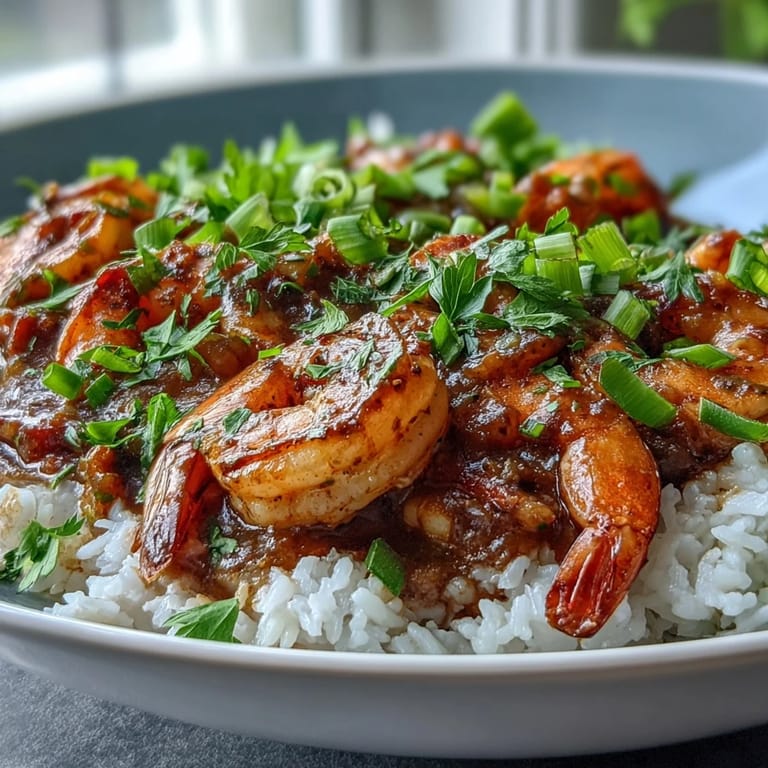
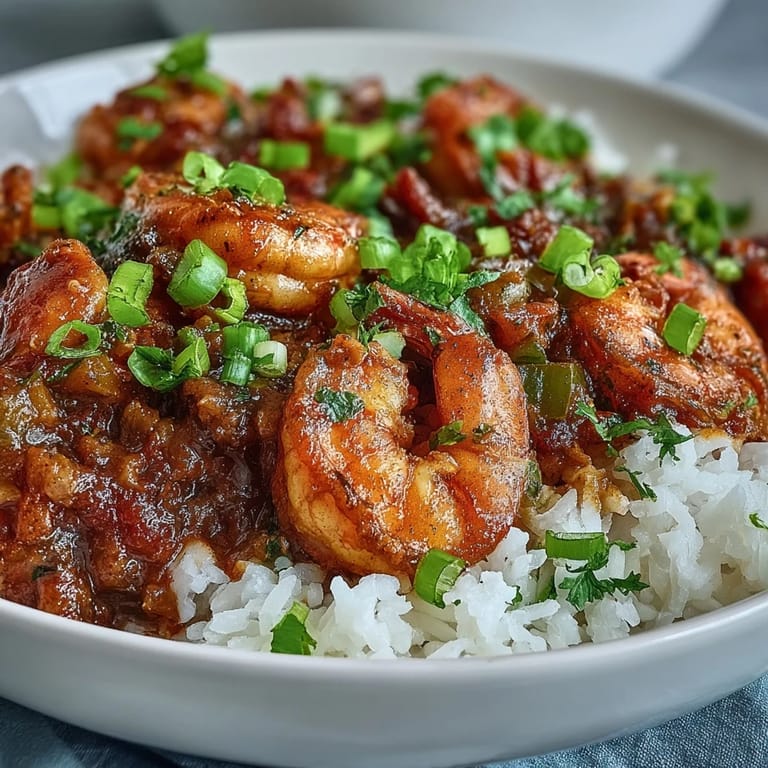
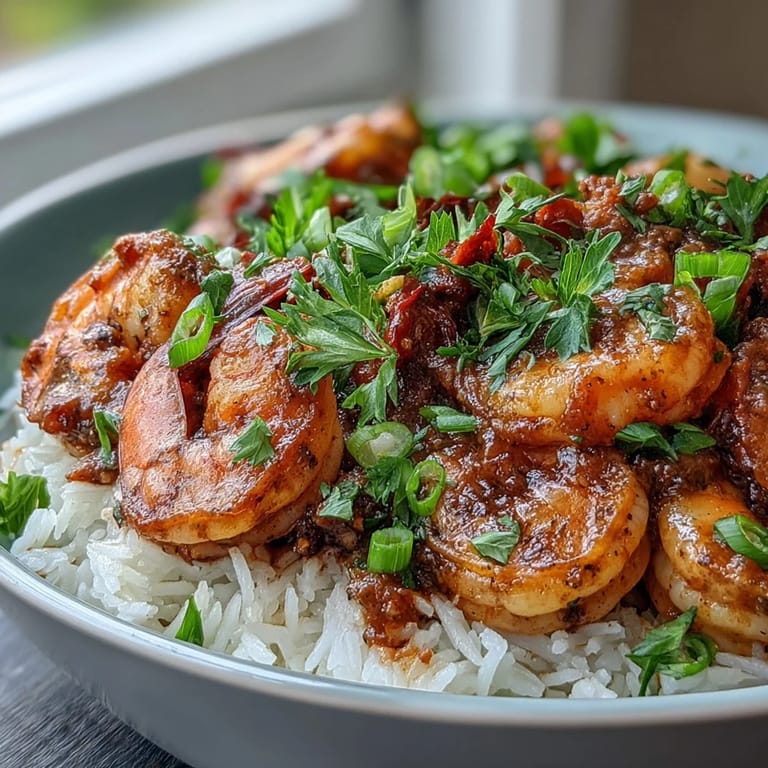
- Taste and adjust the seasoning, then pull out the bay leaf. Spoon the etouffee over bowls of hot rice and top with green onions and parsley.
 Pin
Pin There was a night I made this for friends who'd never had real Cajun food before, and I watched them go quiet after the first bite. One of them looked up and said it tasted like someone's grandmother made it, and I think that might be the highest compliment a dish like this can get. It's the kind of food that makes people feel cared for.
Choosing Your Protein
Shrimp is traditional and cooks quickly, but crawfish will make this taste even more authentic if you can get your hands on it. I've also swapped in chicken thighs or andouille sausage when I wanted something heartier, and mushrooms work surprisingly well for a vegetarian version. The roux and the seasoning do so much of the heavy lifting that you have more flexibility than you might think.
Getting the Heat Right
Cajun food should have some warmth to it, but it shouldn't make you suffer. I usually start with half the cayenne the recipe calls for, taste toward the end, and add more if it needs it. Some people like to put hot sauce on the table so everyone can adjust their own bowl, which takes the pressure off you to guess.
Make It Your Own
This dish is forgiving and wants you to play with it a little. Sometimes I add a splash of cream at the end for a richer sauce, or stir in okra if I have it around. A squeeze of lemon right before serving brightens everything up.
- Serve it with cornbread instead of rice if you want to soak up every bit of sauce.
- Double the batch and freeze half because it reheats beautifully and tastes even better after a day or two.
- If you're cooking for a crowd, keep the etouffee warm in a slow cooker and let people serve themselves.
 Pin
Pin This is the kind of recipe that gets better every time you make it because you start to feel the rhythm of it. You'll know when the roux is ready just by the smell, and that's when you'll understand what my friend's mother was talking about all those years ago.
Recipe Q&A
- → What makes the roux so important in étouffée?
The dark roux is the foundation of authentic étouffée, providing deep, nutty flavor and rich color. Cooking it to a chocolate-brown color takes patience but creates the signature taste that distinguishes this Louisiana classic.
- → Can I use crawfish instead of shrimp?
Absolutely! Crawfish is traditional in Louisiana and works beautifully in étouffée. Use the same quantity and follow the same cooking instructions for equally delicious results.
- → How do I prevent the roux from burning?
Stir constantly over medium heat and never leave it unattended. If you see black specks forming, discard and start over. The process takes 15-20 minutes of continuous stirring for the perfect chocolate-brown color.
- → What's the difference between étouffée and gumbo?
Étouffée has a thicker, more concentrated sauce and typically features one main protein, while gumbo is soupier with multiple proteins and often includes okra. Both use roux but in different proportions.
- → Can I make this dish ahead of time?
Yes! Étouffée actually tastes better the next day as flavors meld together. Store in an airtight container in the refrigerator for up to 3 days and reheat gently on the stovetop.
- → What can I substitute for seafood stock?
Chicken stock works well as a substitute, though seafood stock provides more authentic flavor. You can also use vegetable stock combined with a splash of clam juice for enhanced seafood notes.